
Livraison le jour même ou le lendemain

Qualité garantie

Débloquez vos offres de bienvenue: Livraison GRATUITE | Jusqu'à -80 % | 30 jours d'essai gratuits à JoyPlus
Téléchargez l'application
As the owner of a large breed puppy, you know that properly nourishing your future German Shepherd, Golden Retriever, or Great Dane is a critical challenge. Growing too quickly can weaken their joints, while an unsuitable diet can hinder their development.
This guide is designed to give you clear benchmarks to navigate the complex world of kibble for large breed puppies. Together, we'll break down labels and identify the criteria that truly matter, cutting through the marketing jargon.
Choosing the right food for a large breed puppy is about more than just the bag size. To protect their long-term health, three criteria must be monitored closely.
Large breed puppies are known for their long and intense growth period. A diet too high in calories or with imbalanced minerals can accelerate this growth dangerously. The result is excessive pressure on a still-maturing skeleton.
It is therefore crucial to choose a formula specifically designed for them. These foods typically feature:
Proteins are the building blocks of the body. They are essential for developing strong muscle mass capable of supporting the impressive frame of your future large dog. For large breed puppy food, protein quality takes precedence over quantity.
Prioritise recipes where the first ingredients are clearly identified meats or fish (e.g., "fresh chicken," "dehydrated salmon") rather than vague "by-products" or "animal meals." A crude protein level above 30% is generally a good benchmark for a high-protein puppy kibble.
The topic of grain-free puppy kibble is on everyone's mind. These formulas replace traditional grains (wheat, corn) with other carbohydrate sources like peas, lentils, or sweet potatoes.
They are primarily a relevant option for puppies with digestive sensitivities. However, being grain-free is not an absolute guarantee of quality. What matters most is the recipe's digestibility and the quality of its ingredients, starting with the proteins.
To help you make an informed choice, here is our selection of products that meet the specific needs of large breed puppies. These options are available in large-format puppy kibble, a cost-effective and convenient choice for owners.
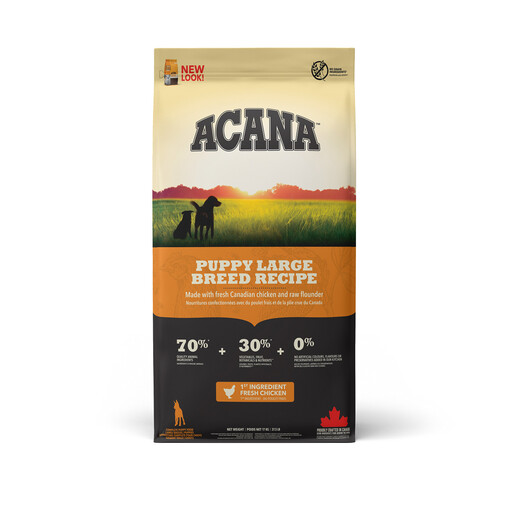
Why It Stands Out The Acana Large Breed Puppy formula is based on a wide variety of animal-based ingredients. According to the brand, it includes free-run chicken, eggs, and wild-caught cod. This diversity ensures a complete nutritional profile, supplemented with fruits and vegetables.
Highlights
Who It's For For owners of large breed puppies seeking a diet rich and varied in animal proteins, in a grain-free formula and a cost-effective format.
View the Acana Large Breed Puppy product
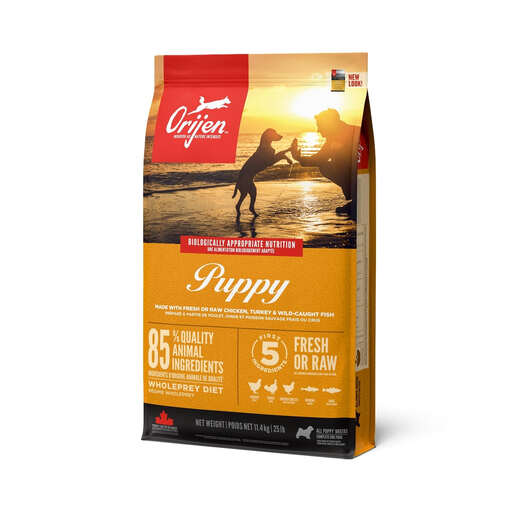
Why It Stands Out Orijen promotes its "Biologically Appropriate" concept with a very high content of animal-based ingredients (85% according to the brand). The recipe includes not only meat but also organs and cartilage (WholePrey ratio) to closely mimic a natural diet.
Highlights
Who It's For For owners who prioritise an extremely protein-rich diet for their large breed puppy, packed with animal-derived nutrients for a regimen that mirrors that of wild canids.
View the Orijen Puppy Formula product
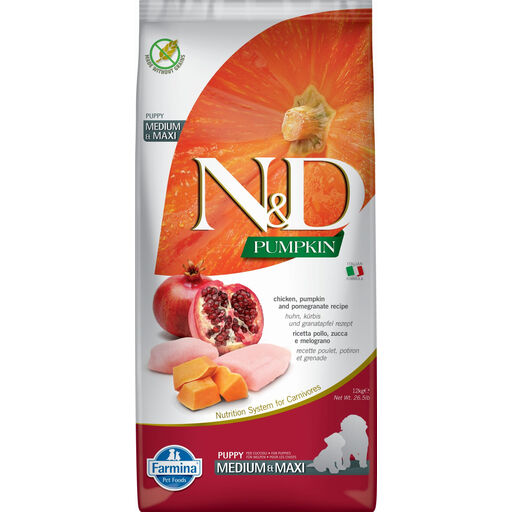
Why It Stands Out Farmina champions a scientific approach based on carnivorous nutrition. This formula is distinguished by a very high proportion of animal-based protein (96% of total protein, according to the manufacturer) and the addition of pumpkin, an ingredient known for its nutritional benefits and digestive support.
Highlights
Who It's For For owners of medium to large breed puppies who appreciate a formulation based on precise nutritional principles and are looking for the benefits of functional ingredients like pumpkin.
View the Farmina N&D Pumpkin product
Our selection provides excellent starting points, but every puppy is unique. Feel free to explore other brands or formulas by browsing our complete catalogue.
Discover our full range of puppy kibble
For large breeds, the transition to adult food typically occurs between 12 and 18 months, once the puppy has reached about 90% of its adult size. This timeframe varies by breed (a Labrador matures faster than a Great Dane). Your veterinarian is the best person to consult to confirm the right time.
The daily amount depends on your puppy's age, current weight, activity level, and metabolism. Each bag of kibble includes a feeding guide that serves as a good starting point. Monitor your puppy's body condition and adjust portions as needed to maintain a healthy weight without excess gain.