If you enjoy different drinks
If you make green tea, black tea, filter coffee or instant drinks, think about which temperatures you’ll actually use. A clear display makes it easy to select the right setting without extra steps.


If you heat one or two cups of water several times a day, a classic kettle is a good choice if all you need is boiling water. A variable-temperature model makes more sense if you regularly choose different temperatures for different drinks. Using a saucepan means you don’t need another appliance, but it takes up a hob and you’ll need to keep an eye on it as the water heats. In either case, first check the kettle’s minimum fill level.
If you make green tea, black tea, filter coffee or instant drinks, think about which temperatures you’ll actually use. A clear display makes it easy to select the right setting without extra steps.
For small amounts heated repeatedly, the minimum fill level matters just as much as the maximum capacity. Also check whether filling, pouring and descaling will be convenient for everyday use.
In an open-plan kitchen or when using the kettle early in the morning, consider the sound it makes while heating separately from its end-of-cycle beeps. Compare the dimensions of individual models rather than assuming how quiet they’ll be based on the brand or material.
If you heat small amounts of water several times a day, start by deciding whether you need boiling water, different temperatures or no extra appliance. The UFC-Que Choisir guide and its testing protocol suggest then comparing the minimum fill level, settings and noise of each model.
Choose this if: you mainly boil water and want straightforward controls.
Bear in mind: without temperature settings, you’ll need to check separately if you want the water at an intermediate temperature.
Choose this if: you regularly select different temperatures for tea, filter coffee or other drinks.
Bear in mind: the available temperatures vary by model, and extra controls are only useful if you’ll use them.
Choose this if: you’d rather stick with your existing kitchen kit, especially for heating larger amounts.
Bear in mind: it takes up a hob and you’ll need to keep an eye on it as it heats, particularly if you want the water at an intermediate temperature.
| What to consider | What to check | Who is it for? |
|---|---|---|
| Temperature | The exact temperature settings and how easy they are to select; a displayed temperature alone doesn’t tell you how accurate it is. | If I switch between green tea and filter coffee, I want to choose a temperature rather than boil the water every time. Around 36% of consumers with this need would make temperature control their top priority. |
| Amount of water | The minimum fill level, followed by the maximum capacity, compared with the volume of your cups. | If I make one cup at a time throughout the day, I want to be able to heat my usual amount. This would be the top priority for around 29% of consumers with this need. |
| Use and maintenance | Automatic shut-off, controls and descaling instructions; also check the filter if it’s removable. | If I use the kettle often, I want simple controls and maintenance I can keep up with regularly. Around 21% of consumers with this need would prioritise everyday convenience. |
| Noise and space | A test result for the specific model covering noise, beeps and dimensions. | In an open-plan kitchen, the sound of the kettle heating and its alerts could bother me, while worktop space is limited. Around 14% of consumers with this need would put this kind of convenience first. |
A large-capacity kettle isn’t necessarily suited to the amount of water needed for one cup. UFC-Que Choisir also carries out a separate test at the minimum fill level.
Compare the stated minimum for the model with the amount you usually heat, and check that the water gauge is easy to read.
The noise made while heating and the sound of alerts are two different things. A comment about one model doesn’t tell you how quiet an entire range is.
If keeping noise down is important, look for a test of the exact model and check whether you can switch off its beeps. UFC-Que Choisir’s testing protocol measures noise from a distance of 0.50 m, among other things.
According to UFC-Que Choisir, heavy limescale deposits can interfere with temperature detection and increase electricity consumption.
Follow the descaling instructions in the manual. If you want to keep maintenance simple, also check whether the filter is removable.
The DGCCRF explains that the CE marking represents the manufacturer’s declaration that the product meets the applicable European requirements; it isn’t an independent certification mark.
Assess the features you need separately, and check the manual and the information provided by the seller.
These range and model examples can help you compare different configurations. The features mentioned apply to the named models, not every product from each brand.
The Smart'n Light KO850810 is a 1.7 L variable-temperature kettle.
The range includes both simple and variable-temperature kettles; the Styline TWK8611P has a 1.5 L capacity.
The brand’s range includes the Ella BBT710 variable-temperature kettle, with a 1 L capacity.
These four variable-temperature kettles are worth considering if you want a dedicated appliance for making hot drinks regularly. If you mainly heat one or two cups, check the minimum fill level of each model before choosing.
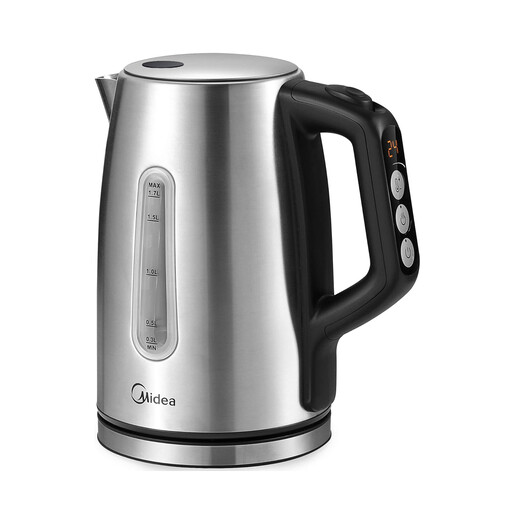 Image unavailable
Worth considering if you’d like to select different temperatures for your drinks.
The product name lists six settings: 40, 60, 70, 80, 90 and 100 °C. It also lists a power rating of 2,200 W, a water-level indicator and a keep-warm function.
Check that its minimum fill level suits the amount of water you usually heat.
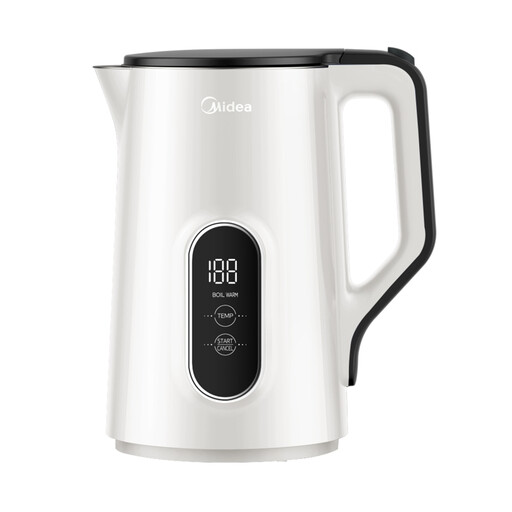 Image unavailable
Compare this model if you want to select an intermediate temperature on a 1.5 L kettle.
The product name lists a variable temperature range from 45 to 100 °C, a power rating of 2,200 W, a digital display and a double wall.
Check the minimum amount of water required before choosing it for a single cup.
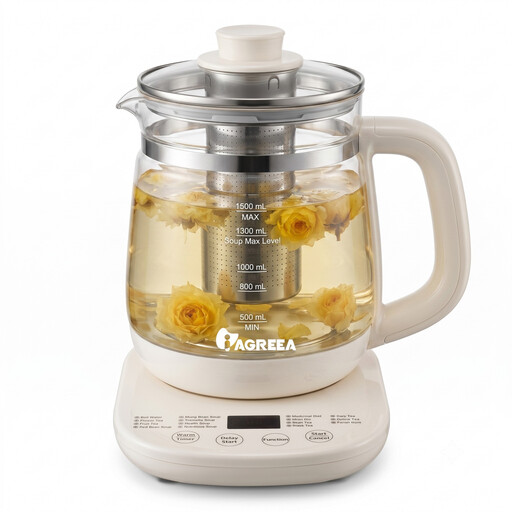 Image unavailable
Worth considering if you’d also like an infuser for certain drinks.
The product name lists a power rating of 800 W, six temperature settings, a stainless steel infuser and a wide opening.
Before buying, check the temperatures for each of the six settings and the minimum fill level.
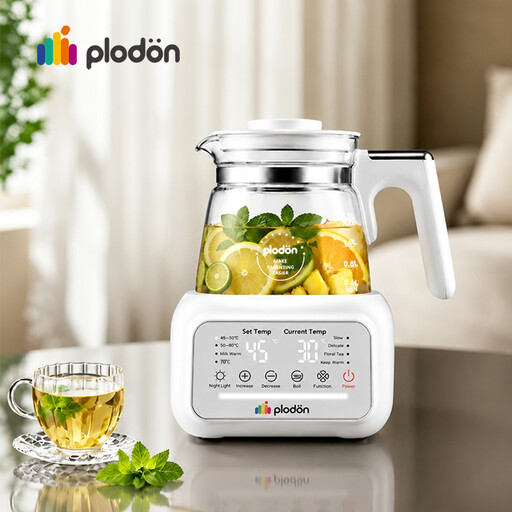 Image unavailable
Worth a look if you want a variable-temperature kettle with a display for regular use.
The product name lists a power rating of 800 W, an LCD screen, night lighting and a keep-warm function.
Compare the available temperatures and minimum fill level with how you plan to use it before choosing.
No. If you mainly want to boil water, a classic kettle may be all you need. A variable-temperature model is more useful if you often choose an intermediate temperature: the UFC-Que Choisir guide gives 70 °C for green tea and 90 °C for black tea or filter coffee as examples. Check the settings on the model you’re considering.
Start by comparing the amount of water you usually heat with the minimum fill level, then check the maximum capacity. UFC-Que Choisir tests kettles separately at their minimum level. As an example of a smaller format, riviera&bar lists a fill range of 250 ml to 1 L for the Ella BBT710.
Yes. Descale it regularly, following the manufacturer’s instructions. UFC-Que Choisir says that heavy limescale deposits can interfere with temperature detection and increase electricity consumption.
No. The DGCCRF explains that the CE marking represents the manufacturer’s declaration that the product meets the applicable European requirements, but it isn’t a certification mark. Assess the features that matter to your choice separately, and check the information provided by the seller.
In France, you can make a claim under the statutory guarantee of conformity with the seller if an item sold by a professional to a consumer doesn’t match its description. According to information published by the Ministry of the Economy, this applies to new, second-hand and refurbished goods. Keep your proof of purchase and a copy of the advertised features to support your claim.