
Livraison le jour même ou le lendemain

Qualité garantie

Débloquez vos offres de bienvenue: Livraison GRATUITE | Jusqu'à -80 % | 30 jours d'essai gratuits à JoyPlus
Téléchargez l'application
For a successful karaoke night or a memorable small event, sound quality is paramount. The problem is, the karaoke speaker market is a jungle of often misleading marketing promises. Between the advertised power and the reality, gimmicky features and true innovations, it's easy to make a misstep.
To avoid falling into the trap, here are the three most common pitfalls to watch out for:
battery-powered karaoke speaker might promise 10 hours of battery life, but this figure is almost always measured at a very low volume, without using the microphones or the light effects. In real-world conditions, once the party gets going, this battery life can be cut in half, or even by two-thirds.wireless karaoke system is certainly convenient, but not all microphones are created equal. Entry-level models use technologies prone to interference, dropouts, and noticeable latency (delay). It's enough to ruin a performance and strain your vocal cords.To make the right choice, forget the marketing and focus on objective technical specifications, whether you're looking for a home karaoke system or a portable model.
Forget PMPO power. The only value that truly matters is the RMS (Root Mean Square) power. It measures the power the speaker can deliver continuously without distortion or risk of overheating. For an indoor party in a 30 to 50 m? living room, a powerful karaoke speaker of 50 to 80 W RMS is more than enough. For outdoor events or larger venues, aim for at least 150 W RMS. This guarantees clear, intelligible sound, even when the bass is pumping and vocals need to cut through the musical mix.
A good system must be versatile. Bluetooth 5.0 (or a more recent version) is the bare minimum to ensure a stable connection and good audio transmission quality from a smartphone or tablet. Also, check for an auxiliary input (AUX), a USB port, and a TF (microSD) card reader for maximum flexibility.
Regarding a karaoke machine with 2 microphones, prioritize systems that use UHF (Ultra High Frequency) technology for the wireless mics. Unlike Bluetooth or the 2.4 GHz band, UHF is much less susceptible to interference from Wi-Fi networks and other devices. The result: a more stable connection and increased range.
If you plan to move your equipment, a portable karaoke PA system is obviously essential. Look for models equipped with wheels and a telescopic handle, trolley-style. Weight is also a key criterion: beyond 10 kg, these transport aids become non-negotiable.
For battery life, look at the battery capacity, expressed in milliampere-hours (mAh) or, even better, in watt-hours (Wh). A battery of over 4000 mAh (about 30 Wh) is a good starting point to last 4 to 6 hours at a moderate volume with the microphones on. The presence of a USB-C charging port is a real bonus for its versatility and charging speed.
Rather than an endless list, we've selected a few models that match specific user profiles, helping you find the perfect fit.
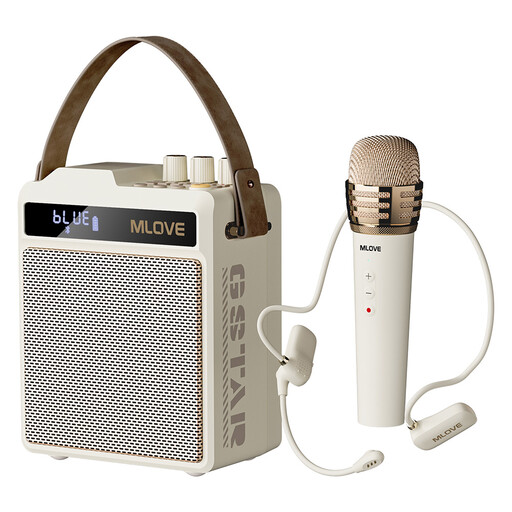
Why this model? Perfect for those who host parties at home as well as small presentations. This compact system includes a wireless handheld microphone and a headset mic, offering complete freedom of movement for singing or speaking.
It avoids the trap of low-quality mics by providing two types of wireless transmitters (handheld and headset) to suit all uses (singing, speeches), all in an ultra-portable format.
Its versatility is its strong suit: a 6.35 mm instrument input, recording to a USB drive, and fast charging via USB-C. The passive radiator provides extra support to give the bass more body despite the compact size.
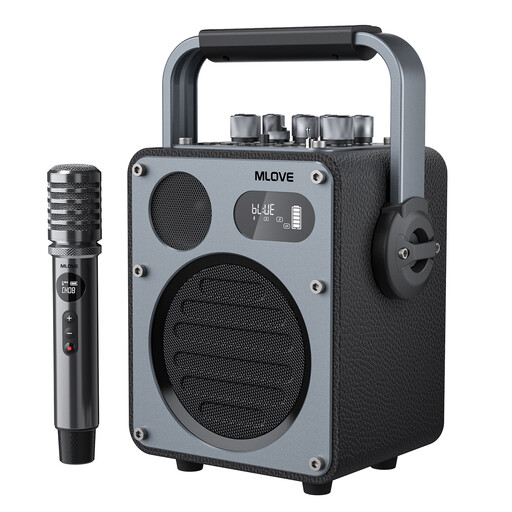
Why this model? Designed for discerning enthusiasts who want more than just a simple karaoke machine. It allows you to plug in an instrument, record your performances, and even live stream thanks to its USB-C OTG port.
It doesn't fall into the gimmick feature trap. Its dedicated EQ modes (voice, instrument, music) and Digital Signal Processor (DSP) offer precise audio control, a far cry from superfluous effects.
The build quality (zinc alloy, wooden cabinet) and Bluetooth 5.4 ensure excellent durability and stable, low-latency audio transmission. A real plus for musicians.
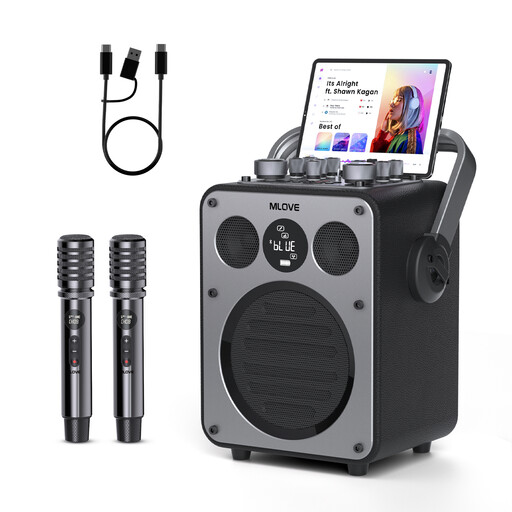
Why this model? For those who need power and mobility to provide sound for outdoor parties, school fairs, or community events. Its "trolley" design with wheels and a retractable handle makes it incredibly easy to transport.
It doesn't fall into the trap of overrated power. Its 200 W (likely peak, but consistent with its size) and dual battery (2x 4500 mAh) are built for intensive and prolonged use, far from fanciful promises.
The combination of power, two included UHF wireless mics, an advertised 6-8 hours of battery life, and portability makes it a remarkably effective all-in-one solution for entertaining groups.
We have compiled a complete and up-to-date selection of products that meet our selection criteria and current standards.
For a standard living room (around 30 m?), a power of 50 W RMS is an excellent starting point. This is enough to cover the ambient noise of about twenty people without pushing the speaker to its limits and risking distortion. If you like punchy bass or if your room is larger, a model between 80 and 100 W RMS will be more comfortable.
Yes, many models allow this. It's even a sign of a higher-end model. Check for a 6.35 mm jack input, often labeled "GUITAR" or "INST". Some systems, like the Mlove Rangers D4, go a step further by offering dedicated equalization settings for instruments, a real plus for sculpting a quality sound.
To minimize risks as much as possible, choose a system with UHF microphones. During setup, ensure that the receiver (the speaker) and the transmitters (the mics) have a clear line of sight. Move the speaker away from notorious sources of interference like Wi-Fi routers, microwave ovens, or any other wireless device operating on the 2.4 GHz band. Finally, a basic but essential tip: always make sure the batteries in the microphones are fully charged. A weak battery is a common source of dropouts.