
Livraison le jour même ou le lendemain

Qualité garantie

Débloquez vos offres de bienvenue: Livraison GRATUITE | Jusqu'à -80 % | 30 jours d'essai gratuits à JoyPlus
Téléchargez l'application
By our Joybuy product expert – Updated 26 August 2026
A dead battery?: every driver's nightmare, especially in the dead of winter or on the eve of a holiday getaway. Faced with this predicament, the jump starter with compressor has emerged as the ultimate all-in-one solution. But be warned: the market is so vast that it's easy to fall for marketing traps and end up with a device that will let you down when you need it most.
As a product expert at Joybuy, my mission is to help you decode the spec sheets to make a truly informed decision. Here are the mistakes to avoid and the key points to check before you pull out your credit card.
The Illusion of Peak Amps?: Many manufacturers advertise an impressive figure (3000A, 5000A...), but this value only represents a split-second burst of energy. What really matters is the Starting Current (or Cranking Amps), the actual power delivered to start your engine. A dazzling peak number with a low starting current will be completely useless on a large diesel engine in freezing weather.
The Gimmicky Air Compressor?: An integrated tire inflator is convenient, but its quality can vary wildly. Low-end models are often slow, very noisy, and prone to overheating after inflating just one tire. Their lack of precision and an often unreliable auto-shutoff feature can even damage your tires.
The Battery That Drains Itself?: The ultimate irony for an emergency starter?? Being dead right when you need it most. Many entry-level jump starters use lithium-ion batteries that suffer from rapid self-discharge (up to 10% per month). If you forget to recharge it every 2 or 3 months, it might just be dead weight.
To ensure you make the right choice, focus on these three characteristics. They are the true measure of the performance and reliability of your future jump starter.
Don't be blinded by the peak current. Look for the starting current, if the manufacturer even bothers to list it. If not, rely on the stated engine compatibility (petrol/diesel displacement).
The capacity, expressed in milliampere-hours (mAh) or watt-hours (Wh), determines the device's autonomy. A higher capacity will allow you to attempt multiple starts or recharge your portable devices. This is what turns your jump starter into a true power bank.
The battery technology is just as crucial. While lithium-ion dominates the market, new technologies like sodium-ion are emerging. They offer better stability in extreme temperatures and next-to-zero self-discharge?: a game-changing advantage for a piece of safety equipment.
For the tire inflator part, here are the points to check?:
Here are a few models that check all the boxes, designed for different user profiles and selected based on strict performance and reliability criteria.
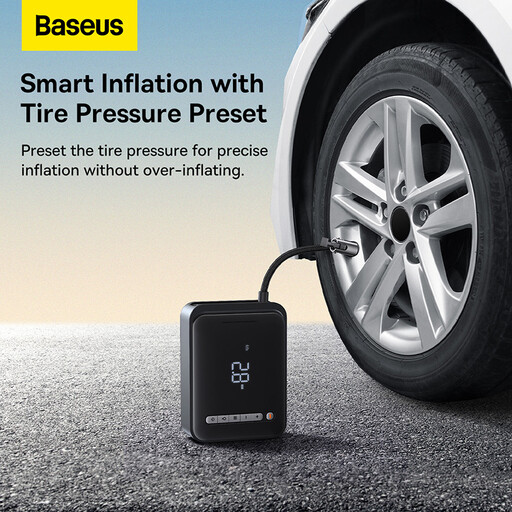
Why we chose it : Ideal for drivers of compact cars and petrol sedans who want a compact, versatile, and budget-friendly emergency solution. It slips into the glove box and covers the essentials : an emergency start and a quick tire top-up.
This model has honest specs (1000A peak, 8000 mAh) without overpromising. The compressor is designed for occasional use, which keeps it from falling into the "gimmick" category by focusing on its primary mission.
Its compact size and dual function (starter + compressor) make it a reassuring tool for everyday mishaps, with the reliability of a recognised brand.
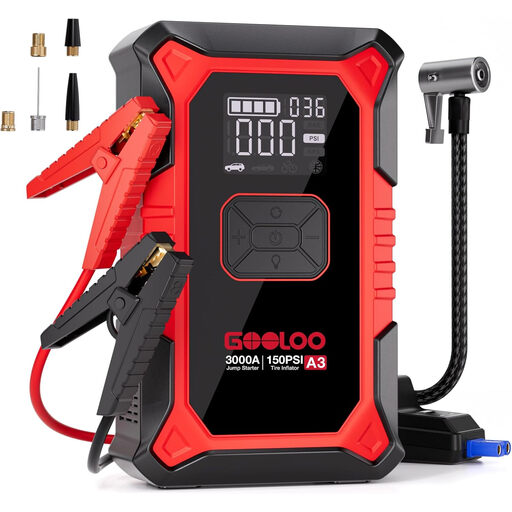
Why we chose it : Built for owners of SUVs, RVs, or large diesel engines (up to 6.5L). Its high starting power and high-performance compressor (35L/min airflow) make it a powerful ally for long trips and critical situations.
It doesn't just rely on a peak number. Its stated compatibility with engines up to 9.0L petrol and 6.5L diesel is a true indicator of its power. The "BOOST" function allows you to force-start even a battery that's considered unrecoverable.
The combination of very high starting power and a fast, efficient compressor, capable of re-inflating a Tesla tire in under a minute, according to the manufacturer.

Why we chose it : For those who prioritise safety, durability, and peace of mind above all else. The sodium-ion battery technology is a small revolution, perfect for leaving the device in the car all year round, regardless of the weather.
It tackles the self-discharge problem head-on. According to the manufacturer, a single charge can last for 5 years on standby, compared to 2-3 months for lithium. Its operating temperature range (-40°C to 80°C) shatters the limitations of in-vehicle storage.
Sodium-ion technology, a guarantee of exceptional safety and longevity (up to 6000 charge cycles). It's the ultimate "peace of mind" investment.
We have curated a complete selection of products that meet our selection criteria and current safety standards.
It all depends on your engine's displacement and fuel type.
Most lithium-ion jump starters lose 3% to 10% of their charge per month. It is therefore advisable to recharge them every 2 to 3 months to avoid any unpleasant surprises. Newer models, especially those with sodium-ion batteries, have almost no self-discharge and can hold a charge for over a year.
Yes, but on one condition?: check its operating temperature range. Most models are designed to operate between -20°C and +60°C. Leaving them in a car in the scorching summer heat or freezing winter cold can damage the battery and reduce its lifespan. For permanent storage with complete peace of mind, choose models designed for extreme temperatures, such as those with sodium-ion batteries.