
Livraison le jour même ou le lendemain

Qualité garantie

Débloquez vos offres de bienvenue: Livraison GRATUITE | Jusqu'à -80 % | 30 jours d'essai gratuits à JoyPlus
Téléchargez l'application
A dead battery on a cold morning or a flat tire far from any service station: situations every driver dreads. The jump starter with compressor has emerged as the all-in-one solution for these headaches. But there's a catch: the market is flooded with models making tempting promises, but their real-world performance is often disappointing.
As the Head of Product Recommendations at Joybuy, I analyze dozens of spec sheets every day. Let me guide you in making a truly informed choice by helping you avoid the common pitfalls and focus on the criteria that really matter.
Don't be fooled by packaging or marketing; many devices fail to deliver on their promises in the field. Be especially vigilant about these three points.
To ensure you're investing in a reliable ally and not a gadget, here are the three parameters to scrutinize.
This is the most critical factor. The power must be perfectly matched to your vehicle's engine.
Always check the compatibility stated by the manufacturer (e.g., "up to 9.0L gas / 6.5L diesel"). This is a much more reliable indicator than the peak amperage figure alone.
A good jump starter with a compressor must be effective for inflation.
A good emergency starter should also be an excellent power bank.
Rather than an endless list, we've selected three models that meet specific needs while avoiding the common pitfalls.
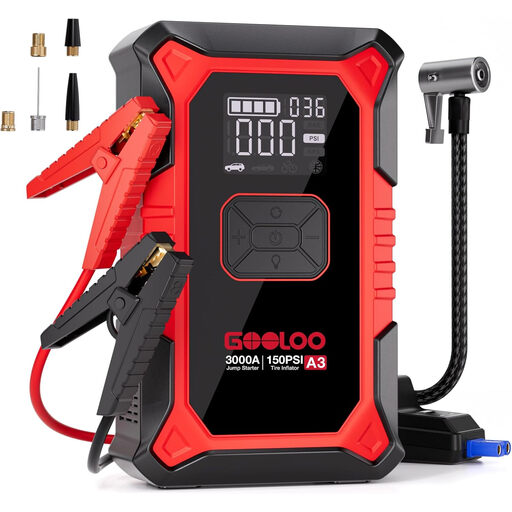
Why we love it: The ultimate versatile and compact solution for city cars and sedans. It offers an excellent balance of starting power (3000A) and inflation features, without cluttering up your trunk.
Unlike models with a token compressor, this one offers an airflow of 35 L/min and preset modes, making it genuinely effective in real-world conditions, not just on the spec sheet.
Its 7-in-1 versatility (starter, compressor, power bank, etc.) and its highly readable digital screen that simplifies every operation.
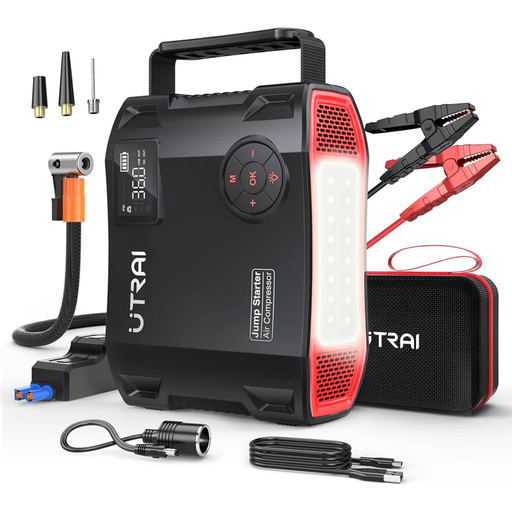
Why we love it: Built for owners of SUVs, utility vehicles, or RVs with large diesel engines (up to 10.0L). Its peak power ensures a flawless start where less powerful models would give up.
It avoids the marketing amperage trap by delivering a raw 6000A of power, truly capable of starting the most stubborn engines. Its 160W DC output can also power energy-hungry equipment, a rare feature.
Its starting firepower and its 12V–16V DC output, perfect for plugging in a cooler or a vacuum.
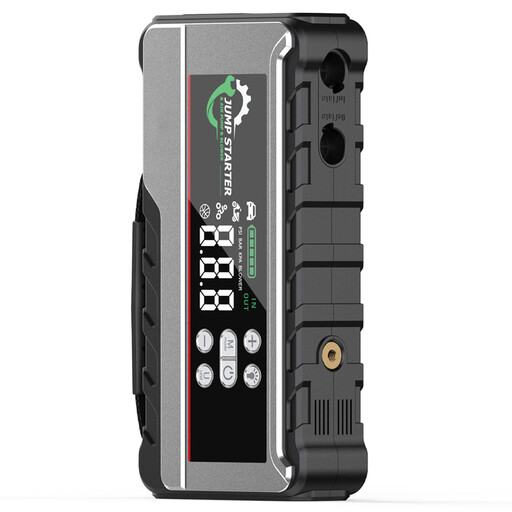
Why we love it: Perfect for those who travel, camp, and need a reliable power source for all their devices, far beyond just a smartphone. Its ultra-fast PD65W charging can power a laptop, turning it into a true portable power station.
It avoids the misleading capacity trap: beyond the 24800 mAh, it's the PD65W output that's the real game-changer. Its blower function, far from being a gimmick, is a real plus for cleaning camping gear or inflating an air mattress.
The ultra-fast laptop charging (PD65W) and its unique blower/deflator function, which is unique in this segment.
Explore our full selection of jump starters that meet our criteria for performance and safety.
It depends on the quality of its internal battery (lithium-ion or sodium-ion), but a good model should easily last you 3 to 5 years. The best practice to preserve the battery is to recharge the device every 3 to 4 months, even if it's not being used. Avoid letting it fully discharge for long periods.
Not necessarily. An oversized amperage is unnecessary and costly for a small gas-powered city car. What's important is that it's suitable for your engine, not the raw number on the box. A 2000A jump starter is perfect for a compact car, while a 4000A model or higher will be necessary for a large diesel 4x4.
Yes, but with caution. Most manufacturers specify an operating temperature range (e.g., -20°C to 60°C). Leaving it in a car in the scorching summer sun can exceed this limit and irreversibly damage the battery. Conversely, freezing cold can temporarily reduce its performance. Ideally, store it in a temperate place if possible, or at least out of direct sunlight inside the cabin.