
Livraison le jour même ou le lendemain

Qualité garantie

Débloquez vos offres de bienvenue: Livraison GRATUITE | Jusqu'à -80 % | 30 jours d'essai gratuits à JoyPlus
Téléchargez l'application
A dead battery on a cold morning, a flat tyre in the middle of nowhere… these are scenarios every driver dreads. To no longer depend on a tow truck or the goodwill of another driver, more and more motorists are equipping themselves with an all-in-one solution: the jump starter with an air compressor.
This multifunctional device combines the power of an emergency starter with the convenience of an inflator, all in a compact case. But with an overwhelming number of options, it's hard to know where to start. Our guide is here to demystify the market and give you the keys to choosing the perfect equipment for your vehicle and your needs, without drowning you in technical jargon.
Before diving into our selection, let's review the essential points for making the right choice.
The number one criterion for a jump starter is its peak current, expressed in amperes (A). This value determines its ability to start a stubborn engine.
A good integrated electric tyre inflator must be both fast and accurate. To ensure this, two indicators should be monitored:
Far more than just an emergency tool, these devices transform into a true portable power station. Remember to check the available connections:
We have selected three models that stand out for their performance and versatility, designed to meet the needs of different types of users.
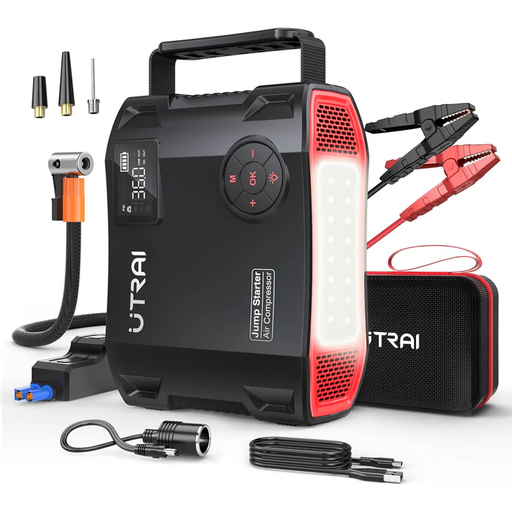
Its strengths: With its monstrous peak current of 6000?A, this model is built for the most extreme situations. It delivers colossal starting power, capable of reviving nearly any vehicle on the road, including very large diesel engines up to 10.0?L.
Key features:
Who is it for? For owners of large vehicles (SUVs, 4x4s, motorhomes, vans) and for anyone living in regions with harsh winters. It's the ultimate starting solution, without compromise.
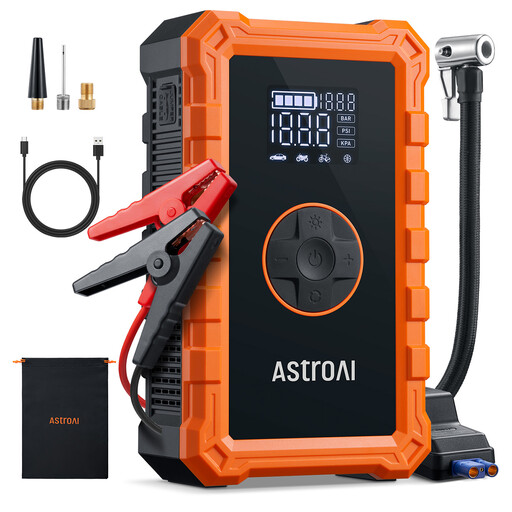
Its standout feature: The AstroAI S8 focuses on ease of use, with its large 2.4-inch digital screen making all the difference. It clearly displays the battery level, real-time tyre pressure, and any error codes. This makes it incredibly simple to use, even for novices.
Key features:
Who is it for? For the everyday driver looking for a reliable jump starter with a compressor that is incredibly simple to use and easy to store in the boot to handle the unexpected.
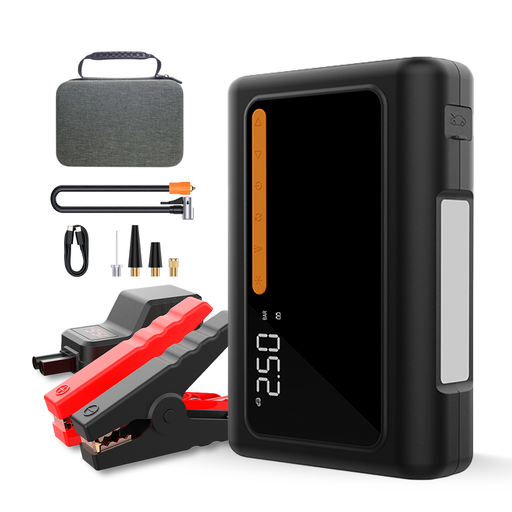
Its standout feature: This model stands out thanks to its sodium-ion battery technology. Unlike conventional lithium batteries, this one supports an extreme operating temperature range (-40?°C to 80?°C) and promises a record-breaking lifespan (over 6000 cycles).
Key features:
Who is it for? For those looking for a long-term investment and absolute peace of mind. Ideal if you plan to leave the device permanently in your vehicle, regardless of the weather.
Our selection highlights highly versatile models, but perhaps you have more specific needs. A simple 12V battery charger, an ultra-compact car power bank, or another type of jump starter? Feel free to explore our full catalogue.
Discover our full range of Battery Car solutions
It all depends on your engine. For a small petrol city car, 800 to 1200?A is sufficient. For a saloon or an SUV, aim for between 1500 and 2000?A. For large diesel engines or in very cold weather, a model with 2500?A or more will give you a real safety margin. In all cases, consult the manufacturer's recommendations.
It depends on its battery technology. Conventional lithium jump starters do not handle extreme temperatures well (both high heat and deep cold), which can degrade their performance and lifespan. It is therefore not recommended to store them permanently in the passenger compartment. Conversely, sodium-ion-based models like the GOKKCL GK01 are designed to withstand a wide temperature range (-40?°C to 80?°C), making them perfect for staying in the glove box or boot all year round.
Yes, most quality models are capable of this, but you'll need to be patient. An integrated compressor is primarily designed for topping up the pressure (e.g., going from 2.1 to 2.5?bars) or for reinflating a tyre after a puncture repair with a plug. For a completely flat tyre, the process can take 5 to 15 minutes depending on the tyre size and the compressor's airflow. Be sure to respect the recommended duty cycles (e.g., 10 minutes of use for 10 minutes of rest) to prevent overheating.