
Livraison le jour même ou le lendemain

Qualité garantie

Débloquez vos offres de bienvenue: Livraison GRATUITE | Jusqu'à -80 % | 30 jours d'essai gratuits à JoyPlus
Téléchargez l'application
A dead battery or a flat tire at the worst possible moment can turn the simplest trip into a total nightmare. When faced with these unexpected issues, the car jump starter with an air compressor stands out as the ultimate all-in-one solution. The problem: the market is flooded with models whose marketing claims are often misleading. This guide gives you the keys to decipher spec sheets, identify the criteria that truly matter, and make an informed choice, so you can finally drive with peace of mind.
Before pulling out your credit card, learn to spot the overhyped features and hidden flaws that render a device useless on the day you really need it.
To ensure you invest in a reliable device, here are the technical specifications that truly make a difference.
Forget peak current, for the most part. Check the starting current, also expressed in amps (A). For a city car or a compact gasoline model, 400A to 600A may be sufficient. However, for an SUV, a van, or a large diesel engine (2.0L and up), aim for at least 800A for a smooth start, especially in the dead of winter. A good portable car jump starter should clearly indicate its compatibility with both gasoline and diesel engines.
A high-performance 12V air compressor should be able to reach a pressure of at least 100-150 PSI (about 7-10 bar) to be versatile. The life-changing features are:
The battery capacity, often expressed in milliamp-hours (mAh) or watt-hours (Wh), determines the number of possible starts or the runtime of auxiliary functions. A good model should also serve as a car power bank and offer at least:
Here are a few options that meet specific needs, keeping performance and safety criteria in mind.
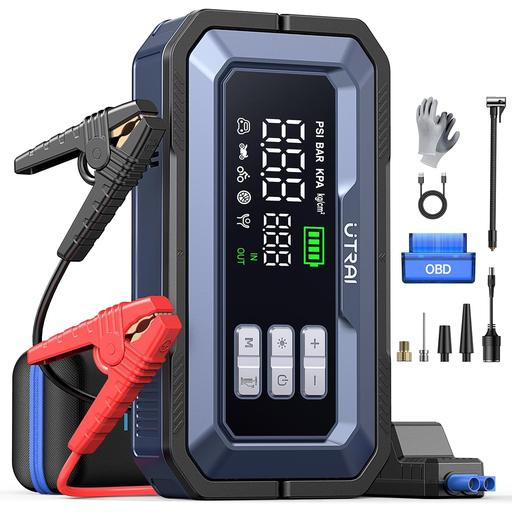
Why we recommend it: This model is for those who want no compromises. It's perfect for owners of large vehicles (diesel up to 14L), travelers, and campers who need a complete solution for starting, inflating, powering devices, and even diagnostics.
It advertises a true starting current of 1000A, a reliable value that goes far beyond peak marketing figures. Its 150 PSI compressor with automatic shut-off is genuinely functional, and it integrates 10 levels of safety protection.
The combination of colossal starting power, a 160W DC output, a 2000-lumen lamp, and the OBD2 fault code reader makes it the ultimate automotive survival kit.
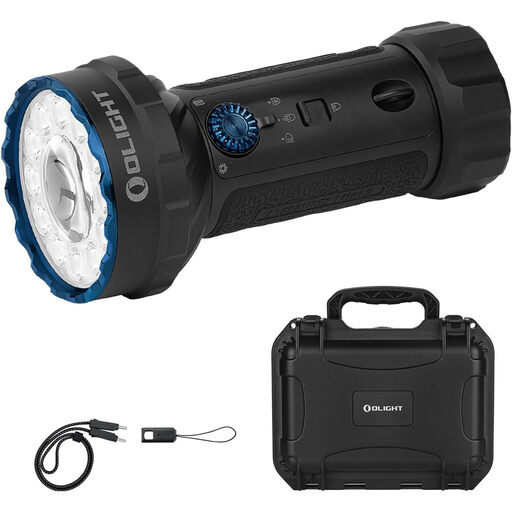
Why we recommend it: For a nighttime repair or setting up camp, a jump starter's small LED is often just symbolic. This flashlight is a prime addition to any emergency kit, offering exceptional lighting power to see and be seen.
It's not in the same league as integrated lights. This is a dedicated, high-performance solution built for action. Its floodlight and spotlight modes allow you to illuminate a large work area or inspect an element from a distance.
Its firepower: 10,000 lumens and a 750-meter range in a format that fits in your hand. The dual charging option (magnetic and USB-C) ensures great flexibility in use.
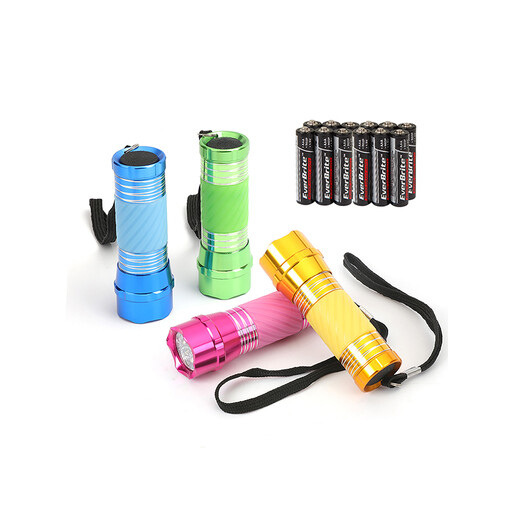
Why we recommend it: Not everyone needs cutting-edge equipment. For the driver looking for a simple, reliable, and inexpensive lighting solution to keep in the car, this pack of mini-flashlights is the most pragmatic solution.
Here, there's no battery to recharge, no complexity. The focus is on the simplicity and reliability of batteries (included). If your jump starter is dead, these lights will still work. It's the foolproof backup plan.
Its unbeatable price-to-practicality ratio. For a modest cost, you get several light sources to distribute throughout the vehicle (glove box, trunk, door pockets), ensuring a light source is always within reach.
Whether for camping or emergency situations, good lighting is crucial. Discover our complete selection of tested and approved products that meet strict selection criteria and safety standards.
1. What starting power is needed for a diesel vehicle? For a modern diesel engine (like in an SUV or van), aim for a starting current of at least 600A, and ideally 800A or more for larger engines or for use in very cold weather. Peak current is just a marketing metric; always rely on the true starting current.
2. Can a jump starter be left in a car during winter or summer? Most quality jump starters are designed to operate within a wide temperature range (e.g., from -20°C to 60°C / -4°F to 140°F). However, avoid leaving it in direct sunlight inside the cabin during a heatwave; extreme heat can damage its battery over the long term. To ensure its effectiveness, remember to check its charge and recharge it every 3 to 4 months.
3. Is the included OBD2 reader compatible with all cars? The OBD2 diagnostic function is generally compatible with most gasoline vehicles made after 2001 and diesel vehicles after 2004 in Europe, which comply with the EOBD/OBDII standard. However, compatibility may vary on some specific models. If in doubt, especially with an older or uncommon vehicle, it's best to check this information with the manufacturer.