
Livraison le jour même ou le lendemain

Qualité garantie

Débloquez vos offres de bienvenue: Livraison GRATUITE | Jusqu'à -80 % | 30 jours d'essai gratuits à JoyPlus
Téléchargez l'application
A dead battery or a flat tire is the classic problem that always happens at the worst possible time?: just before a critical appointment, on the way to your holiday, or in the middle of nowhere. Instead of waiting for a tow truck or relying on the kindness of a fellow driver, a jump starter with an air compressor ensures your complete independence. This all-in-one device is designed to put you back in control when the unexpected happens.
With an overwhelming number of options on the market, it's not easy to find your way. This guide is here to decode the essential features and present our selection of the best models, helping you make an informed choice that's perfectly suited to your vehicle and needs.
Before diving into the products, let's review the three key criteria that will make all the difference in the effectiveness and suitability of a portable car starter.
The starting power, expressed in peak amps (A), is the most crucial factor. It determines the device's ability to start your engine.
An integrated tire air compressor must be efficient and easy to use. There are two indicators to keep an eye on?:
The battery capacity, measured in milliampere-hours (mAh), determines the number of possible jump-starts or the number of times you can recharge your devices. A high-capacity model also serves as a true car power bank.
Don't overlook the other features either?:
Here is a selection of models that stand out for their performance and versatility.
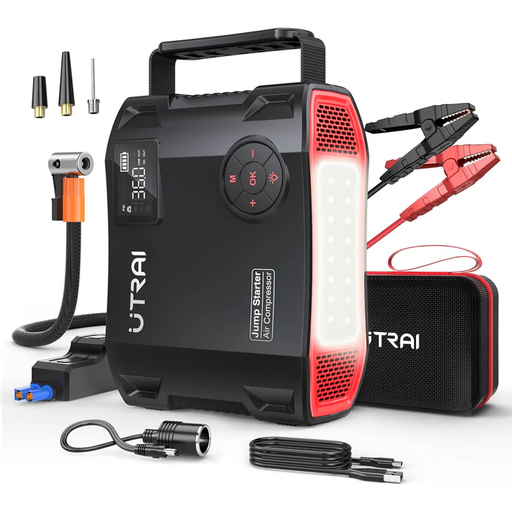
Highlights?: This model combines a very high starting power with a high-performance compressor, making it compatible with a wide range of vehicles, including large diesel engines. Its 160?W DC output gives it great versatility for powering portable equipment.
Advantages?:
Who is it for?? Drivers who own SUVs, LCVs, or motorhomes with large diesel engines. It's also an excellent choice for those looking for a powerful, portable power source for their outdoor activities.
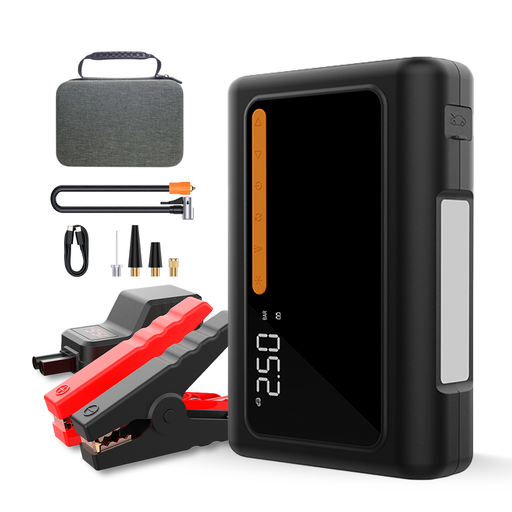
Highlights?: Its sodium-ion battery technology is what makes it unique. According to the manufacturer, it promises a far superior lifespan and safety compared to traditional lithium batteries, resulting in an extreme operating temperature range and near-zero self-discharge.
Advantages?:
Who is it for?? Users who prioritise long-term reliability and safety. Perfect for those who want a low-maintenance device that's always ready to go, even after months without a recharge.
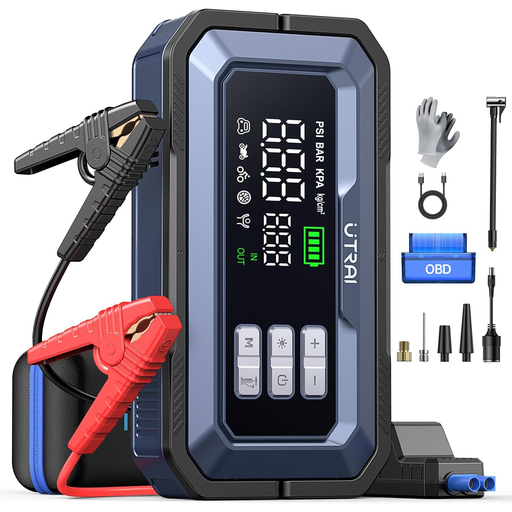
Highlights?: This is a device built for extreme situations. With a peak power of 7000?A, it targets owners of very large vehicles (heavy-duty trucks, motorhomes, boats). Its integrated OBD2 diagnostic function is a technical bonus rarely seen in this segment.
Advantages?:
Who is it for?? Professionals, owners of heavy-duty trucks, large motorhomes, or boats. It's also an excellent choice for mechanics enthusiasts who will appreciate the OBD2 diagnostic feature.
If these models don't check all your boxes, or if you're looking for a more targeted solution just for inflation, other options are available.
? Discover our full range of battery-powered air pumps to find the tool that's right for you.
Diesel engines have a higher compression ratio and are more power-hungry at startup, especially in cold weather. For a standard diesel car, a booster of at least 2000?A is a good starting point. For LCVs, vans, or diesel 4x4s, it's better to opt for models with 3000?A or more. Always refer to the maximum engine displacement recommended by the booster's manufacturer.
It depends on its battery technology and the operating temperature range specified by the manufacturer. Traditional lithium-ion models are sensitive to extreme temperatures (both high heat and extreme cold), which can degrade their performance and lifespan. Newer models, like those based on sodium-ion, are designed to withstand a much wider temperature range (e.g., -40?°C to 80?°C), making them much better suited for permanent storage in a vehicle. Regardless, it's advisable to check its charge level and top it up every 3 to 6 months.
No, a jump starter is a portable car starter, not a portable car battery charger. Its role is to deliver a very intense pulse of current for a short moment to start the engine. It is not designed to slowly recharge a dead battery. Once the engine is started, the alternator takes over to recharge the vehicle's battery.