
Livraison le jour même ou le lendemain

Qualité garantie

Débloquez vos offres de bienvenue: Livraison GRATUITE | Jusqu'à -80 % | 30 jours d'essai gratuits à JoyPlus
Téléchargez l'application
A dead battery or a flat tire: two common breakdowns that can turn any trip into a major headache. To handle these unexpected events, the jump starter with an air compressor has become the go-to, all-in-one smart accessory. The problem is, not all models are created equal. Too many drivers end up with a device that, at the crucial moment, leaves them stranded. Before you invest, it's best to learn how to avoid the most common marketing traps.
The 3 mistakes to avoid when buying:
To avoid a bad surprise, focus on the technical specifications that truly matter. A good multifunction jump starter must be, above all, reliable and ready to use at a moment's notice.
Forget Peak Amps for a moment. The key information is the compatibility of the 12V jump pack with your vehicle's engine (gas or diesel, and its displacement in liters). A model designed for a 3.0L gas engine will struggle to start a 6.0L diesel. Always check the manufacturer's specifications to ensure they match your car, SUV, or van. Built-in safety features (against reverse polarity, short circuits, etc.) are also a non-negotiable safety standard.
This is the heart of your device. A quality battery must have a low self-discharge rate to remain functional even after months in your trunk. Recent models feature more stable technologies, capable of handling more charge cycles and better withstanding extreme temperatures, whether it's a scorching summer or a freezing winter. The car power bank function is a nice bonus, but it shouldn't compromise the device's primary mission: getting you out of a dead battery situation.
A good built-in tire inflator should be both practical and powerful. Look for models with a digital screen to preset the desired pressure and an auto-stop function. This prevents over-inflation and makes your life much easier. The airflow rate (often expressed in liters per minute) is a good indicator of inflation speed, although this data is rarely disclosed. Instead, look for the presence of preset modes (car, motorcycle, bicycle), which indicate a well-thought-out, user-focused design.
Instead of a random list, here are options that cater to specific user profiles, based on our criteria for reliability and performance.
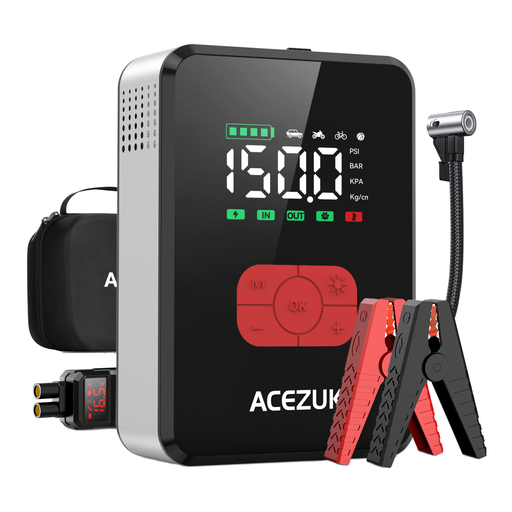
Why we chose it: Ideal for owners of SUVs, vans, or vehicles with large diesel engines (up to 12.0L). Its high power and large capacity (26800mAh) make it a reliable ally for the most demanding situations, including starting deeply discharged batteries.
This model avoids the peak amps trap by delivering real-world power capable of starting engines up to 12.0L. The smart compressor with a screen and auto-stop function eliminates guesswork and the risk of overheating.
Versatile Power: Starts almost any 12V vehicle. Smart Compressor: 4 preset modes and a digital display for precise inflation.

Why we chose it: For those who want a "set-it-and-forget-it" device with no maintenance. Its sodium-ion battery technology ensures very low self-discharge and resistance to extreme temperatures (-40°C to 80°C), allowing it to be stored in the car year-round.
It directly tackles the self-discharge trap. According to the manufacturer, a single charge can last up to 5 years on standby. Goodbye to the hassle of quarterly recharging! Its chemical stability is a major safety guarantee.
Record Standby Time: Very low self-discharge (~1% per month, according to GOKKCL). Enhanced Safety: Stable at high and low temperatures, with no risk of thermal runaway.
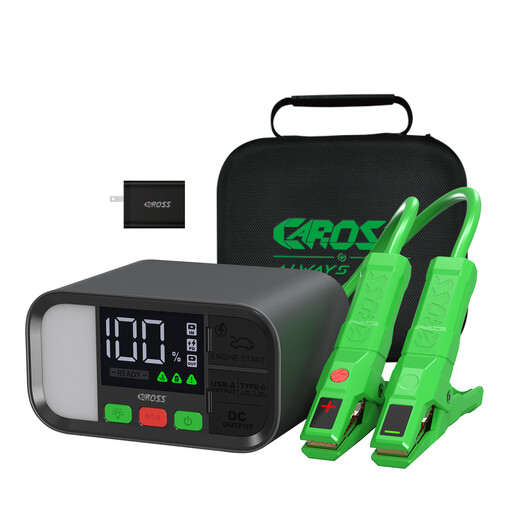
Why we chose it: If you already own a compressor and prioritize a compact size and advanced technology. This model skips the compressor to focus on its two strengths: powerful jump-starting and an ultra-fast power bank function (PD 65W) capable of charging a laptop.
It doesn't bother with a potentially mediocre compressor. It excels at its core mission as a starter and charger, with bonuses like smart, non-polarized clamps that make operation simpler and safer.
Ultra-Fast PD 65W Charging: Recharges your devices (including laptops) at high speed. Design and Simplicity: Aluminum casing, large screen, and smart clamps for intuitive use.
We have curated a complete and up-to-date list of products that meet our strict selection criteria and safety standards.
A diesel engine requires more starting power than a gas engine of the same displacement, so you'll need a jump starter with higher cranking amps (CA or CCA). As a general rule, a model compatible with diesel engines up to 6.0L or 8.0L will cover most needs for passenger cars and light-duty trucks. Always check the compatibility stated by the manufacturer.
It all depends on the battery technology and its self-discharge rate. Standard lithium models lose between 5% and 10% of their charge per month and require recharging every 2 to 3 months. More advanced models, like those with sodium-ion batteries, can hold their charge for years, offering greater peace of mind.
This is a critical point: always check the operating and storage temperature range specified by the manufacturer. Traditional lithium batteries can be damaged by extreme heat (over 60°C / 140°F) and lose efficiency in extreme cold. Some models are specifically designed to withstand a wider range of conditions (e.g., -40°C to 80°C / -40°F to 176°F), making them much safer to store in a vehicle year-round.