
Livraison le jour même ou le lendemain

Qualité garantie

Débloquez vos offres de bienvenue: Livraison GRATUITE | Jusqu'à -80 % | 30 jours d'essai gratuits à JoyPlus
Téléchargez l'application
A dead battery: every driver's nightmare. Fortunately, a portable jump starter can save you from a long wait and a costly tow. But be warned, the market is flooded with models making tempting promises that often fall short. As a product expert at Joybuy, my mission is to help you decode the spec sheets to make an informed choice.
Before you buy, watch out for these 2 common traps that can cost you dearly:
To avoid making a mistake, focus on the objective characteristics that define the performance and reliability of a car jump starter.
The most important data point is the starting current (often much less prominent than the peak current), which determines the booster's ability to crank your engine. A standard 12V jump starter is sufficient for most passenger vehicles.
A jump starter's reliability depends on its internal battery and protection systems.
Instead of an overwhelming list, here are a few options that cater to different needs, all while sidestepping the marketing traps we've discussed.
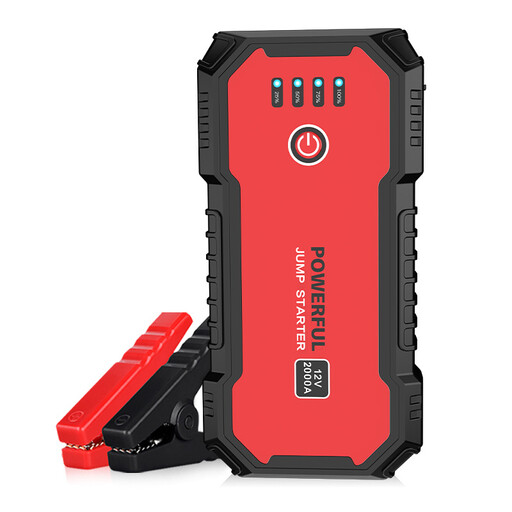
Why we chose it: This is the compact and well-balanced solution for most drivers of city cars and sedans (gas or mid-size diesel). It fits easily in the glove box and offers sufficient power for common breakdowns, without unnecessary frills.
Its 1500A peak current is a realistic value for its size and target audience. It focuses on its core function as a jump starter and power bank, without getting bogged down by gimmicky features that would be poor quality anyway.
The 18W QC3.0 fast-charging port is a real bonus for quickly recharging a smartphone. This transforms it into a very effective power bank in addition to its main function.
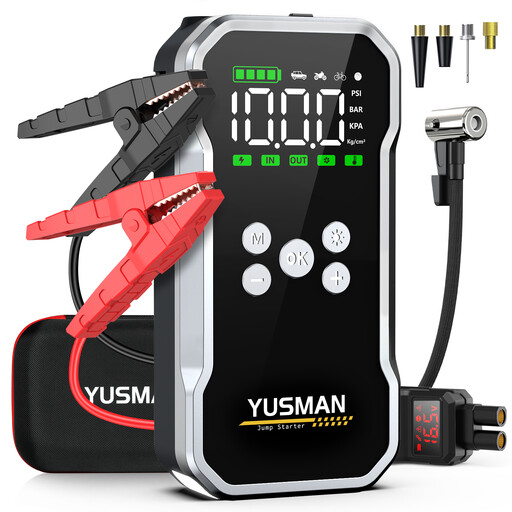
Why we chose it: For those who travel, go camping, or simply want an all-in-one tool. The combination of a powerful jump starter and a functional air compressor makes it the ideal road trip companion for SUVs, vans, and family cars.
It avoids the "mediocre all-in-one" trap by delivering solid performance for its compressor (150 PSI, 45 L/min). That's enough to actually reinflate a tire, not just a beach ball.
Its true 4-in-1 versatility (starter, compressor, power bank, light), with credible technical specs for each function. The dedicated LCD screen for the compressor is a highly appreciated bonus.
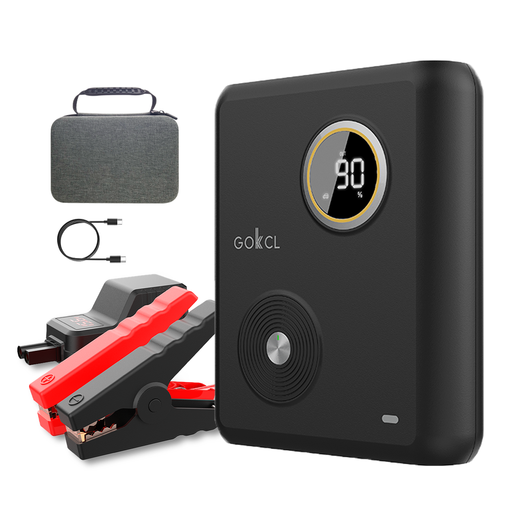
Why we chose it: Ideal for those in regions with extreme temperatures (very hot or cold) or for owners of infrequently used vehicles (RVs, boats, classic cars). Its sodium-ion battery technology offers unmatched reliability and longevity.
It sidesteps the pitfall of lithium battery degradation by using a different, more stable chemistry. Its value proposition is based on durability (6000 cycles) and a very low self-discharge rate (5-year standby time)—concrete, measurable advantages.
Its extreme operating range (-40°C to 80°C / -40°F to 176°F) and very long charge retention make it a hassle-free device you can count on in any situation.
We have curated a full range of products that meet our selection criteria and European safety standards.
Most manufacturers recommend recharging every 2 to 3 months to compensate for the natural self-discharge of lithium batteries and ensure it's ready when you need it. Always consult your device's manual to be sure. Some newer models, like those based on sodium-ion, offer a much longer standby time.
Yes, most are designed for this. However, be sure to check the operating temperature range specified by the manufacturer. Extreme temperatures, whether very hot in summer or very cold in winter, can affect the battery's performance and lifespan. Specific models are designed to better withstand these conditions.
It's often very practical and a real space-saver. It's an excellent solution for topping up tire pressure or inflating recreational equipment (air mattresses, pool floats...). For heavy-duty use, a dedicated compressor will still be more powerful. Check the airflow rate (L/min) and maximum pressure (PSI) to ensure the compressor will meet your expectations.