
Livraison le jour même ou le lendemain

Qualité garantie

Débloquez vos offres de bienvenue: Livraison GRATUITE | Jusqu'à -80 % | 30 jours d'essai gratuits à JoyPlus
Téléchargez l'application
A dead battery: every driver's nightmare, and it always happens at the worst possible time. Faced with this problem, the battery booster (or jump starter) has become the essential accessory for getting back on the road in minutes, without depending on anyone else. The problem: the market is flooded with confusing marketing promises and inflated specs. How can you tell a reliable device from a gadget that will leave you stranded??
As the Head of Product Recommendations at Joybuy, my mission is to demystify this world for you. Together, we'll navigate the pitfalls and identify the key technical criteria to make a smart choice that's perfectly suited to your vehicle.
Jump starter marketing loves spectacular numbers that often hide mediocre performance. Here’s what to check to avoid throwing your money away.
Now that we've covered the pitfalls, let's focus on the features that truly make a difference when choosing the right 12V jump starter.
The power you need depends directly on your engine. A gas/diesel jump starter should be chosen primarily based on engine displacement.
The battery capacity (usually lithium) will determine what you can do with your device beyond a simple emergency jump-start.
A good jump starter must include a full suite of protections. Check for safety features against?:
An LED screen or clear indicator lights are a huge plus to confirm everything is connected correctly before you turn the key, preventing user error.
Instead of an endless list, here are three models that meet specific needs, all vetted against our performance and reliability criteria.
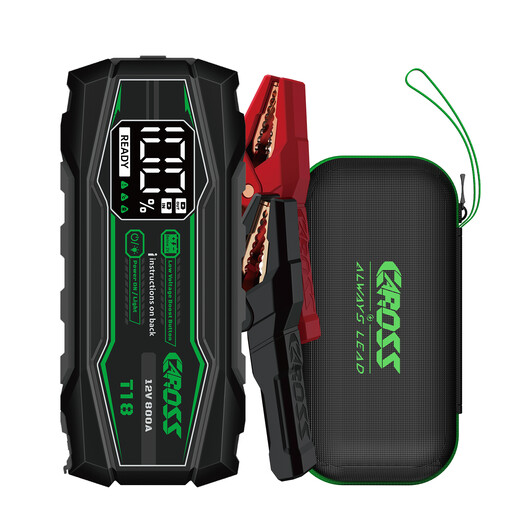
Why this model? Perfect for drivers of compact cars or gas-powered sedans. It offers a compact, easy-to-use emergency solution that fits in your glove box, so it's always on hand when you need it.
This model doesn't rely on exaggerated peak amps. Its 800A are well-calibrated for common vehicles, and it includes essential protections (spark-proof, reverse polarity) that are sorely lacking in entry-level options.
Its 2.3-inch digital screen clearly displays the connection status, making it nearly foolproof to use. The "Boost" function is a real plus for stubborn batteries.

Why this model? Designed for owners of SUVs, vans, RVs, or diesel vehicles up to 10L. Its power and rugged construction make it a powerful ally for professionals or adventurers, even in freezing weather.
Here, the 4000 peak amps serve a real starting power capable of cranking large engines. The all-metal clamps are built to last and avoid the pitfall of flimsy accessories.
Its ability to operate in extreme temperatures (from -20°C to 60°C) is a testament to its reliability. The "BOOST" function forces a start even on a battery considered completely dead.
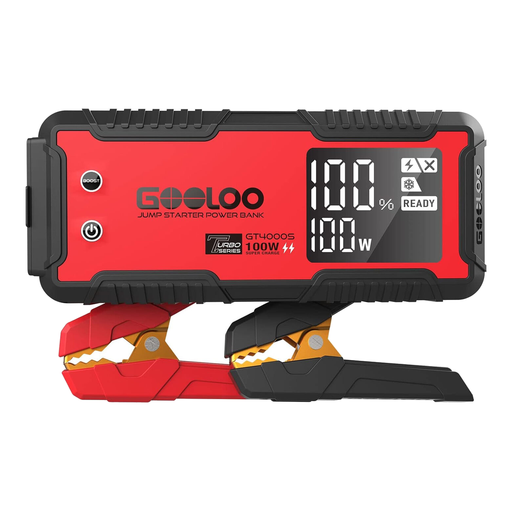
Why this model? For those who expect more than just a jump starter. This is a true portable power hub, capable of recharging a laptop as fast as its wall charger while delivering colossal starting power.
It bypasses the misleading mAh capacity trap with a concrete, verifiable promise: 100W two-way fast charging. Here, the "power bank" feature isn't a gimmick; it's a true charging station.
The 100W ultra-fast charging allows it to go from 0 to 100% in 1 hour and 15 minutes. Even better: just five minutes of charging is enough to recover sufficient power for an emergency jump start.
Explore our full selection of tested and approved products that meet the strictest safety standards.
It all depends on your vehicle's engine. For a mid-size gas car, 800A to 1500A of peak current is sufficient. For a diesel engine, SUV, or van, you should look for a model with at least 1500A to 2000A. When in doubt, choosing a slightly higher power rating provides a good safety margin, especially if you live in a cold climate.
Most modern lithium-battery jump starters can hold their charge for 6 to 18 months. However, self-discharge is inevitable. To ensure it's ready when you need it most, it's recommended to check its charge level and top it up every 3 to 4 months.
Yes, these devices are designed to be stored in a vehicle. However, it's best to avoid extreme temperatures. Don't leave it in direct sunlight behind a windshield in the summer, as excessive heat can degrade the battery. Likewise, in extreme cold, its performance may be slightly reduced, although good models are designed to work in temperatures as low as -20°C. The ideal solution is to store it in its case, either in the glove box or the trunk.