
Livraison le jour même ou le lendemain

Qualité garantie

Débloquez vos offres de bienvenue: Livraison GRATUITE | Jusqu'à -80 % | 30 jours d'essai gratuits à JoyPlus
Téléchargez l'application
A dead battery: every driver's nightmare. Fortunately, a modern jump starter can save you from an endless wait and a costly tow truck. But with an overwhelming number of options on the market, how do you navigate the choices and avoid marketing traps? As the head of our Equipment section, my job is to help you see clearly and make a truly informed decision.
This guide breaks down the essential criteria for finding a reliable portable car starter and helps you avoid the most common buying mistakes.
Before diving into the spec sheet, it's crucial to know the pitfalls that too often turn a great deal into a regrettable purchase.
To make the right choice, focus on these three fundamental parameters. They determine the performance and reliability of your future battery jump starter.
This is the number one criterion. The power must be perfectly matched to your vehicle's engine.
The battery is the heart of the device. Its technology and the protections surrounding it are paramount.
These safety features protect not only your car's onboard electronics but also your own safety.
Here are a few models that cater to distinct user profiles, chosen for their performance and reliability.
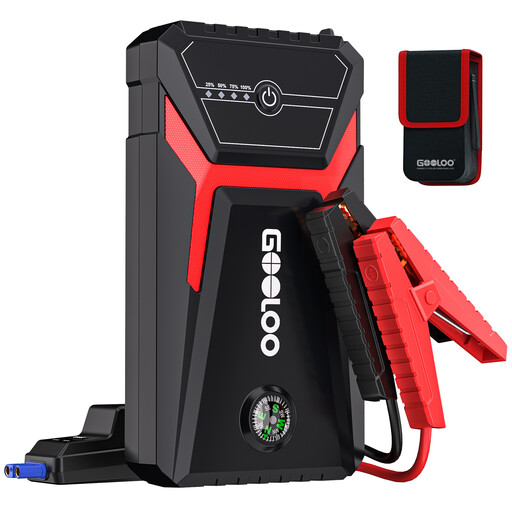
The editor's take: The perfect backup solution for drivers of city cars and petrol sedans. Reliable and compact, it slips into the glove box and delivers the essentials for most cars on the road.
It focuses on its primary mission: starting your car. No superfluous, underperforming gadgets, just a well-calibrated 1500 A of power for engines up to 6.0L petrol and 4.0L diesel.
Includes 10 levels of protection, including an anti-spark system and reverse polarity safety. Its compact size and light weight make it ultra-practical.

The editor's take: The Swiss Army knife for long trips, camping, and holiday getaways. It combines impressive firepower with a genuinely effective compressor for car tyres, bikes, or an air mattress.
Here, the compressor isn't just a gimmick. This 150 PSI model with auto-shutoff is a high-performance tool that doesn't compromise the colossal 4500 A starting power.
5-in-1 versatility (starter, compressor, power bank, 4-mode LED light). Compatible with very large engines (up to 9.0L petrol / 8.0L diesel) and features a highly readable LCD screen.
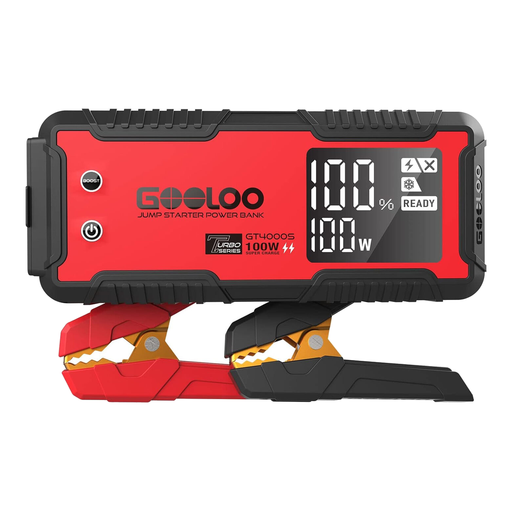
The editor's take: The heavyweight of the category, built for owners of large SUVs, 4x4s, vans, and RVs. Its 4000 A power fears neither large diesel engines (up to 10.0L) nor freezing temperatures.
Here, the peak amperage isn't just for show. The power is genuinely calibrated for the most demanding engines, where less robust models would fail. The 100W fast charging is a real bonus, not a gimmick.
100W two-way fast charging (fully recharges in just 1h 15m!). Can also charge a laptop via its USB-C port. Large 3.2-inch LED screen for precise monitoring.

The editor's take: For those who want a device that's "ready to go" even after years of storage. Its sodium-ion battery technology solves the number one problem with boosters. It's the choice for long-term peace of mind.
It tackles the self-discharge pitfall head-on. The manufacturer claims a 5-year standby time on a single charge, compared to 2-3 months for lithium. Even if the battery drops to 0V, it can be reactivated.
Sodium-ion battery technology. Record-breaking thermal stability (-40°C to 80°C) allows it to be left in the car year-round without risk. Advertised lifespan of up to 6000 cycles.
Discover our complete selection of jump starters, tested and approved by our editors and compliant with the strictest safety standards.
It depends on its battery technology and maintenance. A good Lithium-ion model typically lasts 3 to 5 years (or 500 to 1000 charge cycles). The new generation of Sodium-ion models promises much longer lifespans, potentially exceeding 10 years and several thousand cycles.
Yes, it's essential for most lithium models, which experience natural self-discharge. It is advisable to check the charge level and perform a full recharge every 3 to 6 months. This ensures it will be operational when needed and that its battery will age well.
Theoretically, yes, but in practice, it's risky. Diesel engines require a much more intense starting current. A small booster designed for a compact car won't stand a chance against a diesel SUV. Always check the compatibility specified by the manufacturer (e.g., "up to 8.0L petrol / 6.0L diesel"). When in doubt, opt for a more powerful model.