
Livraison le jour même ou le lendemain

Qualité garantie

Débloquez vos offres de bienvenue: Livraison GRATUITE | Jusqu'à -80 % | 30 jours d'essai gratuits à JoyPlus
Téléchargez l'application
A dead battery?: every driver's nightmare, especially when you're in a hurry or stranded in the middle of nowhere. The battery booster, also known as an emergency starter or jump starter, has become the essential accessory for getting your car started independently, without having to call for a tow truck. The problem?: the market is saturated with marketing promises that make the choice daunting.
As the head of product selection at Joybuy, my mission is to help you see things more clearly. Here are the most common traps to avoid and the objective criteria for choosing a reliable device that won't leave you stranded.
The 3 Pitfalls to Avoid Before Buying a Jump Starter?:
To make an informed choice, focus on the few technical specifications that truly matter for the performance and safety of a jump starter.
The required amperage depends on the size and type of your engine.
Peak amperage remains an indicator, but it must be backed by a solid starting current.
Beyond jump-starting, a good booster should also serve as a versatile power bank.
This is a non-negotiable criterion. A quality jump starter must be equipped with smart clamps featuring multiple protections to prevent accidents. Check for the following protections:
An audible or visual signal (LED indicator) should clearly tell you if the connection is correct and secure.
Here is our selection, based on objective performance and safety criteria, to meet different needs.
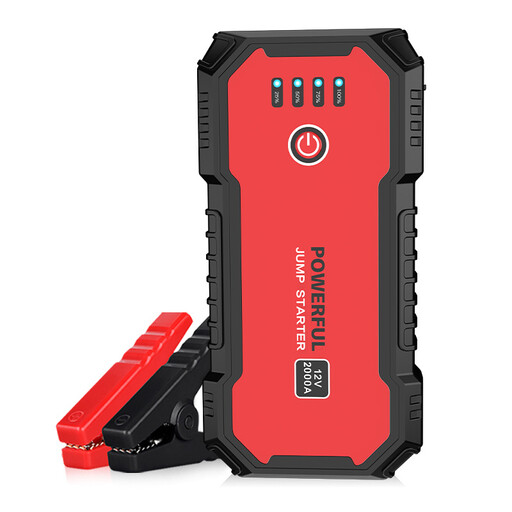
Why we recommend it : This model offers an excellent balance for drivers of city cars, sedans, or small motorcycles. It's compact, lightweight, and stores easily in the glove box, while delivering enough power for most petrol vehicles and mid-sized diesels.
With its 1500 A peak current, it provides appropriate starting power for common vehicles without false promises. Its 14,000 mAh capacity is realistic for its size and ensures multiple starts as well as power bank functionality.
It includes an 18 W QC3.0 fast-charging port to quickly recharge your mobile devices. Its compact form factor and feather-light weight of 430 g make it a discreet and practical travel companion.

Why we recommend it : Designed for owners of SUVs, vans, RVs, or vehicles with large diesel engines. Its massive power and "BOOST" function make it a reliable solution for the most critical situations, including on very low batteries or in freezing temperatures.
Its 4000 A peak power is designed for large engines (up to 10L petrol/diesel, according to the manufacturer). The "BOOST" function allows you to force a start, thus avoiding the trap of boosters that give up on a severely discharged battery.
Its robust, all-metal clamps guarantee unbeatable durability. It can provide over 60 jump starts on a single charge and remains reliable even in extreme temperatures (-20 °C to 60 °C / -4 °F to 140 °F).
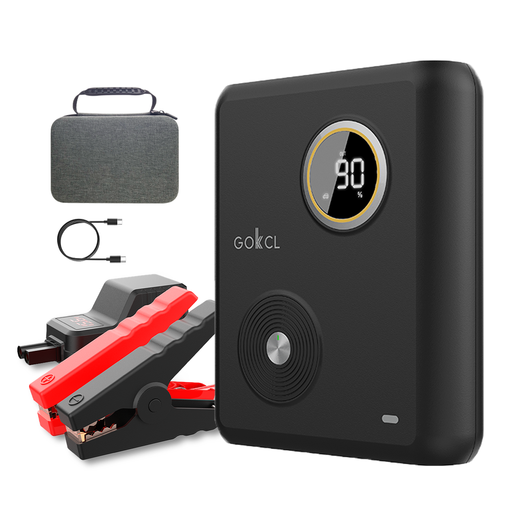
Why we recommend it : For those who demand cutting-edge technology and rock-solid reliability. Its sodium-ion battery sets it apart from lithium models, offering superior safety and durability, especially in extreme weather conditions (mountains, deep cold, high heat).
It shatters the problem of cold-weather performance. The sodium-ion technology works from -40 °C to +80 °C (-40 °F to 176 °F), where lithium batteries lose all their effectiveness. Its very low self-discharge (about 1% per month) means it remains ready to use even after months without being recharged.
Exceptional lifespan (over 6,000 cycles) and enhanced safety (no risk of fire, even if punctured). It can be "revived" even after a complete discharge, unlike some lithium models that would be rendered unusable.
We have compiled a complete and up-to-date selection of products that meet our strict selection criteria and safety standards.
Most lithium-ion jump starters hold their charge for 6 to 12 months. However, due to natural self-discharge, it's advisable to check their charge level and recharge them every 3 to 4 months to ensure they are ready for an emergency. Sodium-ion models, like the GOKKCL GK03, have a much lower self-discharge rate and can last several years without a recharge.
Yes, most 12V boosters are compatible with motorcycle batteries. A motorcycle jump starter is often just a more compact car starter. Simply ensure the booster's power isn't excessive for your two-wheeler's small battery and that the clamps are slim enough to grip the terminals properly.
A quality jump starter with built-in safety features will not damage your vehicle's electronics. So-called "smart" clamps prevent the most common errors (reverse polarity, short circuits), which are the main causes of damage. Always read the user manual and carefully follow the instructions for risk-free use.