
Livraison le jour même ou le lendemain

Qualité garantie

Débloquez vos offres de bienvenue: Livraison GRATUITE | Jusqu'à -80 % | 30 jours d'essai gratuits à JoyPlus
Téléchargez l'application
By Joybuy, Your Product Expert – August 26, 2026
Silence. It's the sound every driver dreads when turning the key on a freezing morning or in a deserted car park. A dead battery can turn any trip into a nightmare of stress and unexpected expenses. The portable jump starter emerges as a lifesaver. The problem? The market is saturated with promises that often don't hold up.
Before you make a choice, it's crucial to avoid the common pitfalls that could render your purchase useless at the worst possible moment.
To ensure you invest in a reliable car jump-starting solution, it's better to focus on a few key technical specifications rather than marketing hype.
Forget peak current. The starting current (sometimes called cranking amps) is the amperage the booster can deliver continuously for several seconds to start your engine. This figure determines its compatibility with your vehicle.
Capacity, expressed in milliampere-hours (mAh), determines the booster's autonomy. The higher it is, the more starting attempts you'll have or the more times you can recharge your smartphone. A portable car battery charger of 15,000 to 20,000 mAh offers an excellent balance between compactness and performance.
Battery technology is just as crucial. While most models use lithium-ion, new technologies like sodium-ion are emerging. They promise significant advantages: increased lifespan (more charge cycles), enhanced safety (less risk of overheating), and much lower self-discharge, making them perfect for long-term storage in a vehicle.
A good car power bank must be safe to use, even in the stress of a breakdown. Check that it includes essential protections:
We've sifted through the market options to identify products that meet specific needs, focusing on performance and reliability.
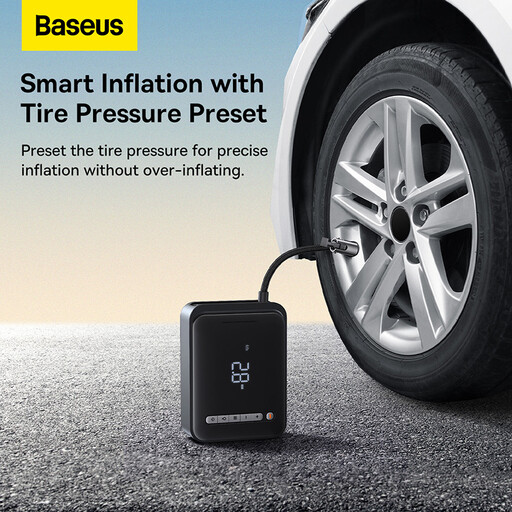
Why we chose it: Perfect for drivers of city cars and petrol sedans looking for a compact and versatile solution. It combines a jump starter and a small compressor for topping up tyre pressure, all in a format that fits in the glove box.
This model doesn't promise outrageous power. Its 500A starting current is clearly calibrated for compact vehicles. The compressor is presented as a top-up solution (5-150 PSI), which avoids the disappointment of a tool that's undersized for heavy-duty use.
Versatility and Compactness: It combines the two most common emergency functions (jump-starting and tyre pressure) in a single device. Dual USB Output: It also serves as a power bank to charge two devices at the same time.
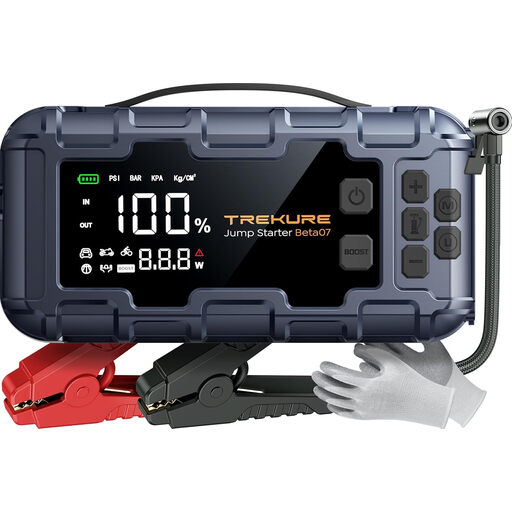
Why we chose it: Designed for owners of large SUVs, camper vans, or diesel vehicles. It offers high starting power and a high-performance compressor (160 PSI, 45 L/min) capable of quickly reinflating a tyre, making it a true Swiss Army knife for long journeys and demanding situations.
It sidesteps the "disappointing all-in-one" trap by integrating a compressor with clear and robust specifications. Its high power is justified by its compatibility with diesel engines up to 12L, making it a coherent choice for large vehicles.
Power and Efficiency: Capable of starting very large engines and inflating a tyre in a flash. Smart Display: The 3.3-inch screen provides clear information on pressure and battery status, simplifying its use in an emergency.
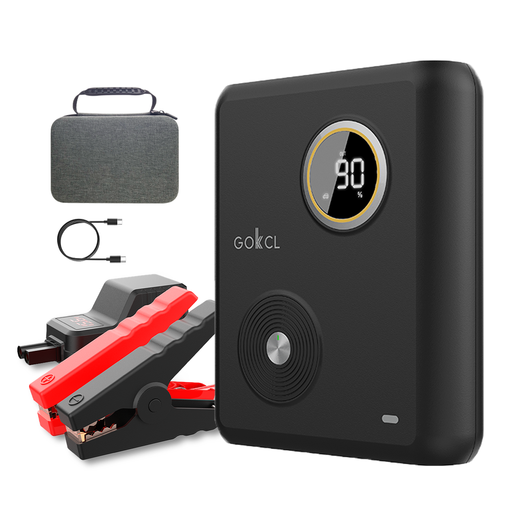
Why we chose it: For those who prioritise long-term reliability and peace of mind. Its sodium-ion battery technology is built to last, with minimal self-discharge and exceptional resistance to extreme temperatures. It's the ultimate "set-it-and-forget-it" purchase.
It directly addresses the "rapid self-discharge" trap. With a discharge rate of about 1% per month, it can remain operational for years on a single charge, whereas conventional lithium batteries require recharging every three months.
Sodium-Ion Technology: A lifespan of up to 6000 cycles and an operating range of -40°C to 80°C. Virtually Zero Maintenance: A single charge can be sufficient for several years of standby, offering unmatched reliability.
We have compiled a complete and up-to-date selection of products that meet our strict selection criteria and current safety standards.
For a diesel engine, the starting current is the number one criterion. This type of engine requires more power to overcome its high compression ratio, especially in cold weather.
It all depends on the battery's technology and quality. Standard lithium-ion models typically lose 3% to 10% of their charge per month, so it's advisable to recharge them every 3 to 6 months. Newer models, especially those based on sodium-ion, have a much lower self-discharge rate (about 1% per month) and can hold their charge for over a year.
Yes, but with some precautions. Most boosters are designed to withstand a specific temperature range, often from -20°C to 60°C. Leaving the device in a car in direct sunlight in summer or in extreme cold in winter can degrade the battery's performance and lifespan. Models specifying a wide operating temperature range (e.g., from -40°C to 80°C) are better suited for being permanently stored in a vehicle.