
Livraison le jour même ou le lendemain

Qualité garantie

Débloquez vos offres de bienvenue: Livraison GRATUITE | Jusqu'à -80 % | 30 jours d'essai gratuits à JoyPlus
Téléchargez l'application
A dead battery: every driver's nightmare. On a freezing winter morning, in a crowded supermarket car park… being stranded is a major source of stress and a huge waste of time. The battery booster, also known as a portable jump starter, is the accessory that gives you back your freedom, without having to wait for a tow truck or a kind fellow driver.
However, the market is flooded with often misleading marketing promises. To prevent a purchase meant to give you peace of mind from turning into a wasted expense, it's best to know the most common pitfalls.
To make the right choice, here are the technical specs that truly matter.
The power of a battery booster is measured by two main values:
For a 12V vehicle, here are some benchmarks:
The battery is the heart of your jump starter. Its capacity in mAh determines the number of starts possible on a single charge, as well as its autonomy as a power bank for recharging your devices (smartphones, tablets).
The battery type and its self-discharge rate are just as important. The majority of models are equipped with lithium-ion batteries, which require recharging every 3 to 6 months to remain operational. Newer technologies, like sodium-ion batteries, show impressive stability and near-zero self-discharge, allowing them to stay charged for several years.
A good jump starter must include electronic protections to avoid damaging your vehicle's battery or the booster itself. Check for the following safety features:
The quality of the clamps is also an excellent indicator of reliability. Sturdy, all-metal clamps connected to sufficiently thick cables are a sign of better conductivity and longevity.
Rather than an endless list, we have selected models that match specific user profiles, based on our criteria for reliability and safety.
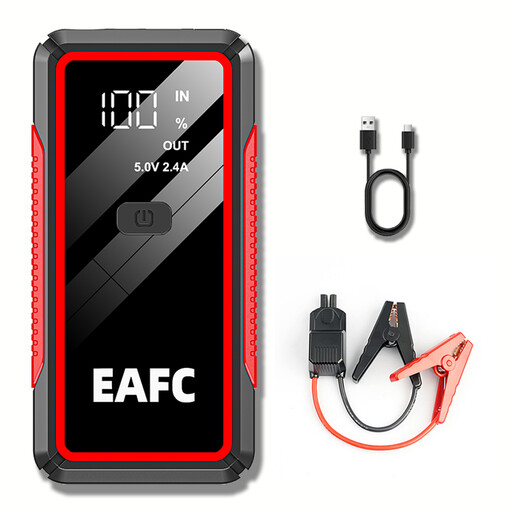
Its profile: Ideal for drivers of city cars, sedans, SUVs, and motorcycles looking for an effective and affordable backup solution. Peace of mind, without superfluous gadgets.
This model doesn't bet everything on an oversized peak current. Its 2,000 A is more than enough for the majority of engines (up to 6.0L petrol / 4.0L diesel), offering an excellent performance-to-price ratio.
Reliable starting power and all the essential safety features in a compact format, all at an affordable price point.
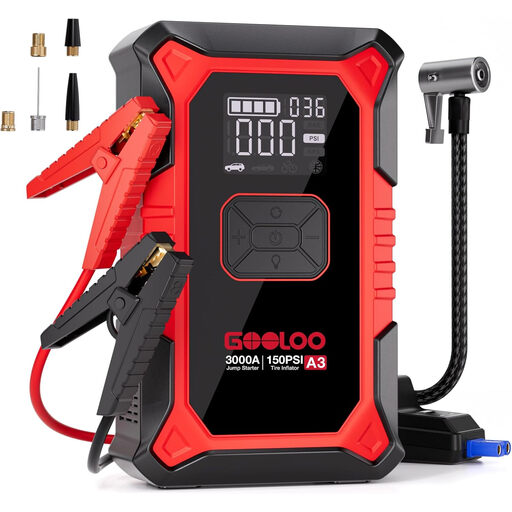
Its profile: Perfect for outdoor enthusiasts, families on road trips, or RV owners. It's a true Swiss Army knife that goes far beyond a simple jump-start.
It avoids the "gadget function" trap by integrating a genuinely powerful 150 PSI air compressor with preset modes and auto-stop. Here, the versatility is truly functional.
It combines a powerful 3,000 A jump starter, a digital air compressor, a power bank, and an LED light. The ultimate road trip companion.

Its profile: For those who prioritize long-term durability and peace of mind. Ideal if you plan to leave the booster in the car all year round and forget about it until the day you need it.
It tackles the Achilles' heel of conventional boosters: self-discharge. Its sodium-ion battery holds its charge for years, freeing you from quarterly recharges and ensuring it will be ready on the day it's needed.
Cutting-edge sodium-ion battery technology, offering enhanced safety, an extreme operating temperature range (-40°C to +80°C), and a record-breaking lifespan (over 6,000 cycles).
Discover our full selection of boosters that meet our performance criteria and European safety standards.
It all depends on its technology and your usage. A standard lithium-ion booster lasts an average of 3 to 5 years and can handle between 400 and 800 charge cycles. To maintain it, it's advisable to recharge it every 3 to 6 months. Newer sodium-ion models shatter these figures, with a lifespan that can exceed 6,000 cycles.
Yes, but with caution. It all depends on the operating temperature range specified by the manufacturer. Lithium batteries do not like extremes: deep cold reduces their efficiency, while intense heat can pose a safety risk. Opt for models designed to withstand extended conditions (e.g., from -40°C to +80°C) if you plan to store it permanently in your vehicle.
No, provided you use a modern model equipped with smart clamps. These integrate a full suite of protections (reverse polarity, short circuits, overvoltage, etc.) that shield your car's sensitive electronics. Using a booster without these safety features should be avoided at all costs.