
Livraison le jour même ou le lendemain

Qualité garantie

Débloquez vos offres de bienvenue: Livraison GRATUITE | Jusqu'à -80 % | 30 jours d'essai gratuits à JoyPlus
Téléchargez l'application
By the Joybuy Editorial Experts – August 28, 2026
It's a classic scenario: a turn of the key, a dreaded click, and then... nothing. Dead battery. It's enough to ruin your day. The solution? A portable jump starter, the accessory that frees you for good from jumper cables, a neighbour's car, or waiting for a tow truck.
The problem is, the market is flooded with models featuring often misleading spec sheets. To help you cut through the clutter, here are the pitfalls to avoid and the real criteria that matter for a smart purchase.
Before you fall for impressive-looking numbers, beware of these three marketing tactics that trap many buyers.
To choose the right car starter for your needs, focus on these three non-negotiable technical criteria.
Forget peak amps and look for the starting amperage (or cranking amps). This is the current the booster can supply continuously for several seconds to turn the starter motor. A large, high-compression diesel engine is far more demanding than a small gasoline engine. Make sure the power is sufficient for your vehicle type.
The most reliable criterion remains the compatibility advertised by the manufacturer in litres (L) of engine displacement. A reputable product will always indicate the maximum engine size it can start, clearly distinguishing between gasoline and diesel engines. For example, a 12V gasoline/diesel booster might be listed as compatible "up to 8.0L gasoline and 6.0L diesel." Ensure your vehicle falls well within this range.
A portable car battery charger worth its salt must include multiple protections to prevent any damage to your vehicle's electronics or the device itself. Essential safety features include:
We have vetted several models based on these objective criteria to bring you a selection tailored to every need.
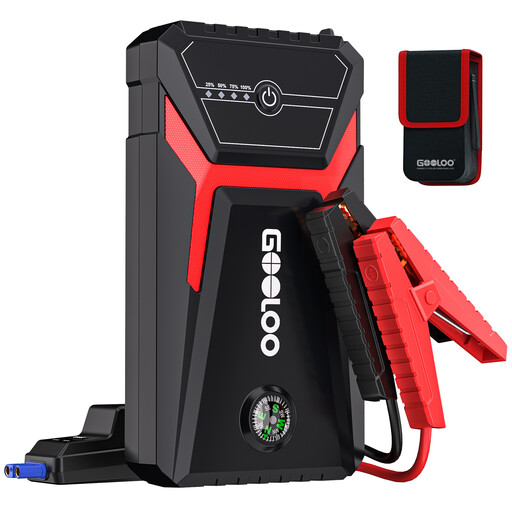
Why we recommend it: Perfect for drivers of city cars, sedans, or small SUVs looking for a compact and reliable emergency solution. It delivers enough power for the majority of vehicles on the road, without being weighed down by unnecessary gadgets.
It focuses on the essentials: jump-starting and power bank functionality, integrating 10 indispensable safety features rather than piling on accessory functions.
Controlled Versatility: Powerful enough for gasoline engines up to 6.0L and diesel up to 4.0L. Compact Design: Slips easily into the glove box.
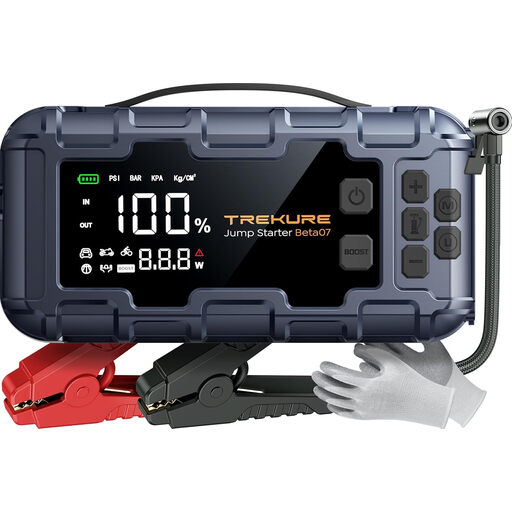
Why we recommend it: Designed for owners of large SUVs, vans, or RVs who are heading out on an adventure. It's the Swiss Army knife for the road, combining massive starting power with an effective air compressor.
Its high amperage isn't just marketing fluff: it's justified by clear compatibility with very large displacement engines (up to 12L diesel), offering real, verifiable power.
All-in-One Solution: Integrates a 160 PSI compressor and 45W PD fast charging. Control Screen: A large 3.3-inch screen clearly displays all information (pressure, charge level, etc.).
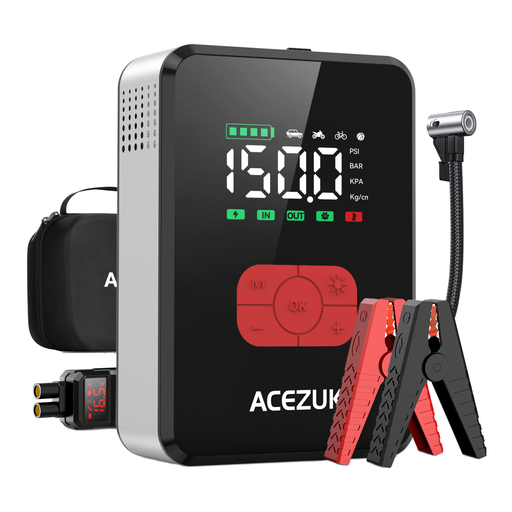
Why we recommend it: Raw power for the most demanding vehicles. Ideal for owners of trucks, commercial vans, or large diesel 4x4s who can't afford a failure.
It meets a need for brute force by advertising compatibility with all gasoline engines and diesels up to 12L, where more modest models would throw in the towel.
Absolute Power: A 7,000A peak current to effortlessly start the most stubborn engines. Smart Clamps: They feature their own screen and audible alerts for enhanced safety.
Explore our full range of products that meet our rigorous selection criteria and current safety standards.
A lithium jump starter has an average lifespan of 3 to 5 years, depending on its use and maintenance. To preserve its longevity, it is advisable to fully recharge it every 2 to 3 months, even when not in use. Store it in a cool, dry place, away from extreme temperatures. The ideal spot? In its case, inside the passenger compartment.
Yes, most recent models have a "Boost" or forced start function. This feature bypasses the voltage detection to manually send current and start a vehicle with a completely dead battery. It is crucial to follow the manufacturer's instructions to the letter to ensure risk-free operation.
No, and this is one of the main pitfalls. As we've seen, peak amperage is often misleading. The most reliable criteria are compatibility with your engine's displacement (in litres, distinguishing between gasoline and diesel) and the presence of comprehensive safety protections. A booster with a moderate peak amperage that is perfectly suited to your engine will always be a better choice than a device with inflated numbers that could prove ineffective, or even dangerous.