
Livraison le jour même ou le lendemain

Qualité garantie

Débloquez vos offres de bienvenue: Livraison GRATUITE | Jusqu'à -80 % | 30 jours d'essai gratuits à JoyPlus
Téléchargez l'application
By the Joybuy Team, our product experts | Published August 27, 2026
A dead battery: every driver's nightmare. A freezing winter morning, a deserted car park... being unable to start your car is always a source of stress and unexpected costs. This is where the jump starter comes in. Compact and self-contained, this accessory has become the essential emergency tool to get you back on the road in minutes, all on your own.
The only problem is that the market is flooded with models making confusing marketing claims. To avoid investing in a gadget that will fail you at the worst possible moment, it's crucial to know how to decode the spec sheets and avoid the most common pitfalls.
The 2 Pitfalls to Avoid Before Buying a Jump Starter:
To make the right choice, focus on the features that truly matter. Here are the two points you should never overlook.
Forget the marketing hype. The only question that matters is: is this jump starter compatible with my vehicle? The answer depends on two things:
Handling a car battery is never without risk. A modern jump starter must include smart clamps with multiple protections. These systems protect the user, the vehicle's electronics, and the jump starter itself. Here are the essential safety features:
A jump starter without these safety features poses a major risk to your car's often fragile electronics.
Rather than an endless list, we've selected three models that meet specific needs, all validated against our reliability and safety criteria.
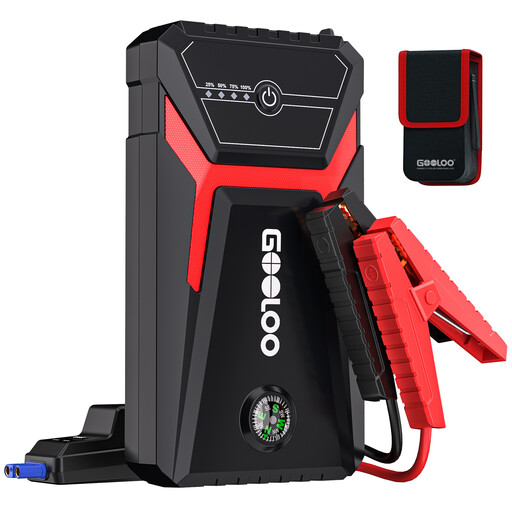
Why it's for you: Perfect for drivers of compact cars, sedans, or small SUVs (petrol engines up to 6.0L and diesel up to 4.0L). It offers the peace of mind of a reliable and compact emergency tool that slips into the glove box, without any unnecessary features.
This model advertises a 1500A power rating that is perfectly calibrated for its target vehicles. No inflated numbers: its performance is consistent with its stated engine compatibility.
The perfect balance between an affordable price, sufficient power for the majority of cars on the road, and a full suite of 10 safety protections.
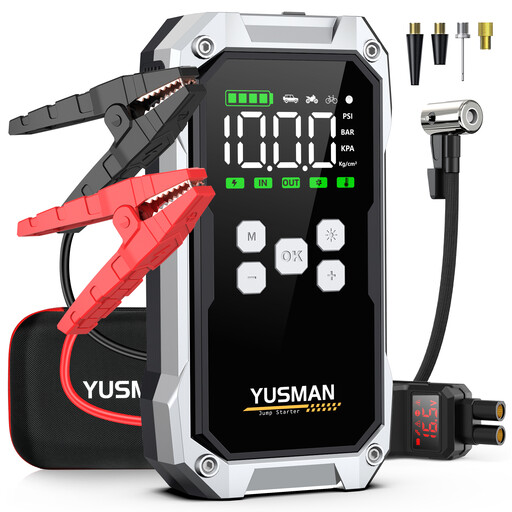
Why it's for you: Built for owners of SUVs, 4x4s, vans, and RVs with large engines (all petrol models / up to 10.0L diesel). Its colossal power and integrated air compressor make it the Swiss Army knife for long trips and unexpected events.
Here, the large 21,800 mAh capacity isn't just a marketing gimmick. It supports a very high starting current (5000A) and an air compressor function, a duo that fully justifies its specs for demanding use.
Its 4-in-1 versatility (starter, 150 PSI compressor, power bank, LED light) makes it a true roadside survival kit, ideal for frequent travellers.
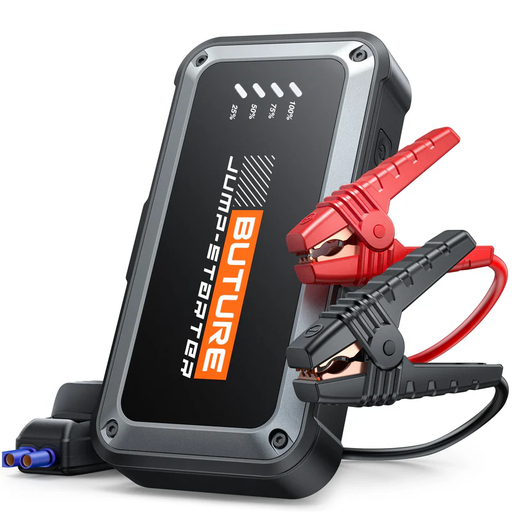
Why it's for you: For those who want a powerful device (up to 9.0L petrol / 8.5L diesel), packed with safety technologies and a sleek design. Its versatility makes it a reliable ally for both breakdowns and outdoor activities.
It goes all-in on safety with its 10 protections and robust design, reassuring those who are hesitant to connect such a powerful device to their car's sensitive electronics.
Its wide-angle, 4-mode LED light, including an orange strobe, ensures optimal visibility and signalling for nighttime emergencies.
We've curated a full selection of products that meet our strict selection criteria and current safety standards.
A lithium jump starter has an average lifespan of 3 to 5 years. This depends on the quality of its components, how often it's used, and its storage conditions. To maximise its longevity, remember to fully recharge it every 2 to 3 months, even when not in use.
Yes, most are designed to be kept in a vehicle. However, you should always check the operating and storage temperature range recommended by the manufacturer. Extreme temperatures (deep freezes or heatwaves) can degrade the battery's performance and lifespan. Opt for a model certified for a wide temperature range (e.g., from -20°C to 60°C).
No, and this is a crucial point: you must not confuse a jump starter with a battery charger. A jump starter delivers a very brief and intense burst of energy, just enough to start the engine. It does not recharge the battery. Once the vehicle has started, the alternator takes over to recharge the battery as you drive.