
Livraison le jour même ou le lendemain

Qualité garantie

Débloquez vos offres de bienvenue: Livraison GRATUITE | Jusqu'à -80 % | 30 jours d'essai gratuits à JoyPlus
Téléchargez l'application
A dead battery. It's a classic scenario, and arguably one of the most frustrating surprises for any driver. That tell-tale click from the ignition, followed by a dead silence, can turn an ordinary day into a real headache. A jump starter, also known as a portable car starter, is the modern solution to get you back on the road on your own, without depending on another vehicle and a set of jumper cables.
The catch? The market is flooded with models making tempting promises, and it's easy to get lost. Before you pull out your credit card, it's crucial to understand the most common marketing traps so you don't invest in a device that will fail you when you need it most.
To ensure you choose a reliable battery starter, focus on a handful of fundamental technical specifications. These are the real deciding factors for evaluating a model's quality and suitability for your needs.
Forget peak amps for a moment and look for a much more concrete piece of information: compatibility with your engine's displacement (expressed in litres). This is the most direct criterion for knowing if a booster will be effective.
Sturdy clamps and sufficiently thick cables are also a guarantee of safety and efficiency for a successful jump-start.
The heart of your booster is its internal battery. Its technology determines its lifespan, reliability, and safety.
Ancillary functions should be judged on their merits—that is, on their actual performance.
To help you see more clearly, we have selected a few models that match specific user profiles, always based on our criteria of performance and reliability.
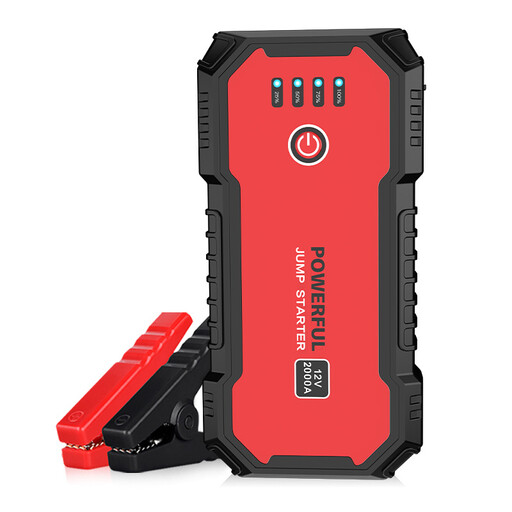
Why it's for you : Ideal for drivers of city cars, sedans, or small SUVs looking for a compact emergency solution that's easy to slip into the glove box. It gives you peace of mind without the burden of an oversized device.
This model doesn't rely on inflated peak numbers. Its 1500 A is calibrated for the most common 12 V vehicles, offering sufficient and verified starting power without making you pay for unnecessary capacity.
Its ultra-compact size and light weight (430 g) make it a piece of equipment you'll forget is even there. The 18 W QC3.0 fast charging function is a welcome bonus for reviving your portable devices.
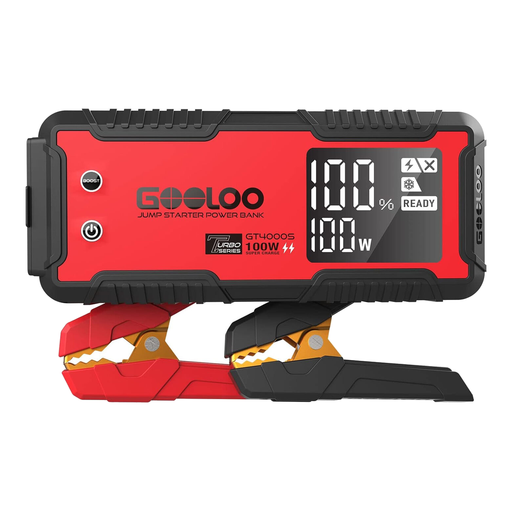
Why it's for you : Built for owners of SUVs, 4x4s, RVs, or commercial vans equipped with large engines (up to 10.0 L diesel). Its firepower ensures reliable starts, even in the harshest conditions.
It bypasses the self-discharge problem with its 100 W two-way fast charging. According to the manufacturer, 5 minutes of charging is enough for a jump-start, making it ready to go even if you forgot to plug it in.
Its 4000 A power is more than a match for the most demanding engines. The 100 W fast charging via USB-C can also efficiently power a laptop, turning it into a true portable power station.
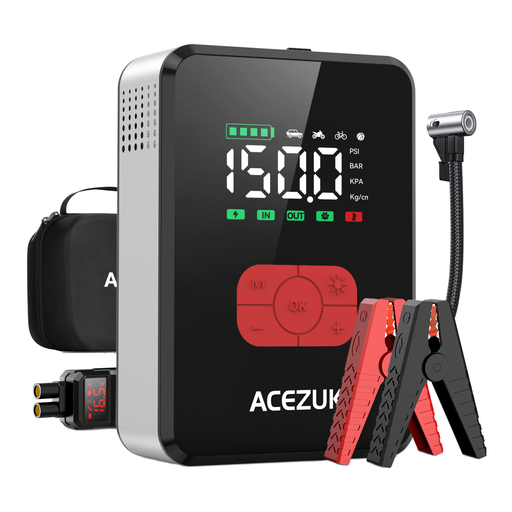
Why it's for you : The ideal companion for camping enthusiasts, van-lifers, or outdoor adventurers. It combines a super-powerful starter with a digital air compressor to handle everything from tires to air mattresses and other recreational gear.
It avoids the "useless gadget" trap by integrating a genuinely high-performance air compressor (150 PSI) with a large 3.3-inch screen, preset modes, and auto-stop. It's a functional tool, not just a marketing gimmick.
The combination of colossal starting power (7000 A) and a smart compressor makes it a true Swiss Army knife for both roadside emergencies and recreational activities, all in one rugged device.
We have compiled a complete and up-to-date selection of products that meet our strict selection criteria and current safety standards.
The required power depends on the engine size and type. For a petrol city car, 1500 peak amps may be enough. For a large SUV or a diesel engine, which requires more power to start, it's better to aim for 3000?A or more for rock-solid performance, especially in extreme cold where batteries lose efficiency.
It all depends on the quality of its internal battery and its self-discharge rate. Entry-level models can lose a significant portion of their charge in just 2 to 3 months. Higher-quality devices, especially those with sodium-ion batteries, can hold a charge for over a year. As a precaution, it's advisable to check and recharge your booster every 3 to 6 months to ensure it's always ready to go.
This is a critical safety question. Conventional lithium-ion batteries have a limited operating temperature range (typically between -20?°C and 60?°C). Leaving them in a sweltering car in summer or a freezing one in winter can damage them and, in extreme cases, pose a risk. Newer models, particularly those based on sodium-ion, are designed to withstand much more extreme temperatures (from -40?°C to 80?°C, for example), making them much safer for permanent storage in a vehicle. Always check the manufacturer's specifications before leaving it in your trunk year-round.