
Livraison le jour même ou le lendemain

Qualité garantie

Débloquez vos offres de bienvenue: Livraison GRATUITE | Jusqu'à -80 % | 30 jours d'essai gratuits à JoyPlus
Téléchargez l'application
It's a freezing winter morning. You turn the key and... nothing. Just that ominous 'click-click-click'. A dead battery. It's every driver's nightmare, yet a situation that's easy to solve with a good jump starter. The problem? The market is a jungle of options and often misleading marketing claims.
To help you see things more clearly, our experts have analysed hundreds of spec sheets and customer reviews. The goal: to identify the 3 common pitfalls that lead to buyer's remorse. Before you make a decision, keep an eye out for these crucial points:
To avoid falling into the trap, focus on the features that really matter. They are the guarantee of your future portable car starter's performance and reliability.
There are two values to distinguish:
A good jump starter must be compatible with both petrol and diesel engines. Being more power-hungry due to their high compression ratio, diesel engines require more juice to start, particularly in winter.
Expressed in mAh, the capacity determines the number of starts possible on a single charge, as well as its endurance as a power bank. A capacity of 14,000 to 20,000 mAh represents an excellent balance for most users.
Think about recharging, too! A modern jump starter must function as a fast-charging power bank. Look for the presence of QC3.0 (Quick Charge) USB ports for your smartphones and, ideally, a PD (Power Delivery) USB-C port. The best models even transform into a laptop power bank, delivering 65W or more.
A good car accessory is a versatile one. Here are the functions that bring undeniable added value:
Rather than an endless list, we've selected models that meet specific needs, based on our strict criteria for performance and reliability.
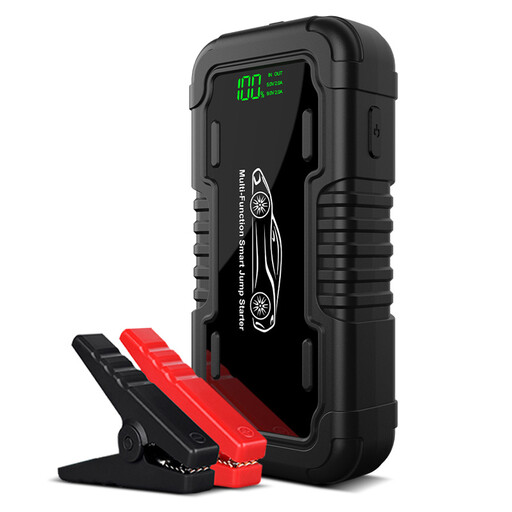
Ideal for daily commutes and family holidays. It ensures a reliable start for most vehicles (petrol and diesel) and its generous 20,000 mAh capacity can recharge smartphones and tablets several times during the trip.
It doesn't rely on a marketing-driven peak amp figure. With 800A of starting current and a usable capacity of 16,000 mAh, its performance is tangible and verifiable. The 18W QC3.0 fast charging is a real plus, not a gimmick.
The perfect balance of power, battery life, and compactness. Its LCD screen lets you see the remaining charge level at a glance.
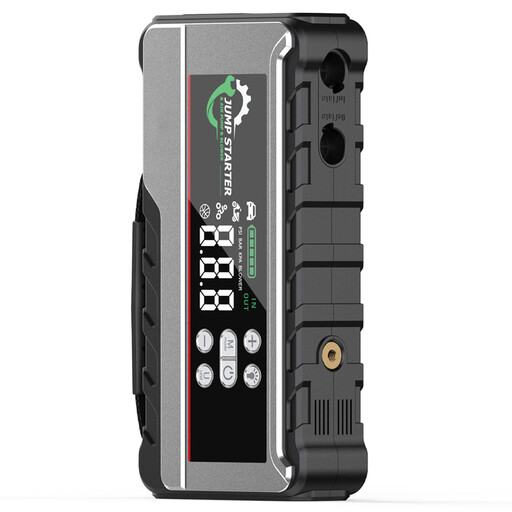
Designed for road trip enthusiasts, van-lifers, and owners of large vehicles (SUVs, 4x4s, vans). It's a true portable power station that combines a heavy-duty starter, an efficient compressor, and laptop charging.
Here, "all-in-one" is not a gimmick. The features are genuinely high-performance: the compressor reaches 150 PSI and the 65W Power Delivery charging, a reliable standard, recharges a laptop at full speed. A rare and valuable feature.
The all-in-one solution without compromise. Heavy-duty starting (3000A), fast tyre inflation, and ultra-fast charging for all your devices, including laptops.
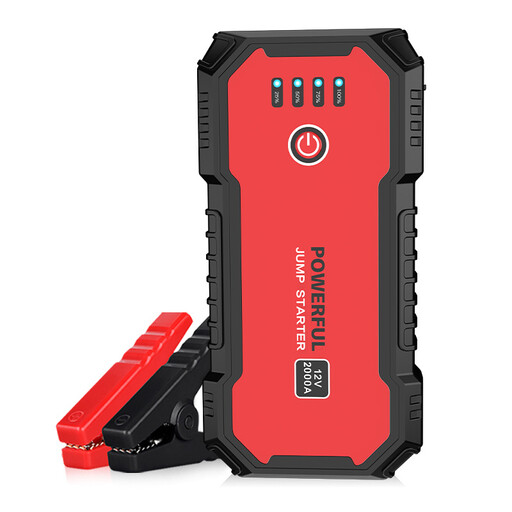
For the driver who wants an effective, compact, and affordable emergency solution. This model gets straight to the point: starting the car. Its feather-light design fits easily in the glove box.
This model doesn't overpromise; it delivers. Its 1500A peak power is perfectly calibrated for most city cars and petrol saloons. It focuses on its primary mission, without unnecessary frills that would drive up the price.
An unbeatable performance-to-price ratio, focused on the essentials. It still includes QC3.0 fast charging and an emergency light, making it a complete and accessible safety kit.
Discover our full selection of products that meet our rigorous selection criteria and European safety standards.
It all depends on your engine's displacement and fuel type.
Yes, but with a few precautions. The lithium batteries in these devices don't like extreme temperatures. Avoid leaving it in direct sunlight on the dashboard during a heatwave, or exposing it to intense, prolonged frost. Most models have a specified operating range (e.g., -20°C to 60°C). To maximise its lifespan, it's best to keep it in the glove box or boot, out of the sun.
The distinction is crucial.