
Livraison le jour même ou le lendemain

Qualité garantie

Débloquez vos offres de bienvenue: Livraison GRATUITE | Jusqu'à -80 % | 30 jours d'essai gratuits à JoyPlus
Téléchargez l'application
A dead battery or a flat tire: a classic problem that always strikes at the worst possible moment. To combat these headaches, a jump starter with an air compressor is the all-in-one miracle solution. The problem? The market is flooded with misleading marketing promises. Behind the dazzling amperage ratings and endless feature lists, you'll often find disappointing devices.
To avoid investing in a gadget that will fail you when you need it most, it's crucial to know how to spot the most common pitfalls.
To get a truly reliable emergency car tool, you need to look beyond the marketing and focus on tangible technical criteria.
To choose a portable car starter that won't let you down, you need to understand a few key concepts. These are the specifications that determine the device's performance, reliability, and safety.
The difference is crucial.
A good car jump starter must therefore have starting amps (CA) that are consistent with its peak power and, most importantly, suitable for your engine type.
The versatility of a multi-function booster depends on the quality of its components.
A 12V emergency starter handles extremely high currents. Its protection systems are therefore absolutely non-negotiable. Check that the model is equipped with smart clamps (a power bank with clamps) that include a full suite of protections:
These safeguards protect your vehicle's electronics and the booster itself, ensuring stress-free use, even in an emergency.
We have selected three models that stand out for their suitability for different user profiles, applying our strict performance and safety criteria.
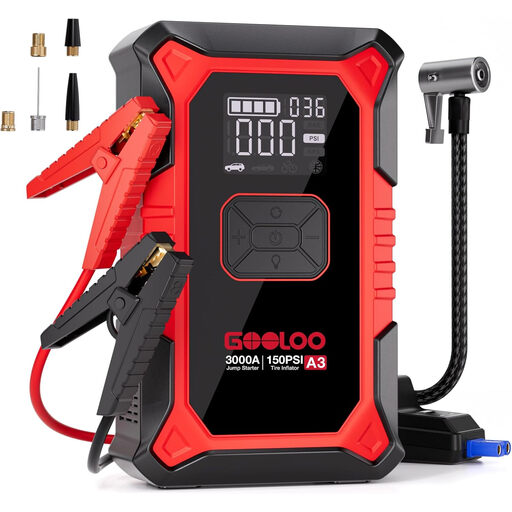
Why we love it: Perfect for family and daily use, this model offers an excellent balance of power, versatility, and simplicity. Easy to use even for beginners, it's the ultimate reassuring device to keep in your trunk.
It avoids the anemic compressor trap with its 5 preset inflation modes and a respectable 35 L/min air flow rate. This ensures efficient and fast inflation without the risk of overheating, with real-time monitoring on the digital screen.
7-in-1 Versatility: It combines the functions of a jump starter, compressor, power bank, LED light, and pressure gauge. "BOOST" Function: Allows you to force a start even on a nearly dead car battery.
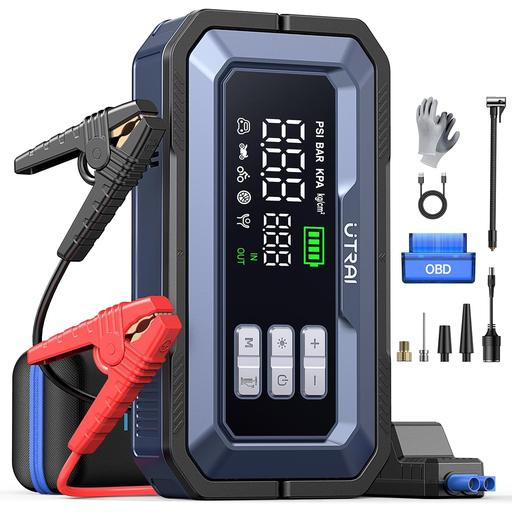
Why we love it: Built for tough jobs, this powerhouse delivers a starting current capable of reviving the largest diesel engines (up to 14L, according to the manufacturer). A sensible choice for owners of SUVs, vans, or RVs.
It doesn't bluff on power: with 7000A peak and, more importantly, 1000A of starting current, it boasts credible specs sized for power-hungry engines.
Raw Power: Suitable for diesel engines up to 14L. Pro Features: Includes a 160W DC output (cigarette lighter type) to power 12V equipment and a powerful 2000-lumen work light.
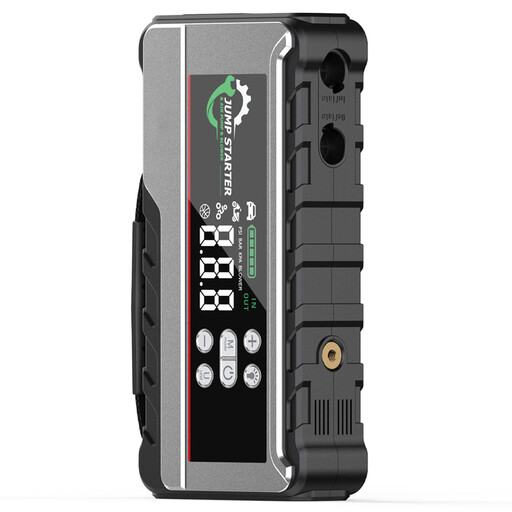
Why we love it: The adventurer's Swiss Army knife. More than just a starter, it's a true road trip or camping companion, capable of charging a laptop at full speed and even serving as an air blower.
It demolishes the problem of poor battery life and slow charging with its 65W PD two-way fast charging. Not only does it charge your devices (including a MacBook) at top speed, but it also recharges itself in about 1 hour and 15 minutes.
Ultra-Fast 65W PD Charging: Ideal for charging a laptop on the go. Blower/Inflator Function: Extremely handy for air mattresses, kayaks, or cleaning off camping gear.
Discover our complete selection of products that meet our rigorous selection criteria and essential safety standards.
Its longevity depends on its battery technology (lithium-ion, etc.) and your usage. A quality model can last for several years. To preserve its battery, fully recharge it every 3 to 6 months, even when not in use. Most importantly, never leave it completely discharged for an extended period.
Not necessarily. A huge peak amperage is useless if the starting amps (CA) aren't up to the task for your engine. For a small petrol city car, a 1500A booster is more than enough. For a large diesel SUV, you should aim for a 3000A model or higher. The key is to choose a power level appropriate for your vehicle's engine size and type.
Most models are designed to withstand a wide range of temperatures (e.g., -20°C to 60°C), so they can be left in your car. However, be aware that prolonged exposure to extreme temperatures (heatwaves or deep freezes) can degrade the battery's performance and lifespan. Always check the manufacturer's recommended temperature range and avoid leaving it in direct sunlight behind the windshield in summer.