
Livraison le jour même ou le lendemain

Qualité garantie

Débloquez vos offres de bienvenue: Livraison GRATUITE | Jusqu'à -80 % | 30 jours d'essai gratuits à JoyPlus
Téléchargez l'application
A dead battery on a cold morning or an underinflated tire far from any service station: two classic breakdowns every driver dreads. The idea of a single device that solves both problems is undeniably appealing. The jump starter with air compressor promises this peace of mind. However, the market is saturated with products featuring often-embellished technical specs, which too often lead to disappointing purchases.
As the Head of Product Recommendations at Joybuy, my role is to equip you to decipher spec sheets and avoid common pitfalls. Here’s how to identify a reliable device that won’t let you down when it matters most, without blindly trusting marketing claims.
Before you get swayed by promising packaging, be wary of these three weak points that make many models almost useless in real-world conditions:
electric tire inflator with very limited performance. Slow, noisy, and prone to overheating after just a few minutes, they often struggle to reinflate a simple bicycle tire. For a car tire, the process can become endless, if not impossible.To ensure you invest in a portable car starter that delivers on its promises, focus on these objective characteristics.
Ignore the spectacular amperage figures and look for engine compatibility, a much more reliable indicator. Reputable manufacturers specify the maximum engine displacement they can handle:
gas and diesel car jump starter, ensure that diesel compatibility is clearly stated (e.g., up to 7.0L or more for large vehicles).A good multifunction starter must also include comprehensive safety features (reverse polarity, anti-spark, overload protection) to avoid damaging your vehicle's electronics.
An effective compressor isn't just judged by its maximum pressure (150 PSI or 10 Bar is a common standard). The decisive criterion is the airflow, measured in liters per minute (L/min). A high flow rate (e.g., 35-45 L/min) means inflation will be fast.
Also, check for an auto-stop function. It allows you to preset the target pressure: the compressor then stops automatically, preventing any risk of over-inflation and freeing you from having to monitor the process.
To assess the energy reserve, rely on the capacity in Watt-hours (Wh), a standardized and unambiguous measurement. A higher Wh capacity means more starting attempts or more recharges for your devices.
The car power bank feature has become standard, but its performance varies. Look for USB-C ports with Power Delivery (PD). They not only allow you to quickly charge your phone or laptop but also to recharge the jump starter itself in record time. A DC output port (12V/15V) is a welcome bonus for powering other car accessories like a cooler or a vacuum cleaner.
Here are a few options that meet specific needs, taking into account performance and reliability criteria.
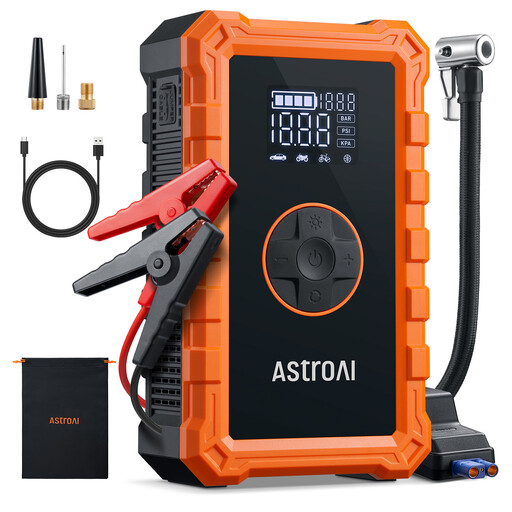
Why we chose it: Ideal for drivers of city cars and gasoline sedans looking for a compact, affordable, all-in-one solution for everyday emergencies. Its power is suitable for the majority of cars on the road (up to 6.0L gasoline), and its compressor is perfect for routine tire pressure maintenance.
It doesn't promise outrageous power. Its 1500 A are targeted for common engines. Its compressor includes an auto-stop feature, making it practical and avoiding the trap of being a useless gimmick.
Compact and simple: Its large 2.4-inch screen is very readable, and its compact size allows it to be easily stored in the glove box. The inflator's auto-stop function is a real plus at this price point.

Why we chose it: Designed for owners of SUVs, vans, or diesel cars (up to 8.0L). Its high starting power and robust design make it reliable for long trips and harsh weather conditions. In short, it's the complete safety tool for those who refuse to compromise on the road.
Its power is justified by its compatibility with large diesel engines. The compressor is not a gimmick: it has 5 preset modes and an auto-stop function, making it genuinely practical on the road.
Power and versatility: Compatibility with engines up to 9.0L gasoline / 8.0L diesel covers a very wide range of vehicles. The cooling technology and 10 intelligent protection levels inspire confidence.
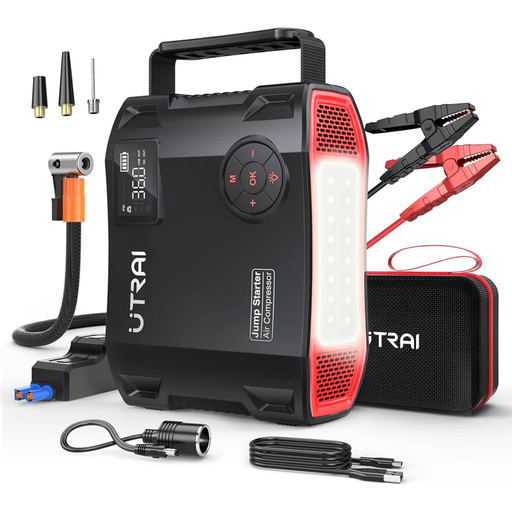
Why we chose it: For those who own very demanding vehicles (large utility vans, RVs, boats) or need a portable power source. Its massive starting power and 160W DC output make it a true Swiss Army knife for outdoor activities and semi-professional use.
It justifies its high amperage with compatibility for diesel engines up to 10.0L. Its compressor offers a high airflow (45 L/min), making it much faster than entry-level models.
160W DC Output: This is its real standout feature. This output can directly power 12V devices like an electric cooler, a car vacuum, or a water pump—a major advantage for camping and long trips.
We have compiled a complete and updated list of products that meet these strict selection criteria and current safety standards.
Its lifespan primarily depends on the quality of its internal battery and its maintenance. Most models use lithium-ion batteries designed for several hundred charge cycles. To preserve its longevity, it is advisable to recharge the device every 3 to 6 months, even when not in use. This simple step prevents deep discharge, which could irreversibly damage the battery.
Yes, but with a few precautions. Most jump starters are designed to withstand a wide temperature range (e.g., from -20°C to 60°C). However, leaving the device in direct sunlight inside a car during a heatwave can expose the battery to extreme temperatures and reduce its lifespan. It's best to store it in the glove box or under a seat to protect it from direct sunlight.
Not necessarily. Very high amperage is essential for large diesel engines or utility vehicles, but it's overkill for a small gasoline car. Choosing a model that is oversized for your vehicle will provide no benefit in starting performance but will mean a higher purchase cost and a bulkier device. It's better to choose a jump starter suited to your engine's displacement: it's smarter and more cost-effective.