Joybuy Insights

Jumbo Colouring Pencils for Kids: A Guide to Choosing the Right Set

Choosing colouring pencils for a young child? Child's play, in theory. In practice, the school supplies aisle often feels like a complete puzzle. Between marketing promises and a jungle of options, it's easy to make the wrong choice and leave with pencils that will frustrate your budding artist more than they stimulate their creativity. As product experts at Joybuy, our mission is to do the groundwork for you. Let's break down the pitfalls to avoid and the criteria that truly matter for making the right choice.

The 3 Common Pitfalls When Buying Pencils for Kids

Before you even start comparing boxes, let's learn to spot the flaws that too often turn a promising purchase into a major disappointment.

  1. The supposedly "unbreakable" lead that shatters inside: It's a familiar story: after a few drops (unavoidable with a child), the lead fractures along its entire length inside the wood casing. The result: the pencil becomes impossible to sharpen, leading to frustration and waste.
  2. Poor ergonomics that tire and discourage your child: A pencil that's too thin or perfectly cylindrical is a challenge for little hands. The child has to grip too hard, gets tired quickly, and struggles to develop a proper grip (the famous pincer grasp), which is essential for learning to write.
  3. A lack of versatility that stifles creativity: Sticking to basic pencils can mean missing out. Options like watercolour pencils or multi-surface pencils open up a much wider world of possibilities, turning a simple colouring session into a true artistic exploration.

The Essential Criteria for a Successful Purchase

To avoid being fooled by marketing slogans, focus on a few concrete technical points.

1. Ergonomics: The Key to Comfort for Little Hands

Grip is the number one criterion for children aged 2-8. It determines not only the child's comfort but also the proper development of their fine motor skills.

  • Shape: Opt for triangular colouring pencils. Their shape naturally guides finger placement (the classic thumb-index-middle finger grip) and, as a significant bonus, prevents them from rolling off the table.
  • Diameter: A wide barrel, often called "Jumbo," is much easier for toddlers to grip. These ergonomic pencils for small hands ensure a tension-free hold, perfect for long drawing sessions.

2. Durability: The End of Broken Leads

To put an end to the broken lead syndrome, there are two things to check:

  • Lead Diameter: A standard lead is about 2.5 mm. For a young child, aim for much wider: thick leads ranging from 4.2 mm for classic wooden pencils up to 10 mm for multi-purpose pencils. They are inherently more resistant to impact and pressure.
  • Pencil Type:Unbreakable wax crayons are an excellent alternative. Made entirely of colouring material, they have no fragile internal lead and can be used down to the very last centimetre.

3. Versatility and Safety: For Limitless (and Stress-Free) Creativity

Some pencils go far beyond simple colouring on paper, multiplying the creative possibilities.

  • 3-in-1 Pencils: Star products like the Stabilo Woody 3 in 1 combine a colouring pencil, wax crayon, and watercolour pencil. Their ultra-pigmented lead works on a host of surfaces (paper, cardboard, glass, whiteboards...) and wipes clean from smooth surfaces with a cloth.
  • Washability: For parents' peace of mind, check for the "washable" label. We're all familiar with washable markers for kids, but this option also exists for pencils, allowing for easy cleanup of stains on skin and most fabrics.

Our Top Picks for Every Age and Artist

Instead of an endless list, here are our targeted recommendations that tick all the right boxes and avoid the pitfalls we've just discussed.
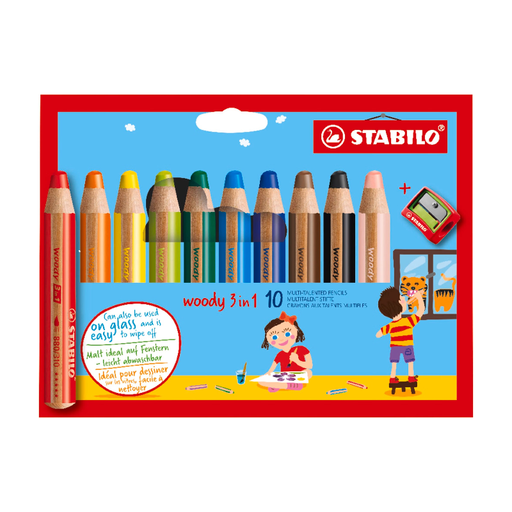
IDEAL FOR: FIRST-TIME SCRIBBLERS (AGES 2-4)
STABILO Woody 3 In 1 - Cardboard Box of 10 Assorted Units + Woody Pencil Sharpener

STABILO Woody 3 in 1: Box of 10 with Sharpener

Why we love it: It's the perfect pencil for toddlers just discovering drawing. Its XXL barrel is ultra-easy to grip, and its versatility (pencil, wax crayon, watercolour) is an invitation to experiment on paper, as well as on windows or a whiteboard. All with super-easy cleanup.

The Pitfall-Proof Feature

Its XXL 10 mm lead is virtually indestructible: it withstands drops and heavy pressure. Its thick barrel is perfectly suited for hands that haven't yet mastered a fine pincer grasp.

Its Key Strength

Its 3-in-1 versatility and multi-surface use unleash creativity far beyond a simple sheet of paper.
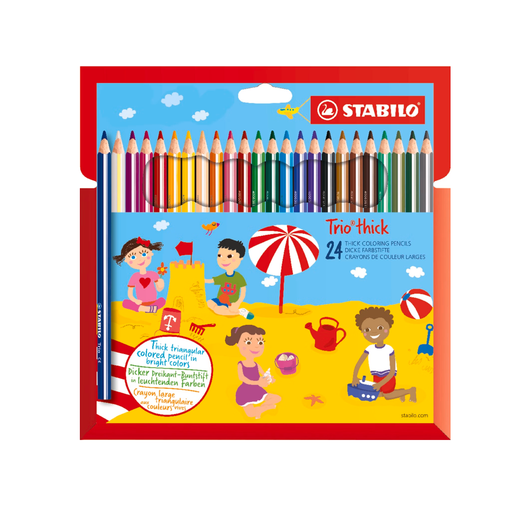
IDEAL FOR: STARTING PRESCHOOL (AGES 4-6)
STABILO Trio Thick Colouring Pencils Assorted Colours, Pack of 24

STABILO Trio Thick: Colouring Pencils, Pack of 24

Why we love it: This is the perfect companion for preschoolers refining their motor skills. Its triangular shape, often recommended by teachers, helps prepare them for writing. The 24-colour palette already offers a rich creative range.

The Pitfall-Proof Feature

Its triangular shape directly tackles the problem of poor grip and fatigue. The 4.2 mm lead offers an excellent balance of durability and precision for colouring.

Its Key Strength

A perfectly ergonomic tool that supports a child's development while ensuring a rich and long-lasting colouring experience.
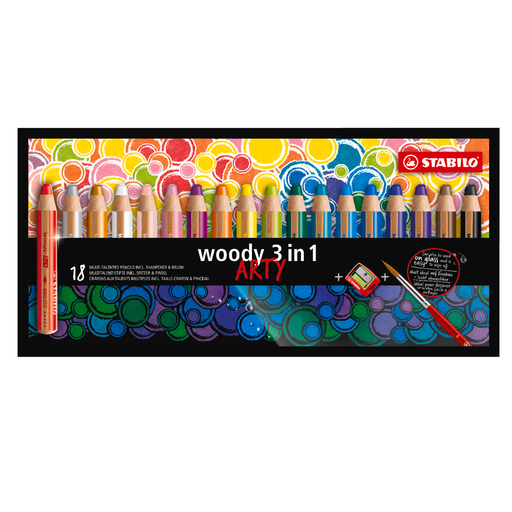
IDEAL FOR: BUDDING ARTISTS (AGES 5-8)
STABILO Woody 3-in-1 - Multi-Talented Pencil - ARTY - Pack of 18 - Assorted Colours with Sharpener and Paint Brush

STABILO Woody 3-in-1 ARTY: Set of 18 with Brush

Why we love it: For children who already love to explore and mix techniques. This comprehensive set includes 18 rich colours and a brush to turn a drawing into a true watercolour in the blink of an eye.

The Pitfall-Proof Feature

It combats boredom by offering maximum versatility. The durability of the 10 mm lead remains a major asset, even for older children who are still just as... energetic.

Its Key Strength

A true all-in-one creative kit that encourages artistic experimentation far beyond simple colouring.

Want to see more options?

We have curated a complete selection of products that meet our quality criteria and European safety standards.

Frequently Asked Questions (FAQ)

At what age can a child start using jumbo colouring pencils?

From 18 months to 2 years, a child can start handling jumbo colouring pencils, always under supervision. At this age, the goal isn't precise drawing but sensory discovery: the feel of the pencil in their hand, the magic of colour appearing on paper. Very wide and durable models like the Stabilo Woody are perfect for this stage.

How can you ensure a pencil is safe for a child?

The CE mark on the packaging is essential: it guarantees that the product complies with European Union safety standards. For the youngest children, also check for the absence of small, detachable parts (caps, etc.) that could pose a choking hazard. The "non-toxic" label is also a standard to look for.

Wax crayons, wood pencils, or 3-in-1: which to choose?

  • Wax Crayons: Perfect for toddlers (ages 2-3). Very durable, they don't need sharpening and lay down intense colour effortlessly.
  • Jumbo Wood Pencils: Ideal as a transition for ages 3-5. Triangular models are excellent for developing the proper grip needed for writing.
  • 3-in-1 Pencils: The best choice for curious and creative kids (from age 3). Their versatility allows them to explore different techniques (including watercolour) with a single tool.