
Livraison le jour même ou le lendemain

Qualité garantie

Débloquez vos offres de bienvenue: Livraison GRATUITE | Jusqu'à -80 % | 30 jours d'essai gratuits à JoyPlus
Téléchargez l'application
Getting started with homemade fruit and vegetable juices is an excellent idea. But be warned: the juicer market is a jungle of marketing promises where an enthusiastic purchase can quickly turn into a disappointment. To prevent your new appliance from ending up collecting dust in a cupboard, it's essential to know the most common pitfalls.
As a product selection expert at Joybuy, my role is to help you navigate this landscape. Here are the three classic mistakes to avoid at all costs:
To make the right choice, cut through the marketing jargon. Focus on the features that are a real game-changer in daily use. Here are the three key points to analyze.
This is the criterion that distinguishes two major families of appliances:
slow juicer): It operates with an auger that slowly presses the produce. Its rotation speed is generally below 100 revolutions per minute (RPM). This gentle, low-heat process better preserves vitamins, enzymes, and nutrients that are sensitive to oxidation. The juice is more uniform and can be stored a little longer.The choice therefore depends on your priorities: speed for the centrifugal juicer, nutritional quality for the cold press juicer.
Simple cleaning is the absolute must for your juicing machine to become a daily ally. Before you decide, check the following points:
The size of the feed chute is a crucial convenience factor. A wide chute (larger than 75 mm) allows you to insert whole fruits (apples, peeled oranges...) and spares you the chore of chopping. Models with extra-large chutes (over 100 mm) offer the ultimate in convenience.
The perfect appliance doesn't exist. The best choice will always be the one that fits your lifestyle, habits, and budget. Here are our recommendations for different user profiles.
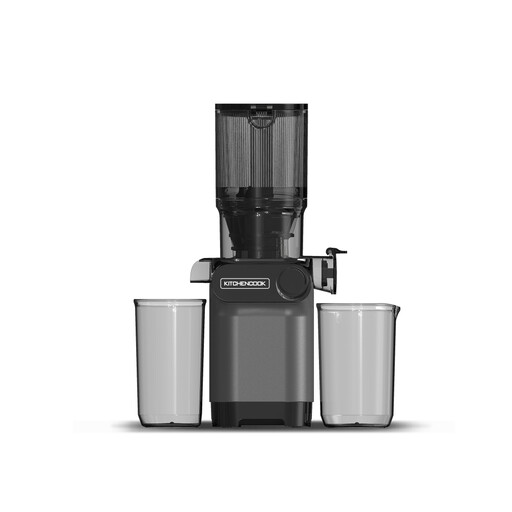
Why it stands out: This juicer is designed for those who want to explore a wide variety of juices (hard fruits, root vegetables, herbs) while ensuring optimal nutrient preservation thanks to its cold press extraction technology.
Its extra-large 108 mm feed chute puts an end to the prep work chore. No more chopping—you can insert whole fruits.
Its slow rotation speed (45-70 RPM) ensures cold press extraction that limits oxidation. The "reverse" function and included brush make cleaning significantly easier.
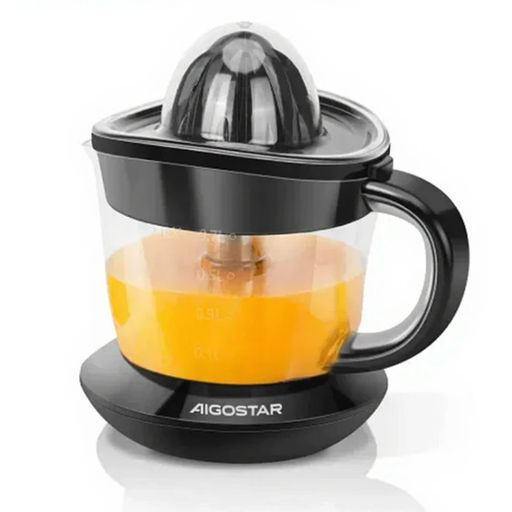
Why it stands out: This electric citrus juicer is perfect for the morning ritual. It's simple, fast, and efficient for juicing oranges, lemons, or grapefruits, without the complexity of a full-featured juicer.
It helps you avoid the trap of buying more than you need. No need for a heavy-duty machine for a simple glass of orange juice. Its assembly and maintenance are incredibly simple.
The bi-directional rotation maximizes juice extraction. The two included cones adapt to different citrus sizes, and the removable parts are dishwasher-safe.
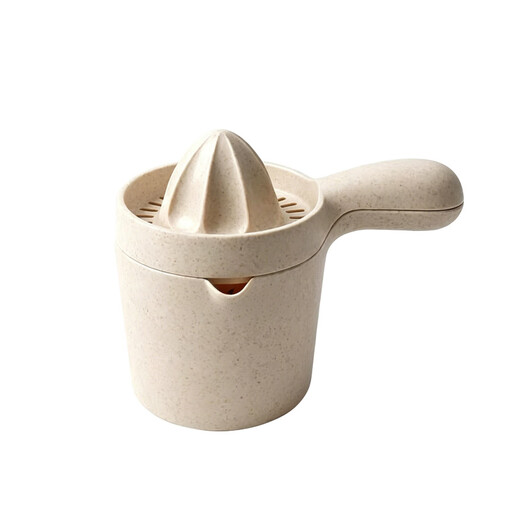
Why it stands out: This manual citrus juicer is a simple, economical, and compact solution for making fresh juice from time to time, for a recipe or breakfast, without investing in a more expensive electric appliance.
It bypasses the drawbacks of electric appliances: no noise, no breakdowns, no complicated cleaning. Zero hassle, and it cleans in a flash.
Its manual design is robust, and its 500 ml capacity is practical for preparing one or two glasses. It stores easily in a drawer or cupboard.
For those who prioritize simplicity and efficiency, we have selected a complete range of appliances that meet a demanding set of specifications.
The fundamental difference lies in the extraction technology. A cold press juicer (slow juicer) slowly presses produce (less than 100 RPM) to extract the juice, which better preserves nutrients. A centrifugal juicer grinds produce at a very high speed (over 1000 RPM) and uses centrifugal force to separate the juice from the pulp. The cold press juicer is more versatile (effective on leafy greens) and produces a higher-quality, more nutritious juice, while the centrifugal juicer is all about speed.
It really depends on the model, and this is a classic pitfall. Fortunately, manufacturers have made huge progress. Modern models are much simpler to maintain. Our advice: opt for appliances with few parts, dishwasher-safe components, and an included cleaning brush. The "reverse" function is also a real plus to prevent pulp from jamming the mechanism, making disassembly easier.
Absolutely not, and this is a crucial point. Cold press juicers, with their pressing auger, are far more effective at extracting juice from leafy greens, herbs, or wheatgrass. Centrifugal juicers, on the other hand, tend to just eject these light ingredients without extracting much, if any, juice. If green juices are your priority, a slow juicer isn't just an option: it's a must-have.