
Livraison le jour même ou le lendemain

Qualité garantie

Débloquez vos offres de bienvenue: Livraison GRATUITE | Jusqu'à -80 % | 30 jours d'essai gratuits à JoyPlus
Téléchargez l'application
Making juice at home sounds simple… until you end up with a noisy appliance that is difficult to clean or poorly suited to your needs. Between a slow juicer, centrifugal juicer and electric citrus press, the operating method has a direct impact on preparation time, juice texture and everyday maintenance.
Before getting your bank card out, it is worth avoiding three common mistakes.
A slow juicer, also known as a cold-press juicer, generally works using a rotating auger or screw at low speed. The Kitchencook and Bear models featured in this selection operate at 45 to 70 revolutions per minute and use a slow-masticating system respectively. This type of machine is suitable for anyone who wants to prepare a wide variety of fruit and vegetable juices regularly, while accepting a more gradual extraction process.
A fruit and vegetable centrifugal juicer grates the ingredients before separating the juice using centrifugal force. It focuses on speed and will generally fill a glass in just a few moments. The 600 W WOOX model has a 7.6 cm opening, but its filter basket contains sharp components that require extra care when cleaning.
An electric citrus press is designed for a more specific purpose: oranges, lemons, grapefruit or limes. It cannot replace a versatile juicer, but it requires less preparation and assembly for targeted use.
For one person, a container holding a few hundred millilitres may be more than sufficient. For a family, remember to check the capacity of the juice container and pulp container separately. The Bear YZJ-F01D6 offers a capacity of 1 litre, while the EUHOMY and WOOX MX0289 have a 1.8-litre chamber.
A wide feed chute reduces the time spent chopping ingredients. The Kitchencook Nectar Well has a 108 mm opening, the Bear has an 80 mm opening and the WOOX MX0289 has a 130 mm inlet. However, bear in mind that these dimensions do not mean that every fruit can be inserted whole. Hard stones, thick skins and very fibrous foods must be prepared according to the instructions in the manual.
An easy-to-maintain juicer should come apart without requiring you to consult the manual every time you use it, and should come with a suitable cleaning brush or bottle brush. Rinsing it immediately prevents residue from drying in the strainer. Some Bear components are described as dishwasher-safe, while Taurus states that its container and cones can be placed in the dishwasher.
When it comes to materials, look for precise information rather than relying on simple marketing claims. Kitchencook uses a Tritan bowl, along with stainless steel and plastic components. The Bear CZJ-A04B1 is described as BPA-free on its product page. In all cases, the motorised base must never be immersed in water.
Also check for a reverse function, which is useful when food blocks the mechanism, as well as a drip-stop system and overheating protection. Follow the recommended operating times: some appliances need to cool down after a few minutes of continuous use.

Why it suits this type of user: This compact 30 W citrus press is designed for people who mainly prepare orange or lemon juice and do not need a versatile machine.
It avoids paying for unnecessary features if you only use it for citrus fruits. Its detachable design makes cleaning easier.
400 ml container, five advertised pulp settings and materials described as BPA-free.
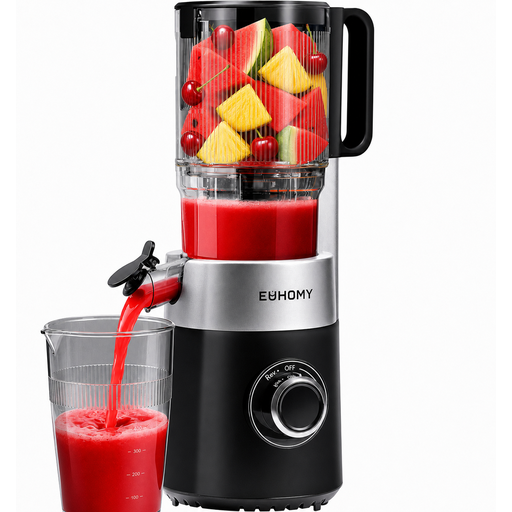
Why it suits this type of user: Its 1.8-litre chamber and wide 135 mm opening are ideal for households preparing several portions at once.
It combines a large capacity with an assembly process described as taking three steps, reducing the amount of handling before and after extraction.
Advertised 220 W motor, twin stainless steel augers and a three-stage filtration system according to the product page.
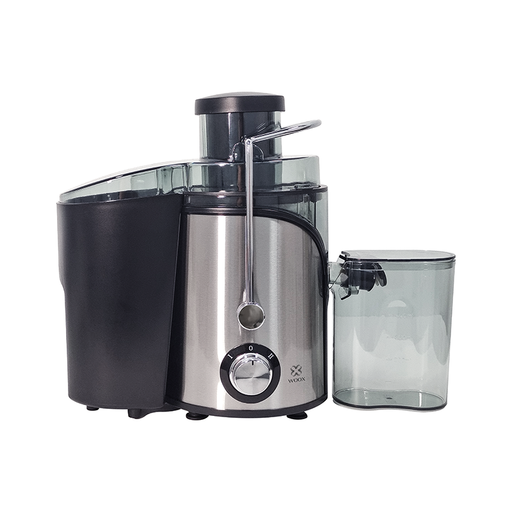
Why it suits this type of user: This centrifugal juicer is aimed at users who prioritise speed when preparing fruit and vegetable juices every day.
Its wide inlet reduces the need for chopping, while the manual limits continuous operation to two minutes.
Advertised 600 W power, 7.6 cm opening and stainless steel filter basket.
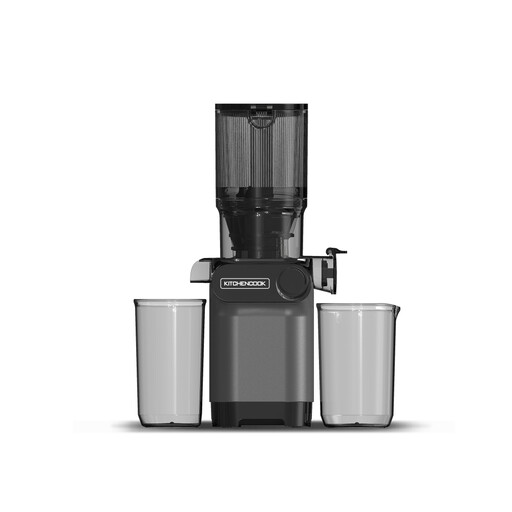
Why it suits this type of user: This slow-extraction model is suitable for those who want to process a wide variety of fruit and vegetables for moderate family preparation.
The reverse function helps release ingredients that have become stuck, while the anti-drip spout helps prevent splashes when serving.
108 mm opening, 800 ml juice cup, 600 ml pulp container and cleaning brush included.
We have put together a comprehensive, real-time updated selection of products that meet these exacting criteria as well as European safety standards.
It depends on the power rating and how long you use it. A 150 to 220 W appliance used for a few minutes is generally economical, but how often you prepare juice also plays a part. A 600 W centrifugal juicer often runs for less time because it is faster, so rated power alone is not enough to compare models.
It generally takes a few minutes if you rinse the components immediately after use. Remove fibres from the strainer, wash the removable parts in warm water and use the supplied brush to reach awkward corners. The motorised base only needs to be wiped with a damp cloth and must never be immersed.
No. Hard stones, sugar cane, ice cubes and certain very fibrous foods can damage the mechanism or cause it to jam. Chop ingredients according to the instructions in the manual, remove stones and feed the pieces in gradually. If you mainly prepare orange or lemon juice, an electric citrus press will make more sense than a versatile appliance.