
Livraison le jour même ou le lendemain

Qualité garantie

Débloquez vos offres de bienvenue: Livraison GRATUITE | Jusqu'à -80 % | 30 jours d'essai gratuits à JoyPlus
Téléchargez l'application
Preparing fresh homemade juice sounds simple… until the day you end up with an appliance that is complicated to assemble, noisy or tedious to clean. Between promises of high yields, wide feed chutes and «professional» functions, it is easy to pay for features that make very little difference in everyday use.
Before choosing a juicer, a centrifugal juicer or a citrus press, focus above all on how often you plan to use it, the foods you want to prepare, the appliance’s capacity and how much time you are prepared to spend maintaining it.
High power does not guarantee a more enjoyable experience. A fruit and vegetable centrifugal juicer prepares juice quickly, but its filter basket and blades generally need to be cleaned straight away. By contrast, a cold-press juicer, also known as a slow juicer, operates at a reduced speed and is better suited to people who prefer gradual extraction.
The stated speed should therefore be considered alongside the design of the auger, filter, feed chute and containers.
An appliance may look appealing on paper, then end up at the back of a cupboard if several parts trap pulp. To find an easy-to-clean juicer, check how many removable parts it has, whether a brush is included, whether the parts are dishwasher-safe and whether they can be rinsed quickly after each use.
Also pay attention to the motorised base: it must never be immersed in water.
A large bowl does not necessarily make an appliance more practical. For one person, a container holding a few hundred millilitres may be sufficient while taking up less space. A family, on the other hand, may prefer a large-capacity juicer with a separate pulp container and designed for continuous use in line with the manufacturer’s recommendations.
A wide feed chute reduces the time spent cutting ingredients. However, it is still essential to wash fruit and vegetables, remove stones and cut fibrous foods according to the instructions. Models with an opening of 80 to 130 mm may reduce the preparation needed for certain ingredients, but you should still check that each food is compatible with the appliance.
Power, expressed in watts, provides information about the motor, but it is not enough to distinguish between two machines. Also check:
An appliance intended for a family or regular use may be comparable to a professional juicer in terms of its capacity and design, without being intended for commercial use. Always observe the necessary breaks to allow the motor to cool down.
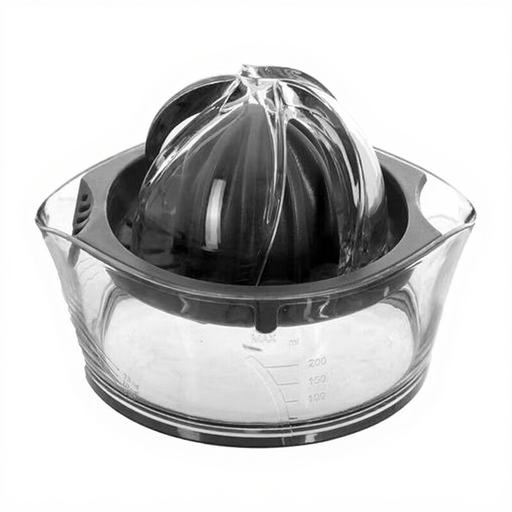
Why this choice suits this user: this manual citrus press is suitable for small quantities, occasional use and kitchens where keeping clutter to a minimum is important. It requires no electricity and has a capacity of 0.4 litre.
Its manual design means you do not have to invest in a powerful motor to prepare citrus juice occasionally. The parts separate for washing, but the manufacturer states that they are not dishwasher-safe.
Compact 25 × 10 × 15 cm format, stated weight of 180 g, and separate juice and pulp collection.
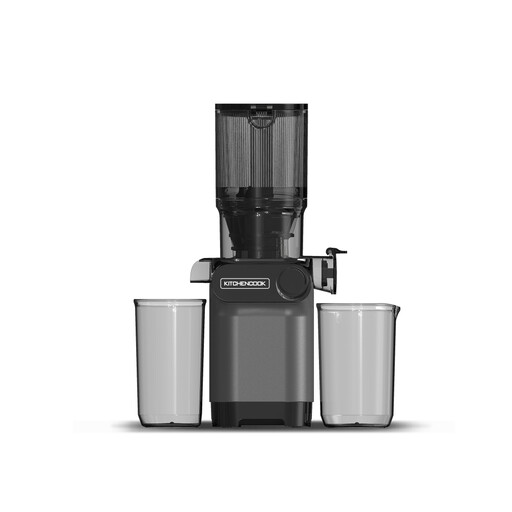
Why this choice suits this user: this cold-press juicer is aimed at people who regularly prepare fruit and vegetable blends and want to reduce preparation time thanks to its 108 mm feed chute.
The reverse function helps release an ingredient that has become stuck. The spout with anti-drip valve and the included brush help prevent spillages and make cleaning easier.
200 W motor, stated speed of 45 to 70 rpm, 800 ml jug and 600 ml pulp container.
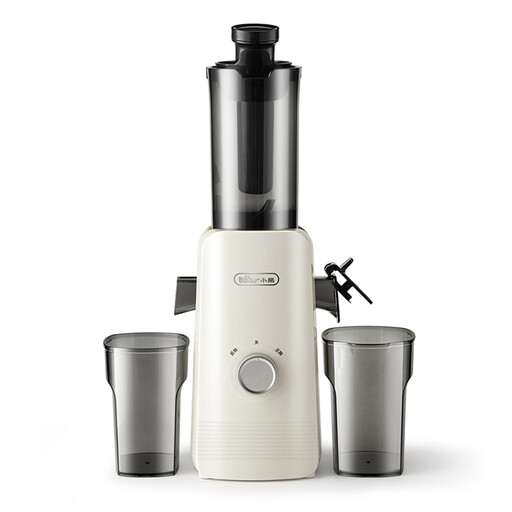
Why this choice suits this user: its 1-litre bowl and wide 80 mm opening may suit a family preparing several glasses in succession, while retaining the operation of a slow juicer.
The removable parts can be rinsed after use and are dishwasher-safe, according to the supplied instructions. However, the manual limits continuous operation to 15 minutes.
80 mm opening, stated capacity of 1 litre and a motor described as quiet on the product page.
We have brought together a complete, real-time updated selection of products that meet these demanding criteria and European safety standards.
To extend the life of your juicer:
With a centrifugal juicer, handle the filter basket carefully: its blades may be sharp. For a manual citrus press, washing it by hand with a soft sponge will help preserve the plastic or steel.
No. Very fibrous foods, hard stones, sugar cane, ice cubes and some frozen products may not be recommended. Consult the manual for your chosen model and cut ingredients according to the size of the feed chute.
It depends on the number of parts and the amount of pulp produced. Rinsing the appliance immediately will generally prevent residue from drying. Models that can be dismantled, with an included brush or dishwasher-safe parts, make this stage easier, but the motorised base should only be cleaned with a damp cloth.
Consumption depends on the motor’s power and how long the appliance is used. A 30 to 40 W appliance used for a few minutes at breakfast will have limited electricity consumption. To estimate running costs, consider the power, frequency of use and capacity rather than relying solely on the manufacturer’s marketing claims.