Families who check ingredients
If you’re preparing several snacks, the product description and ingredients can help you tell fruit juice from nectar. You can then compare the sugar content on the same basis using the nutritional information.


For family study-break snacks, first choose between fruit juice and nectar based on what you want to serve: the product description and ingredients matter more than the 2 L size alone. Then compare the sugar content on the same basis and check whether you can refrigerate the bottle and finish it within the stated time after opening. Manger Bouger recommends limiting fruit juice and choosing water and whole fruit instead.
If you’re preparing several snacks, the product description and ingredients can help you tell fruit juice from nectar. You can then compare the sugar content on the same basis using the nutritional information.
A 2 L container can hold either juice or nectar. If that distinction matters to you, check the product description before comparing two bottles of the same size.
The 2 L size is most practical if you can refrigerate the bottle after opening and finish it within the time stated for the product you choose.
For a bottle to serve with study-break snacks, start with the recipe, then check the nutritional information and storage instructions for after opening. The DGCCRF notes that the product description, ingredients and nutrition declaration are among the key details on food labels.
| What to consider | What to check | Who is it for? |
|---|---|---|
| Ingredients and sugars | Read the product description and ingredients, and check the ‘of which sugars’ line per 100 ml. | For family snacks, I want to know whether I’m serving juice or nectar and how much sugar is listed. Around 42% of consumers would put checking the ingredients first. |
| Choice of recipe | Compare the product description and ingredients for each 2 L bottle, particularly if one is a nectar. | If several drinks of the same size suit me, I want to make an informed choice between their recipes. Around 33% of consumers would put this choice first. |
| After opening | Check the time stated by the manufacturer and whether the bottle can be kept in the fridge. | I may not serve 2 L quickly and want to avoid opening a bottle my household won’t be able to finish in time. This would be the priority for around 25% of consumers. |
No added sugar doesn’t mean that a juice contains no sugars. The Carrefour Classic’ and Auchan listings cited for their 2 L mixed fruit juices each state 11 g of sugars per 100 ml.
Compare the ‘of which sugars’ line per 100 ml, rather than assuming how much sugar it contains from the wording on the front of the pack alone.
Carrefour says to keep its 2 L Classic’ mixed fruit juice in the fridge and use it within three days of opening; Auchan gives a five-day period for its 2 L not-from-concentrate mixed fruit juice. These times apply to the specific products listed.
Check the label on the bottle you choose, and opt for a smaller container if your household can’t finish 2 L within the stated time.
An opened bottle that gets forgotten can lead to waste.
The large bottle size doesn’t determine how much to serve. Manger Bouger recommends limiting fruit juice to one glass a day and choosing water and whole fruit instead.
Have water ready for the session. If you also offer juice with a snack, serve it in a glass rather than leaving the bottle open and within reach.
Auchan offers a 2 L option of not-from-concentrate mixed fruit juice.
The products reviewed include a 2 L Carrefour Classic’ mixed fruit juice made partly from concentrate and a 2 L SIMPL mixed fruit nectar.
E.Leclerc’s range includes 2 L products described as either pure orange juice or orange nectar.
Joker is included in the comparison of mixed fruit juices, but the products featured here come in 1 L or 1.5 L sizes.
Both of these products are nectars in a 2 L format. If you’re looking for fruit juice instead, don’t assume they’re the same recipe just because they’re the same size.
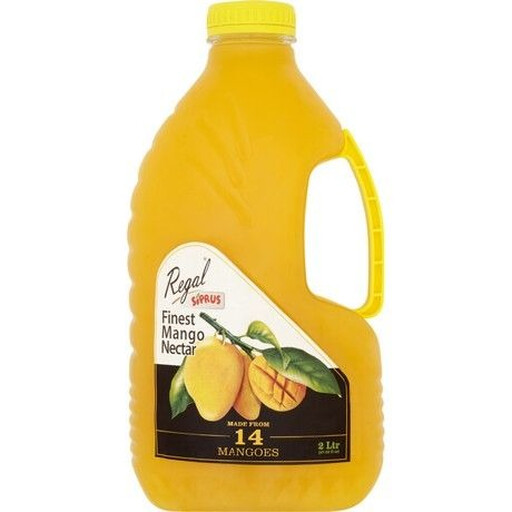 Image unavailable
Consider this if you’re looking for mango nectar to share at several snack breaks and a pack of six 2 L bottles is the quantity you need.
The ‘no added sugar’ claim conflicts with the sugar listed in the ingredients: check the label on the packaging before choosing. Values given per 100 g aren’t directly comparable with values per 100 ml.
Also check the information in French and the storage instructions on the packaging.
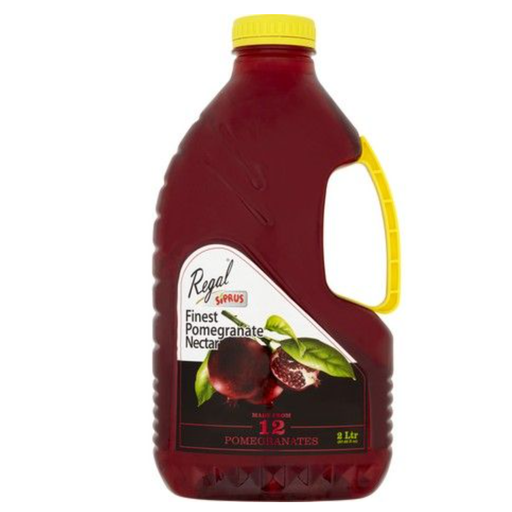 Image unavailable
Consider this if you’d prefer a 2 L bottle of pomegranate nectar rather than fruit juice.
Ingredients may vary, so check the packaging. Also read the instructions for after opening to decide whether your household can finish this size in time.
Check that the information on the packaging is in French before buying.
Check the product description and ingredients: don’t assume a nectar is juice just because the packaging shows fruit or uses the word ‘mixed fruit’. The DGCCRF treats juice and nectar as separate categories with different labelling rules, so check the recipe for each product before choosing.
No. Juice can contain sugars that occur naturally in fruit. To compare drinks, check the ‘of which sugars’ line on the same basis. The listings for the 2 L Carrefour Classic’ and Auchan mixed fruit juices each state 11 g per 100 ml.
The size of the bottle doesn’t determine how much to serve. Manger Bouger recommends limiting fruit juice to one glass a day and choosing water and whole fruit instead. Choose a bottle size based on how much your household can realistically consume within the time allowed after opening.
Follow the instructions for the specific product you buy. Carrefour says to refrigerate its 2 L Classic’ mixed fruit juice and consume it within three days of opening; Auchan gives a five-day period in the fridge for its 2 L not-from-concentrate mixed fruit juice.
First compare the product description, ingredients and nutritional information on the same basis, then check the storage instructions. The DGCCRF lists the product name, ingredients, nutrition declaration and net quantity among the information required on food labels.