
Livraison le jour même ou le lendemain

Qualité garantie

Débloquez vos offres de bienvenue: Livraison GRATUITE | Jusqu'à -80 % | 30 jours d'essai gratuits à JoyPlus
Téléchargez l'application
Preparing a fresh homemade juice sounds simple enough… until you find yourself with an appliance that’s fiddly to dismantle, too noisy, or ill-suited to the fruits and vegetables you actually use. Between an electric juice extractor, a citrus press and a centrifugal juicer, the design differences have a direct impact on how comfortable they are to use.
Before comparing models, it’s best to avoid three common pitfalls:
An electric citrus press is ideal for oranges, lemons, grapefruits and limes. Its rotating cone or pressing mechanism lets you prepare juice quickly, but it isn’t designed for hard vegetables.
A slow juicer, also known as a cold-press juicer, gradually crushes ingredients using an auger. It’s better suited to blends of apples, carrots, cucumbers, leafy greens or celery. However, you’ll need to chop fibrous ingredients into pieces and follow the manufacturer’s recommendations.
A centrifugal fruit and vegetable juicer works with a fast-spinning basket and filter. It’s handy for making large quantities of juice quickly, but it generally produces more noise and foam.
For one person, a capacity of 400 to 800 ml may be enough. For two people or a family, a large-capacity juice extractor with a jug of around 1 to 1.8 litres saves you having to empty it several times.
The feed chute diameter is also worth your attention. An opening of 80 to 130 mm reduces the time spent chopping ingredients, though it won’t let you feed in whole fruits. According to the manual, you’ll need to remove stones, very hard parts and certain skins.
Go for removable parts that are easy to rinse, a suitable brush and, where the manufacturer clearly states it, dishwasher-safe components. The motor base must never be submerged.
The noise level depends on both the motor and the pressing system. Even an appliance marketed as a quiet juice extractor can still be perfectly audible in an open-plan kitchen. Check the available data, such as the “under 72 dB” rating given for some models, and consider how long you’ll be using it.
Finally, check for a locking system, a pusher and information about the maximum operating time. Blades, sieves and augers should be handled with care, and always after unplugging the appliance.
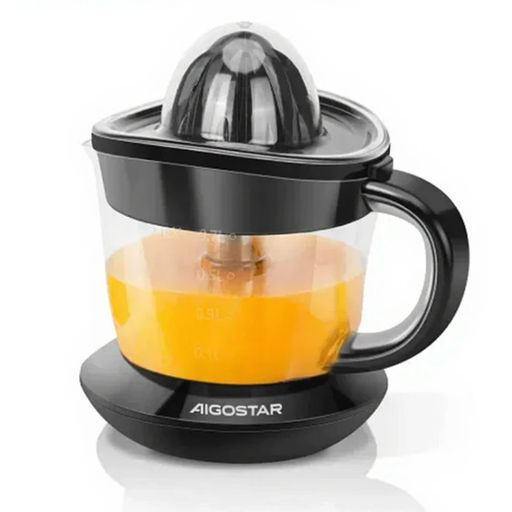
Why this choice suits this profile: This 40 W electric citrus press offers a 0.7 litre capacity and two cones to fit different citrus sizes. It’s ideal for everyday use without taking over your worktop.
Its specialised design means you’re not paying for a system built for vegetables or large quantities when you only need it for citrus fruits.
Two-way rotation, 0.7 litre jug and removable parts stated as dishwasher-safe.
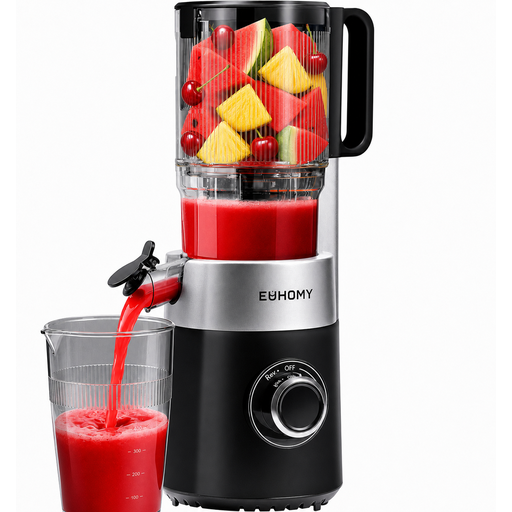
Why this choice suits this profile: Its slow extraction system and 1.8 litre capacity are ideal for households that want to prepare fruit and vegetable blends in one go.
The listing states a XXL 135 mm feed chute, three-step assembly and a triple filter. Consider these features in light of your own preparation habits.
Stated 220 W motor, slow-speed operation and 1.8 litre jug for making juices for the whole family.
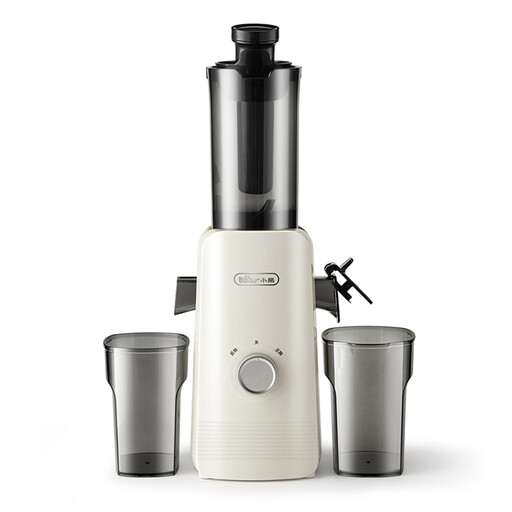
Why this choice suits this profile: The slow pressing technology, 80 mm feed chute and 1 litre capacity suit regular users who switch between fruits and vegetables.
The manual specifies which ingredients to avoid, limits the operating time to 15 minutes and recommends using the pusher gradually.
80 mm feed chute, cleaning stated as a simple rinse and quiet operation according to the product description.
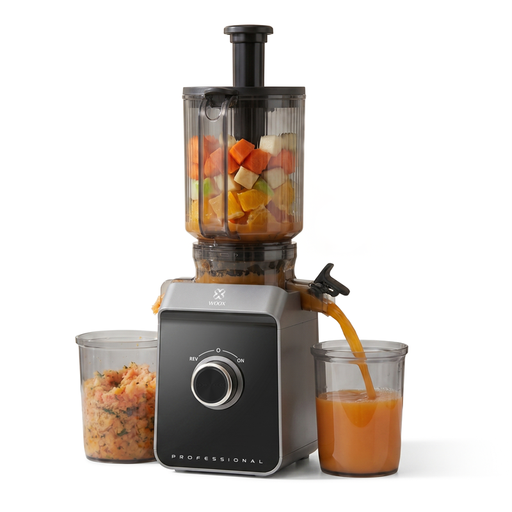
Why this choice suits this profile: Its stated 1.8 litre chamber and 130 mm feed chute are designed for households that want to prepare multiple portions of fruit and vegetable juice.
The listing indicates overheat protection, a maximum continuous operating time of 10 minutes and a reverse function in case of blockage.
Stated 150 W power, 1.8 litre capacity and noise level under 72 dB according to the information provided.
We’ve put together a comprehensive, real-time selection of products that meet these strict criteria and comply with European safety regulations.
An automatic or electric citrus press is usually sufficient. Look for a cone that fits several citrus sizes, an anti-drip spout and removable parts. A model with a 200 to 700 ml capacity is often fine for occasional use.
It depends on the amount of fibre and the filter design. An immediate rinse, dismantling the removable parts and using the supplied brush make maintenance easier. The motor base simply needs wiping with a damp cloth.
The consumption depends on the appliance’s power and how long it runs. A 150 W model used for 10 minutes theoretically consumes around 0.025 kWh, excluding standby phases. To estimate the actual cost, multiply this consumption by the rate on your electricity contract.