
Livraison le jour même ou le lendemain

Qualité garantie

Débloquez vos offres de bienvenue: Livraison GRATUITE | Jusqu'à -80 % | 30 jours d'essai gratuits à JoyPlus
Téléchargez l'application
A juice extractor might seem simple to choose… until you start comparing power, speed, capacity, cleaning and accessories. The features highlighted on product pages don’t always match your habits. An impressive-looking appliance on paper can quickly become bulky, a pain to clean or impractical if you’re only making a single glass in the morning.
Before buying a cold press juicer, a centrifugal juicer or a citrus press, here are the criteria to examine to avoid nasty surprises.
A motor with more watts doesn’t automatically produce more juice. Power needs to be considered alongside the technology used, the rotation speed and the design of the auger or filter basket.
Also remember to check the maximum continuous running time. Some models need to cool down after a few minutes to prevent the motor from overheating.
A wide chute reduces the need for chopping, but it doesn’t necessarily mean you can skip washing, peeling or removing stones. Large fruits and fibrous vegetables may still require a bit of preparation.
The width of the opening should therefore match the foods you use most often. An opening of 80 to 108 mm works well for apples, cucumbers and standard-sized oranges. Wider openings can reduce preparation time, but they also take up more space on your worktop.
An appliance with lots of parts can quickly become a chore to dismantle after each use. Check whether a cleaning brush is included, whether parts are dishwasher-safe, and how easy it is to access the filters and chutes.
With an electric juice extractor, a few rules are non-negotiable:
A cold press juicer slowly presses the ingredients. Models in this category typically run at a speed of between 45 and 70 revolutions per minute. This method generally takes longer than a centrifugal juicer, but it can suit those looking for gradual extraction and automatic pulp separation.
A centrifugal juicer prioritises speed above all. The WOOX 600 W model has a 3-inch feed chute and a stainless steel basket. It can work for making several glasses occasionally, as long as you stick to the manufacturer’s recommended running time.
An electric citrus press is more specialised. Its blade-free design is ideal for citrus fruit, but it won’t replace an appliance designed for carrots, apples, celery or leafy greens.
For one person, a container of 400 to 700 ml may be enough. For a couple or a family, it’s better to go for a larger jug and a separate pulp container. A stated capacity of 1 to 1.8 litres means you won’t have to empty the appliance mid-way through, though the weight and size usually increase as a result.
Also check the actual capacity of the juice jug, which can differ from the main chamber. The WOOX MX0289, for example, has a 1.8-litre chamber, a 726 ml jug with a maximum graduation of 600 ml, and an 836 ml pulp container.
An anti-drip function with a valve limits drips between glasses. It’s particularly handy on a light-coloured worktop or when serving juice straight into a glass.
The reverse function, where available, helps to free stuck pieces. However, it shouldn’t be used to compensate for overloading: stop the appliance and remove the food according to the manufacturer’s instructions.
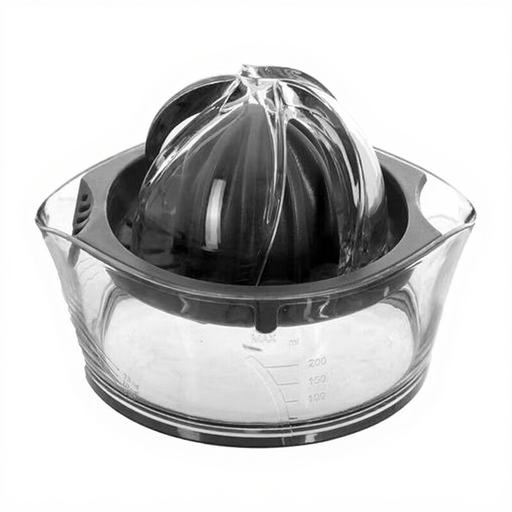
Why this choice suits this profile: This manual citrus press is ideal for occasional use, with no plugging in or motor to maintain. Its 0.4-litre capacity is enough for a breakfast or a one-off preparation.
It avoids paying for unnecessary power if you only press citrus fruit. The manual operation also removes the constraints of motor running time.
Separate juice container and pulp compartment, compact dimensions of 25 × 10 × 15 cm, stated weight of 180 g.
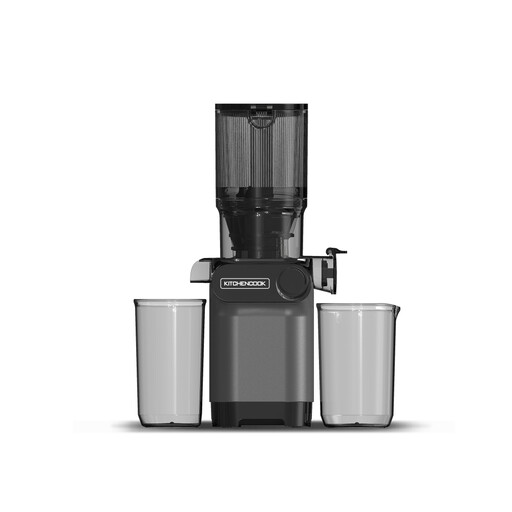
Why this choice suits this profile: This 200 W model is aimed at those who want to make a variety of juices regularly, with a slow extraction stated at between 45 and 70 revolutions per minute.
The reverse function helps to free stuck ingredients, while the anti-drip valve limits spills when serving.
108 mm feed chute, 800 ml juice jug, 600 ml pulp container, cleaning brush included and a stated 2-year guarantee.
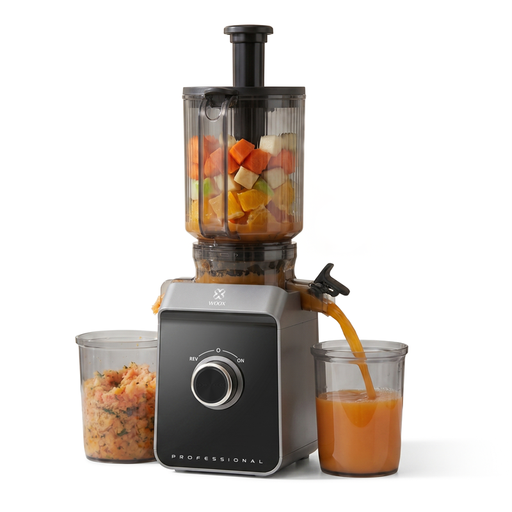
Why this choice suits this profile: Its 1.8-litre chamber and 130 mm feed chute are designed for households that prepare multiple portions or alternate between fruit and vegetables.
The separate juice and pulp containers reduce interruptions. Overheat protection and the reverse function are mentioned in the usage instructions.
Stated 150 W motor, 726 ml jug, 836 ml pulp container and removable parts stated as dishwasher-safe.
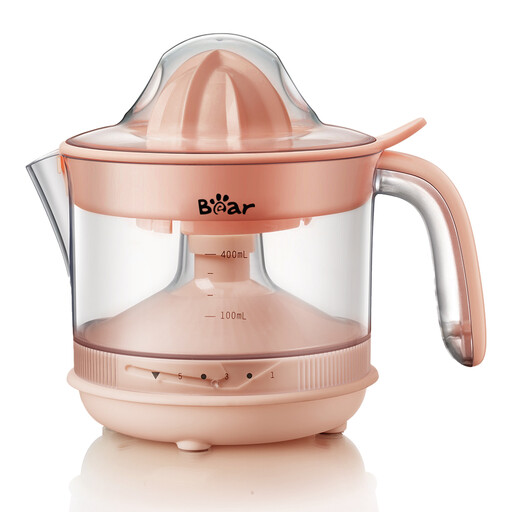
Why this choice suits this profile: This 30 W electric citrus press is aimed at households that regularly make orange or lemon juice, without needing an appliance capable of handling fibrous vegetables.
Its blade-free design is suited to citrus-focused use. The detachable parts make rinsing easy after each preparation.
Stated 400 ml capacity, five pulp settings, non-slip base and 220–240 V power supply.
We’ve put together a comprehensive, real-time updated list of products that meet these strict selection criteria and European safety regulations.
Start by comparing the capacity of the jug and the pulp container, then check the maximum continuous running time. A large feed chute can reduce chopping time, but the appliance also needs to be easy to dismantle, clean and store.
It depends on the design. Look for removable parts, a dedicated brush and easily accessible chutes. Rinse the parts straight after use to prevent pulp from drying in the filter.
The consumption depends on the motor power and the running time. A 30 to 40 W appliance designed for citrus fruit can be enough for a few glasses. A 150 to 200 W extractor will handle a wider variety of preparations more comfortably, as long as you follow the rest periods recommended in the manual.