
Livraison le jour même ou le lendemain

Qualité garantie

Débloquez vos offres de bienvenue: Livraison GRATUITE | Jusqu'à -80 % | 30 jours d'essai gratuits à JoyPlus
Téléchargez l'application
Making homemade fruit juice or vegetable juice sounds simple. That is, until the appliance turns out to be bulky, a pain to clean, or too limited to serve the whole family. Before choosing a juice extractor, a centrifugal juicer or an electric citrus press, it is worth separating genuinely useful features from the more vague marketing claims.
This 2026 selection, put together by the Joybuy Product Recommendation Officer, is based on concrete criteria: extraction type, feed chute dimensions, capacity, maintenance, stated noise level and usage precautions.
A centrifugal juicer relies on fast spinning and a filter basket to produce juice in moments. It is handy if you want to fill a glass without waiting, but this operation can be noisier and often means cleaning the filter straight after use.
By contrast, a cold press juicer – also called a slow juicer – typically uses an auger and low-speed extraction. The process is more gradual and often suits apples, carrots, cucumbers, peeled citrus fruits and leafy greens, depending on the manufacturer’s recommendations. That does not mean every model accepts the same ingredients.
A large feed chute saves you from cutting fruit and vegetables into small pieces, but it does not let you off following the usage instructions. Stone fruits must be pitted, long fibres may need trimming, and certain foods – such as sugar cane, ice cubes or frozen fruit – are not recommended for several models.
Also remember to measure the available space on your worktop. An opening of 108, 130 or 135 mm can save time, but the overall height of the appliance matters just as much in a kitchen with wall units.
The main barrier to daily use is often the upkeep. Even when an appliance is described as easy to clean, it may have a fine filter, an auger, several seals and a container that need rinsing separately. To prevent residue from drying, it is best to rinse the removable parts straight after extraction.
The BPA-free claim should be checked on the product page. It does not necessarily apply to every part if the manufacturer does not specify this. The same goes for the dishwasher: compatibility may be limited to certain accessories.
If you mainly make citrus juice for breakfast, a 30 to 40 W electric citrus press will be more than enough. If you want to switch between apples, carrots and vegetables, an auger extractor will generally be more suitable.
A jug or cup of 400 to 800 ml is fine for one or two servings. If you are making juice for several people, check the capacity of the juice container as well as the pulp bin. Models with a 1.8-litre chamber allow you to prepare more juice in one go, but they also take up more space.
Automatic pulp separation means you do not have to stop the appliance after every glass. A pouring spout with an anti-drip system is also welcome to keep splashes off the worktop.
Electrical power alone is not enough to judge extraction ease. The design of the auger, filter and motor also plays a role. A 150 to 220 W motor can be paired with slow extraction, while a 600 W centrifugal juicer generally prioritises speed.
Also check the maximum continuous running time. Some appliances require a break after 10 or 15 minutes. The WOOX centrifugal juicer shown below, for example, states a limit of two consecutive minutes. These recommendations should be followed to avoid motor overheating.
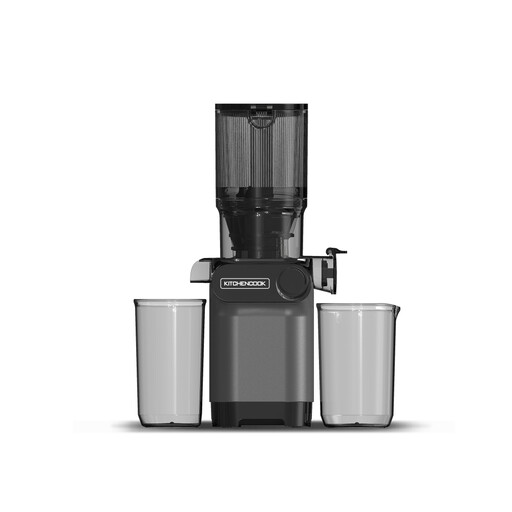
Why this model fits: This 200 W cold press juicer operates between 45 and 70 rpm. Its 108 mm feed chute and 800 ml juice container with 600 ml pulp bin are well suited for regular home use.
The reverse function can help free a stuck ingredient. The anti-drip spout and included brush make preparation and rinsing easier after use.
Reversible rotation, automatic pulp separation, Tritan bowl and a stated two-year warranty.
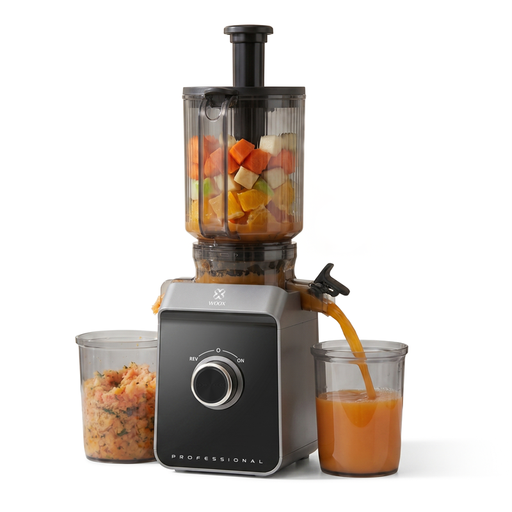
Why this model fits: Its 1.8-litre chamber, 726 ml juice cup and 836 ml pulp bin are designed for households that prepare several portions.
The 130 mm feed chute reduces pre-cutting. According to the product page, the removable parts are dishwasher-safe.
150 W motor, overheat protection and stated noise level below 72 dB.
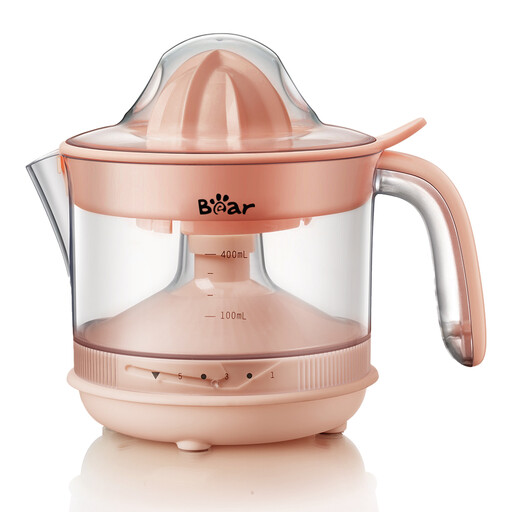
Why this model fits: This 30 W electric citrus press has a 400 ml reservoir and five stated pulp levels. It works well for oranges, lemons and other citrus fruits.
Its blade-free operation and non-slip base make it suitable for family use. Adult supervision is still required.
Detachable parts, dual-direction rotation and stated BPA-free material.
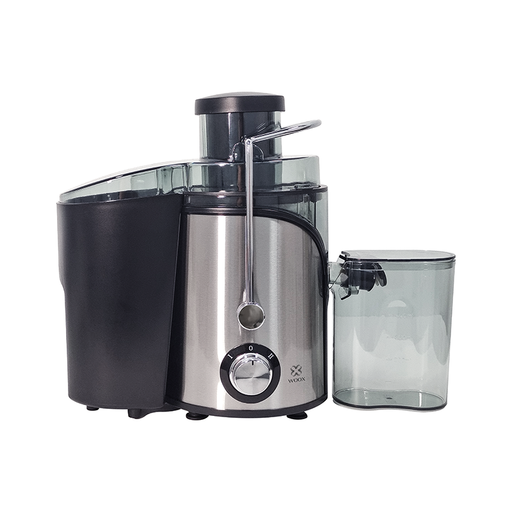
Why this model fits: This stainless steel centrifugal juicer has a 7.6 cm opening and is designed for quick fruit and vegetable preparation.
The wide opening reduces preparation time, but the stated two-minute continuous limit is a reminder to respect the motor’s rest periods.
Stated 600 W power, 7.6 cm opening and stainless steel filter basket.
For daily use with a variety of fruit and vegetables, go for a slow juicer with automatic pulp separation, a reverse function and parts that are easy to rinse. If your breakfast mainly involves oranges or lemons, an electric citrus press will be more compact and simpler to use.
The centrifugal juicer remains a good choice when speed matters more than quiet operation. In every case, check the voltage compatibility with the French mains, the presence of a French-language manual, the warranty conditions and the cleaning instructions before ordering.
We have put together an updated selection of appliances that meet these criteria and are suited to the demands of home use in France.
Freshly made juice is generally intended to be drunk quickly. If you store it in the fridge, use a clean, sealed container and follow the food hygiene recommendations for the ingredients used. An extractor does not turn juice into a long-life drink.
The consumption depends on the motor power and the running time. A 150 to 220 W model used for a few minutes uses little electricity per session. A 600 W centrifugal juicer may run for less time thanks to its speed, but the actual consumption always depends on the usage time. The budget spent on buying fruit and vegetables is usually the biggest expense.
Cut fibrous vegetables into pieces a few centimetres long, remove stones and feed ingredients in gradually. Alternating hard and soft foods can help the extraction. If the appliance has a reverse function, use it only as instructed in the manual, then unplug it before any disassembly.