
Livraison le jour même ou le lendemain

Qualité garantie

Débloquez vos offres de bienvenue: Livraison GRATUITE | Jusqu'à -80 % | 30 jours d'essai gratuits à JoyPlus
Téléchargez l'application
Making fresh juice at home seems simple enough… until the appliance leaves behind a lot of pulp, keeps clogging up, or takes longer to clean than it does to prepare. Choosing a juice extractor isn’t just about comparing motor power or how the machine looks.
To avoid a purchase you’ll regret, focus on the type of extraction, capacity, feed chute diameter, noise level and maintenance requirements. Here are the key factors to consider before picking a cold press juicer, a fruit and vegetable centrifugal juicer or an electric citrus press.
A powerful motor doesn’t guarantee the appliance will suit your habits. A fast centrifugal juicer can be perfect for occasional use, whereas a slow juicer runs at a lower speed and usually requires you to feed ingredients in gradually.
Instead, look at the full set of features:
A juice extractor that’s easy to clean is one you’ll actually use every day. Fibres can dry onto the filter, auger or chutes if the parts aren’t rinsed promptly. Check whether a cleaning brush is included, how many parts need to be dismantled, and whether they’re dishwasher-safe.
Instructions vary from model to model: some claim a quick rinse is enough, while others require a more thorough manual clean. The manufacturer’s spec sheet is always your best guide.
A 400 or 600 ml capacity may be fine for one person, but it quickly becomes impractical when you need to make several glasses. On the other hand, a large-capacity extractor takes up more worktop space. Measure the height available under your cupboards and also check the cord length, which is often around 0.9 m on some appliances.
A cold press juicer uses an auger, or worm gear, to slowly press fruits and vegetables. Some models in this selection run at speeds between 45 and 70 rpm. This method can be a good choice if you prefer gentle extraction and want to minimise foam, depending on the filter design.
A fruit and vegetable centrifugal juicer, on the other hand, separates juice and pulp using a fast-spinning filter basket. It’s handy for making juice quickly, but its moving parts and blades require careful handling. The WOOX 600 W model, for example, has a 3-inch feed chute and a maximum continuous running time of just 2 minutes – instructions like these must be followed to the letter.
A wide feed chute cuts down on chopping time, but it doesn’t mean you can skip removing stones, peeling certain citrus fruits or cutting up very fibrous fruit and veg. Among the models on offer, chute diameters range from 80 to 135 mm.
For daily use, an opening of 108 mm or more can save you a noticeable amount of time. Safety comes first: always use the pusher provided and never put your fingers into the chute.
A capacity of 1 to 1.8 litres is better suited to families or making several glasses at once. For a single person, a more compact container will take up less space and be quicker to clean.
Noise level is another factor to take with a pinch of salt. A product page might claim quiet operation or a level below 72 dB, but the actual noise you hear also depends on your worktop and the ingredients you use. Finally, never immerse the motor base in water, and always unplug the appliance before taking it apart.
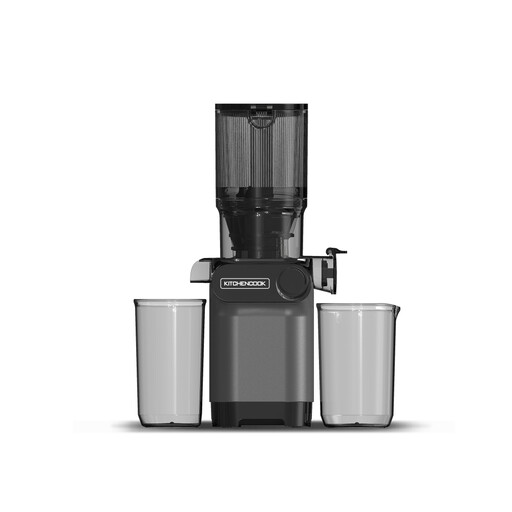
Why this suits this profile: With its 200 W motor, this model offers slow extraction at 45 to 70 rpm, an 800 ml juice jug and a cleaning brush included. A simple way to get started with homemade juice without collecting lots of accessories.
The reverse function helps free stuck ingredients, while the anti-drip spout minimises mess.
108 mm feed chute, automatic pulp separation and a stated 2-year warranty.
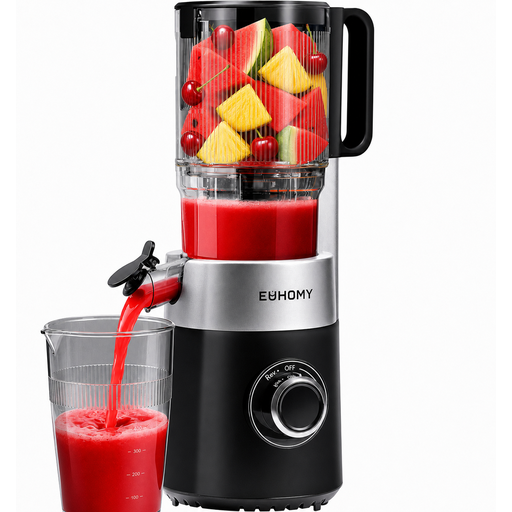
Why this suits this profile: With its stated 1.8 litre capacity, 135 mm feed chute and 220 W motor, it’s aimed at households that prepare several portions at once.
The wide opening reduces chopping, while the claimed three-step assembly makes preparation and cleaning simpler.
Dual stainless steel auger and three-stage filtration system, as stated on the product page.
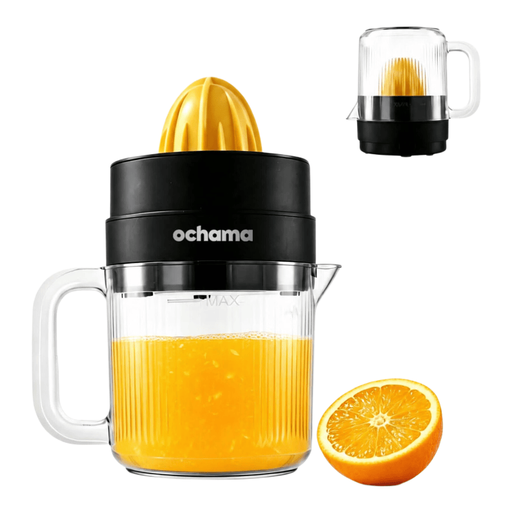
Why this suits this profile: This 30 W citrus press, with no blades, is designed for oranges, lemons, mandarins and other citrus fruit. Its stated 1.4 litre capacity is ideal for repeated use.
Its blade-free design and removable parts meet safety requirements and make cleaning easier, always under adult supervision.
Pulp separation and claimed simple disassembly for cleaning.
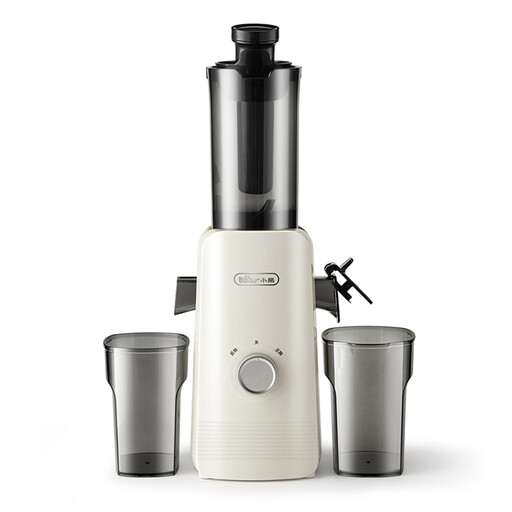
Why this suits this profile: This slow extraction model has a 1 litre capacity, an 80 mm opening and a motor described as quiet. It’s well suited to daily juicing, one ingredient at a time.
The manufacturer states that removable parts can be quickly rinsed, and the maximum continuous running time is 15 minutes.
Whole fruits can be added depending on their size, and the removable parts are claimed to be dishwasher-safe on the top rack.
The H.Koenig AGR60 and the Bear CZJ-A04B1 citrus press are also great options for fans of oranges, lemons, grapefruits and other citrus fruit. The first has two interchangeable cones and an anti-drip spout; the second offers a 400 ml jug and five stated pulp levels.
We’ve put together a full list, updated in real time, of products that meet these demanding selection criteria and European safety standards.
A juice extractor presses ingredients at a low speed, whereas a centrifugal juicer separates them using a fast-spinning basket. The former usually requires more gradual feeding; the latter is more about speed. The right choice depends on your recipes, how much time you have and how much cleaning you can tolerate.
The running time depends on the model. Some spec sheets state a maximum continuous use of 10 or 15 minutes, while a centrifugal juicer may be limited to 2 minutes. Always follow the instructions, let the appliance cool down if it gets hot, and never force food into the chute.
Rinse the parts straight after use, choose seasonal fruit and veg, and avoid ingredients the manual says not to use, such as ice cubes, hard stones or sugar cane. A well-maintained machine will also run more consistently over time.