Anyone looking for a clearly identified portion of juice
A small carton can fit in your gym bag. To choose juice rather than a fruit juice drink, check the product description: France’s DGCCRF identifies it as an essential labelling guide.


If you want to pack a clearly labelled portion of juice with your snack, compare the 20 cl cartons. If you’d rather have a can, check its product description, as a fruit drink in a can isn’t necessarily juice. To rehydrate after exercise, keep water close to hand and choose your fruit drink by checking its ingredients, sugar content and serving size.
A small carton can fit in your gym bag. To choose juice rather than a fruit juice drink, check the product description: France’s DGCCRF identifies it as an essential labelling guide.
You care more about having a ready-to-drink container than the drink category. Check the can’s size and ingredients before treating it as juice.
A multipack lets you stock up for the fridge or lunchboxes. Check the number of servings, their size and the type of packaging: multipacks of small cartons and cans don’t quite meet the same needs.
For a post-exercise snack, first decide whether you specifically want juice or mainly want a can, then choose the serving size. According to product listings from Auchan and Carrefour, the formats reviewed include both 33 cl cans of fruit juice drink and individual 20 cl cartons of juice.
| What to compare | What to check | Who is it for? |
|---|---|---|
| Product description and ingredients | Read the product description, then check the juice content and ingredient list. The DGCCRF distinguishes drink categories by their labelling. | If I want juice with my snack, I don’t want to mistake it for a fruit juice drink. Around 40% of consumers put this distinction first among their needs. |
| Can or small carton | Compare the container, number of units and size of each one: a 20 cl carton isn’t the same as a 33 cl can. | If I want something ready to open after my workout, the type of container can guide my choice. A can or portable serving is the priority for around 30% of consumers. |
| Serving size and sugars | Check the sugars per 100 ml and the serving size. “No added sugars” doesn’t mean the juice contains no sugars. | When I plan to have a drink with my snack, I want to know what the whole serving contains, not just compare values per 100 ml. Understanding the serving size and its sugar content comes first for around 20% of consumers. |
| Planning snacks | Check how many units are in the pack and whether the format you want is available in your store or for your chosen collection option. | If I’m preparing several lunchboxes, I need convenient servings that are available where I shop. For around 10% of consumers, this is their main consideration. |
According to Auchan’s product listing, the 33 cl Tropicana Juicy Tropical cans are described as a “fruit juice drink made from concentrate”. The ingredients include water, 16% juice from concentrate and sugar.
Read the product description and ingredients before comparing this multipack with cartons of juice.
Juice or a fruit drink doesn’t replace water for hydration. Manger Bouger also recommends limiting fruit juice and sugary drinks.
Take water with you for your workout. If you choose a fruit drink, treat it separately from your hydration drink.
This claim doesn’t remove the sugars naturally present in juice. The size of the carton or can also matters when you check the nutrition information.
Compare the “of which sugars” figure per 100 ml with the amount you plan to drink.
The Carrefour individual servings shown in packs of 6 × 20 cl are cartons, while the Tropicana Juicy Tropical pack shown by Auchan contains 33 cl cans.
Check the exact packaging and whether the format is available in your store or through your chosen collection option.
Auchan lists Tropicana Juicy Tropical in a pack of 6 × 33 cl cans.
Carrefour lists pulp-free orange juice in 6 × 20 cl cartons.
Carrefour lists organic, pulp-free orange juice in 6 × 20 cl cartons, described on its product page as 100% pure juice.
The Joker range listed by Carrefour includes orange juice multipacks of 4 × 1 L and 6 × 1 L.
E.Leclerc lists, among other products, Jafaden pure orange juice in a pack of 4 × 20 cl.
These products are suited to choosing a multipack of cans to take with you alongside a post-exercise snack. For each drink, check the product description and ingredients if you specifically want juice: the can format alone doesn’t tell you what it contains.
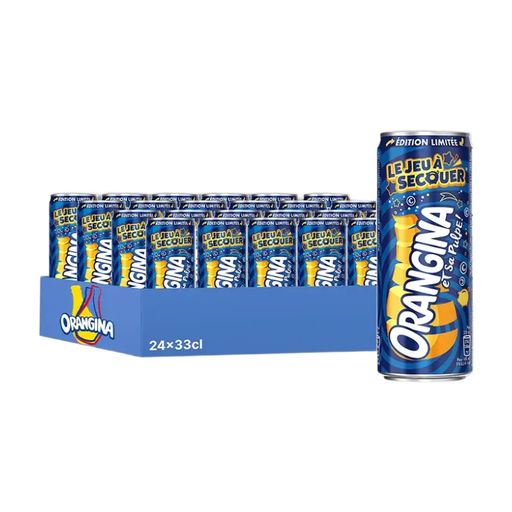 Image unavailable
Worth considering if you’re looking for individual cans to chill or take with you. This pack contains 24 × 330 ml cans. Check the product description and ingredients if you’re looking for juice rather than a fruit drink.
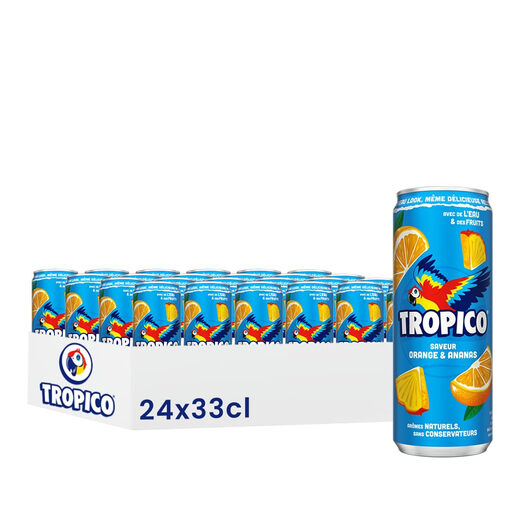 Image unavailable
This format is a good choice if you want individual cans for several snacks. The pack contains 24 × 33 cl cans; “fruit drink” shouldn’t be taken to mean pure juice.
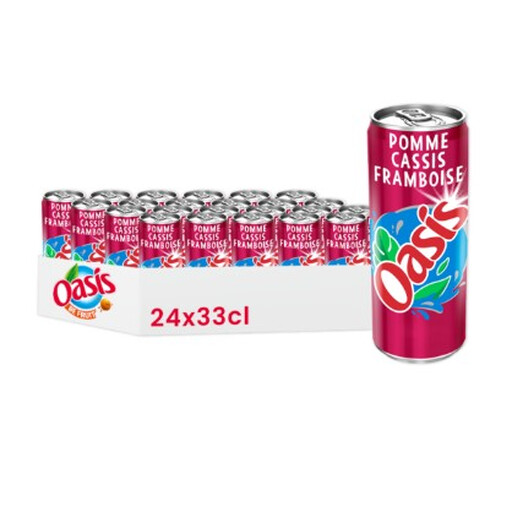 Image unavailable
This pack lets you take individual cans in apple, blackcurrant and raspberry flavours. It contains 24 × 330 ml cans; read the product description and nutrition information before comparing it with juice in small cartons.
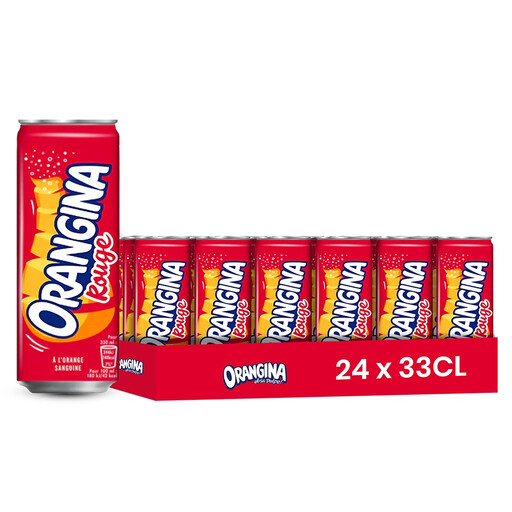 Image unavailable
Worth a look if you prefer a fizzy drink in individual cans. The pack contains 24 × 330 ml cans. To understand the claim for this variant, check the sugars per 100 ml and the product description.
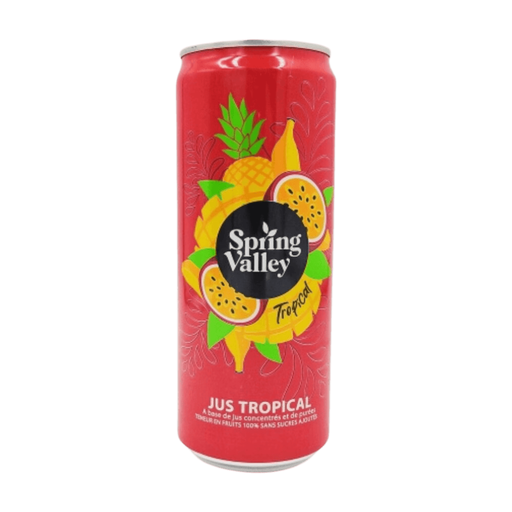 Image unavailable
This pack is a good fit if you’re looking for individual cans with tropical fruit flavours. It contains 24 × 330 ml cans. Before choosing it as pure juice, check the product description on the label rather than relying on the product name alone.
No: the container and the words “fruit” don’t determine the product description. The DGCCRF advises shoppers to distinguish drink categories by checking the label. For example, Auchan describes its Tropicana Juicy Tropical cans as a “fruit juice drink made from concentrate”, with water first on the ingredients list.
A small carton is handy if you want a 20 cl serving of juice, while a can may suit you better if you prefer that container and a 33 cl serving. Check the product description too: the Carrefour juice cartons and Tropicana Juicy Tropical cans listed by the retailers aren’t described as the same type of drink. Keep water to hand to rehydrate after exercise.
No: juice can contain sugars naturally present in fruit. Read the “of which sugars” line in the nutrition information and take the serving size into account, even when the packaging says “no added sugars”.
Compare the number of units, the size of each one, the type of container and the drink description. A pack of six 20 cl cartons and a pack of six 33 cl cans don’t provide the same serving sizes, and they may not contain the same type of drink.
Put empty cans in the recycling collection with other packaging. ADEME says metal packaging should be placed loose, not nested, and doesn’t need to be washed.