
Livraison le jour même ou le lendemain

Qualité garantie

Débloquez vos offres de bienvenue: Livraison GRATUITE | Jusqu'à -80 % | 30 jours d'essai gratuits à JoyPlus
Téléchargez l'application
A draught coming in under the door, dust gathering in the hallway or a floor that feels cold are usually easy problems to fix. But buying a door draught excluder can quickly lead to disappointment: adhesive that peels off, a brush that’s too short, annoying friction or a product that isn’t suitable for an uneven floor.
Before comparing prices or colours, check three things: the size of the gap, the type of floor and the fixing method. This will help you choose a door draught excluder that’s right for the door in question.
A draught excluder with a rigid strip may work well on parquet, laminate, PVC or polished concrete. On old tiles, unfinished concrete or a surface with raised areas, however, it may leave gaps that let draughts through.
In this case, choose a door draught excluder for uneven floors with a flexible brush, soft membrane or articulated profile. A model designed only for smooth floors may wear out more quickly and make it harder to open the door.
An adhesive door draught excluder designed to cover gaps of up to 15 mm won’t be effective if the gap is 20 or 25 mm. On the other hand, a strip that’s too thick may rub against the floor and make the door difficult to close.
With the door closed, measure the widest gap between the bottom of the door and the floor. Check the width too: 80 or 93 cm models can often be trimmed to size, but remember to allow for this before fitting.
Adhesive makes fitting easier, which can be handy in a rented home or if you’d rather not drill. However, the surface must be clean, dry, grease-free and reasonably smooth. Dust, moisture or a textured door can affect how well it sticks.
Screw-on fixings need a little more equipment, but provide a durable mechanical hold. They may be a better choice for a door that’s used frequently, a commercial premises or a heavy door.
The product details should specify the maximum gap it can cover. The 3M range available on Joybuy includes models designed for gaps of up to 15 mm, 20 mm, 25 mm, 27 mm or 30 mm, depending on the design.
A double row of brushes, a transparent strip or a thin membrane can help limit draughts, dust and moisture. However, claims such as ‘up to 80 %’ should be treated as product information that depends on fitting conditions and the condition of the door.
For a door draught excluder designed for smooth floors, look for a soft or transparent strip that stays in contact with parquet, laminate, vinyl, PVC or polished concrete. Adhesive models are quick to fit, while screw-on versions are suitable if you’re looking for a more secure fixing.
On an uneven floor, a row of brushes or an articulated profile will follow changes in the surface more closely. The product must still be compatible with the way the door opens and must not press too firmly against the floor.
An adhesive door draught excluder can be fitted without drilling, but preparing the surface properly is essential:
For a screw-on door draught excluder, mark the fixing points, use screws that are suitable for the door material and check the alignment before tightening them fully. When trimming, wear gloves and safety glasses, following the precautions given in the product details.
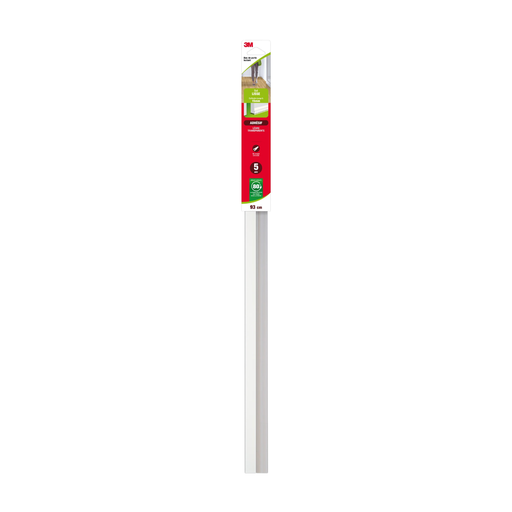
Why it’s a good match for this situation: This model is suitable for a first-time installation on parquet, laminate, vinyl, PVC or polished concrete, if you’re looking for a solution that doesn’t require drilling.
The product details specify that it’s for smooth floors, so you won’t mistake it for a model designed for a textured or very uneven surface.
93 cm long, with adhesive fixing and claimed coverage of up to 15 mm.
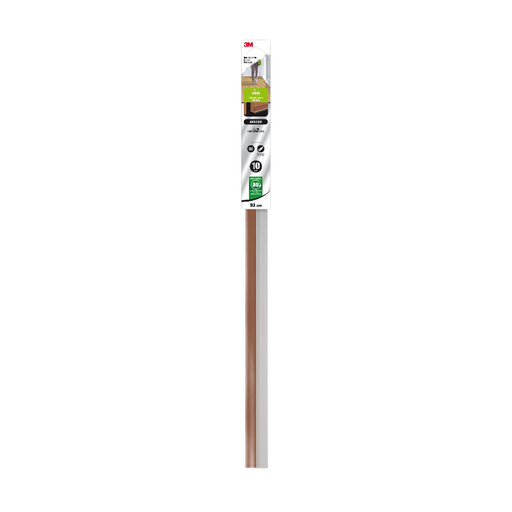
Why it’s a good match for this situation: Its brown finish and transparent strip blend discreetly with wooden doors and darker interiors.
The ‘smooth floor’ description lets you check that it’s suitable before you buy, rather than relying on the product’s appearance alone.
93 cm profile, self-adhesive fixing and claimed coverage of gaps up to 15 mm.
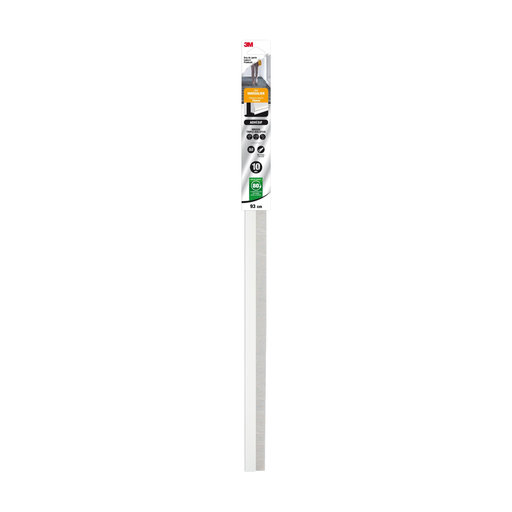
Why it’s a good match for this situation: This model is designed for entrance doors, garages or workshops with unfinished concrete, natural stone or other uneven floors.
It’s specified for uneven floors, so you won’t have to fit a rigid strip against a surface with varying levels.
Painted aluminium profile, adhesive fixing and claimed coverage of up to 25 mm.
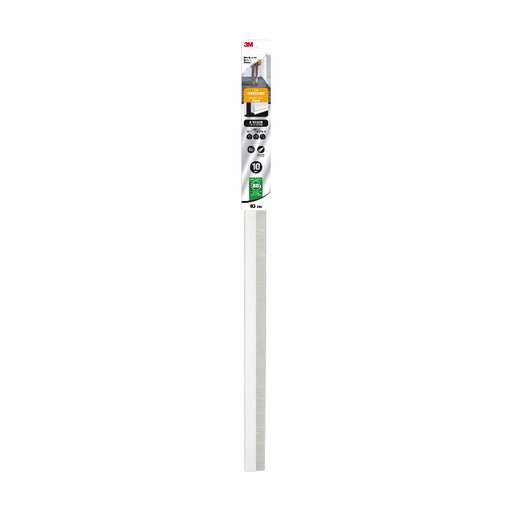
Why it’s a good match for this situation: Screw-on fixing is suitable for doors used every day when you want to rely less on adhesive.
Screw-on fixing reduces the risk of the seal coming loose during cleaning or with frequent use, provided it’s fitted to a suitable surface.
White aluminium profile, double row of brushes with a membrane, and can be trimmed with a saw.
We’ve put together a comprehensive, regularly updated list of products that meet these strict selection criteria and European safety requirements.
The door must be clean, dry and grease-free. Measure and trim the profile, then position it with the door closed to check that it touches the floor. Gradually peel off the backing film and press firmly along the full length. Wait until the adhesive has set properly before using the door heavily.
A draught excluder cushion is usually removable and sits against the door or attaches directly to it. It’s quick to install, but may move each time the door opens. An insulating threshold strip, brush or seal fitted to the bottom of the door moves with it. The right choice depends on how often the door is used, the look you want and how even the floor is.
Its lifespan depends on the material, how often the door is opened, how it’s cared for and the surface it’s fitted to. Product details may state a minimum lifespan of five or ten years for certain models, but this doesn’t guarantee the same performance in every home. Check the strip or brushes regularly: deformation, peeling or a draught that persists may mean it’s time for a replacement.