
Livraison le jour même ou le lendemain

Qualité garantie

Débloquez vos offres de bienvenue: Livraison GRATUITE | Jusqu'à -80 % | 30 jours d'essai gratuits à JoyPlus
Téléchargez l'application
A jewelry organizer can quickly become cumbersome if it is not suited to your collection. A tray that is too shallow leaves necklaces tangled, an unstable display can tip over, and a poorly compartmentalized box can turn the search for a pair of earrings into a real treasure hunt.
Before placing your order, it is worth keeping three common pitfalls in mind:
Here are the criteria to consider when choosing storage suited to your home, a retail environment or a photography session.
The right storage solution depends first and foremost on your collection:
A jewelry display tray can also be a smart choice for boutiques, exhibitors and photographers who want to arrange several pieces within a single setting.
Not all materials are suited to the same uses. A PU leather jewelry tray can generally be cleaned with a soft cloth and provides a smooth, even surface. It fits easily on a dresser, desk or inside a display case.
Wood provides a more rigid structure. Some models combine solid wood, microfiber and PU leather to create a stable base with a soft surface for accessories. Microfiber cannot, however, prevent every type of mark, so it is best to store clean jewelry separately.
For a jewelry box, check for an interior lining, compartments and a properly fitted closure. A jewelry box with a mirror can be especially convenient for trying on accessories directly at your dressing table.
Measure the intended space before ordering. As a guide:
Stability depends both on the weight of the base and on how the pieces are distributed. For a display case or trade-show stand, choose a weighted base and a reasonable height. At home, also consider drawer width and the clearance needed to open wardrobe doors.
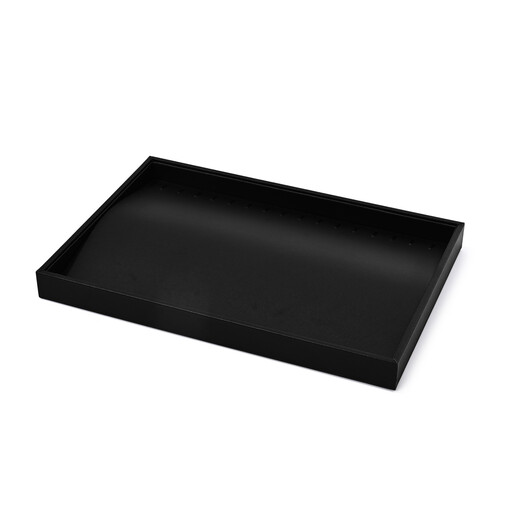
Why this option works: its open design keeps rings, earrings, bracelets and watches clearly visible on a dresser or desk, with no assembly required.
Its stated dimensions of 35 × 24 × 3.5 cm give you a clear idea of the space it will occupy, without relying on the photo alone. The surface can be cleaned with a soft cloth.
Compartments for several types of jewelry, suitable for use at home or in a boutique, with no assembly required.
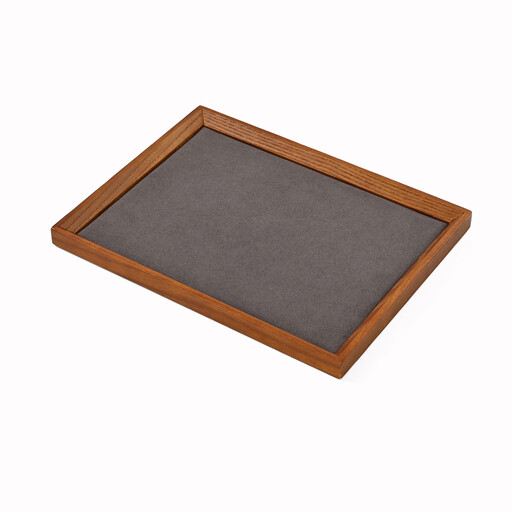
Why this option works: measuring 23 × 15 × 1.7 cm, it fits easily on a bedside table, dressing table or display counter.
The rigid base and microfiber lining create a protective layer between the jewelry and the surface. The tray should nevertheless be kept in a dry place.
Solid wood, a microfiber surface, a stated weight of 0.22 kg and suitability for use at home or in a boutique.
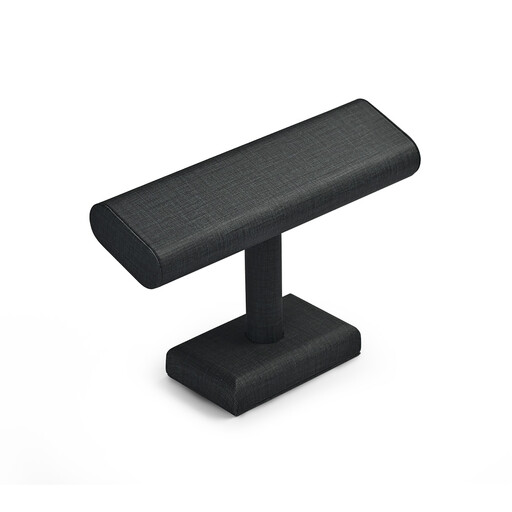
Why this option works: its vertical structure is designed for collections of watches, bracelets, chains and bangles, whether at home or in a retail setting.
Its weighted base helps reduce the risk of tipping, an important consideration with taller displays. The soft resting bar is designed to minimize direct contact with watches.
Dimensions of 20 × 14 × 6 cm, a stated capacity of four to five pieces and a ready-to-use design.
To extend the life of a jewelry display, avoid exposing it directly to sunlight, a radiator or humidity. Clean PU leather, wood and microfiber surfaces with a dry or barely damp cloth, without using abrasive products. Excess water can damage the finish.
Keep long necklaces away from rings and earrings. When using a jewelry box, avoid filling compartments to the brim: clasps and chains can become misshapen under pressure. Also remember to check the stitching, dividers and closure regularly.
The dimensions, materials and stated capacity should always be assessed against your actual needs. For purchases intended for commercial use, also check the delivery terms, the exact contents of the package and the liability information provided on the product page.
A vertical stand or a tray with separate sections is generally more suitable than a box without compartments. If you have a substantial collection, you can combine a necklace organizer with a tray dedicated to rings, earrings and bracelets.
Its main purpose is to keep jewelry visible and separated. It does not, however, replace a closed box when it comes to protecting pieces from dust or humidity. For jewelry worn less frequently, a jewelry box with a mirror and an interior lining will often be the better choice.
Choose dimensions that fit the display case, a stable base and materials that are easy to clean. A jewelry display stand should also leave enough space between pieces so that every item remains clearly visible, particularly during an exhibition or photography session.