
Livraison le jour même ou le lendemain

Qualité garantie

Débloquez vos offres de bienvenue: Livraison GRATUITE | Jusqu'à -80 % | 30 jours d'essai gratuits à JoyPlus
Téléchargez l'application
A well-chosen jewellery box keeps necklaces from getting tangled, makes earrings easier to find and helps prevent scratches caused by haphazard storage. It can also complement your décor or serve as a display stand in a shop, jeweller’s or designer’s studio.
Don’t be swayed by flattering photos, though. A box that’s too narrow, poorly designed compartments or a tricky-to-clean lining can quickly make it impractical for everyday use. Here are the main things to consider before you buy, along with a selection to suit different needs.
A jewellery box may look large but offer very little usable space inside, especially if it has thick walls, fixed dividers or shallow drawers. Check the stated dimensions carefully and compare them with the space available on your dressing table, in your wardrobe or in a drawer.
If your collection includes bracelets, necklaces and earrings, it’s best to choose a box with several storage levels. Adjustable compartments are particularly useful if your collection is likely to grow.
A ring holder won’t meet the same needs as necklace storage. Long chains need hooks or vertical space to help prevent knots. Watches and rigid bracelets, meanwhile, need more depth and a stable base.
A box made up entirely of small compartments will suit rings and earrings, but will be much less practical for pendants, watches or bangles.
Velvet, faux leather and wood can give a box an elegant finish, but it’s also worth considering how easy it is to care for, how well it stands up to moisture and how stable it is. Jewellery should be protected from dust, but a closed box doesn’t remove the need to store it somewhere dry.
Avoid keeping your jewellery organiser in the bathroom or near a heat source. A soft, dry cloth is generally a better choice for cleaning than abrasive products.
Start by taking stock of the pieces you need to store:
A women’s jewellery box isn’t necessarily different from a model designed for men. In both cases, the interior layout, capacity and ease of access are what really matter.
Velvet and microfibre provide a soft surface that helps reduce friction. Wood, MDF, acrylic and polyurethane each have their own look, weight and care requirements.
Check the finishing details too: rounded edges, a reliable clasp, a non-slip base and drawers that run smoothly. These details make much more difference in everyday use than a purely decorative effect.
For travel, a compact jewellery box with a clasp or handle is a better choice than a large, stationary case. If you want to limit access to what’s inside, look for a lockable model and check what type of lock is included.
A clasp or lock isn’t a substitute for theft protection, though. Its main purpose is to keep the box closed and prevent it from opening accidentally.
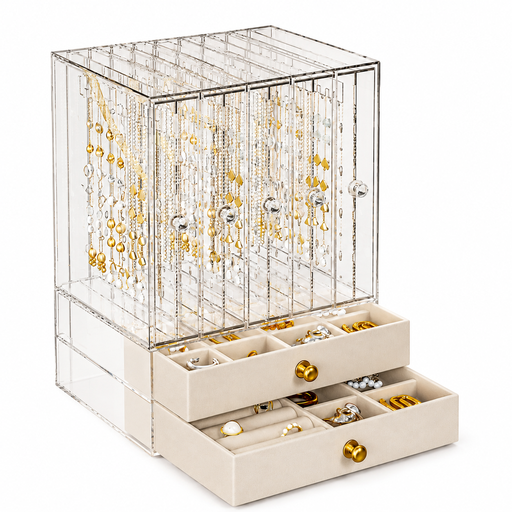
Why it suits this need: Its transparent design makes it easy to spot your accessories, while the removable dividers let you arrange the space for rings, earrings, bracelets and necklaces.
The clear design means there’s no need to rummage around, while the removable compartments let you change the layout to suit your needs.
Transparent design, removable dividers and separate storage for several types of jewellery.
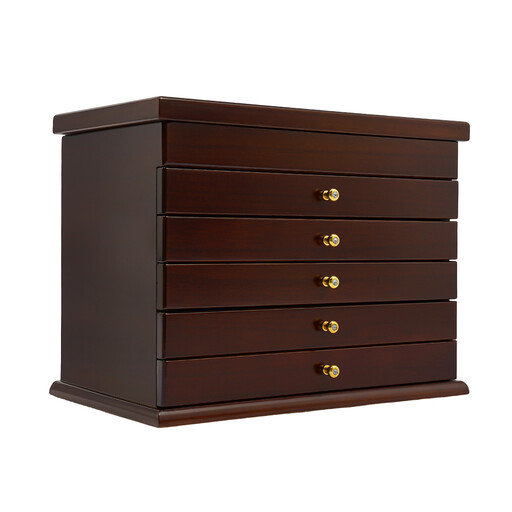
Why it suits this need: This box combines acrylic, paulownia wood and a metal frame. It features a carved lid, a metal handle and an interior lined with velvet and cotton strips.
The six tiers help keep different types of jewellery separate, while rubber feet help keep the box steady on furniture.
Six tiers, walnut or white walnut finish, dimensions of 31 × 20 × 24 cm and a stated weight of around 2.2 kg.
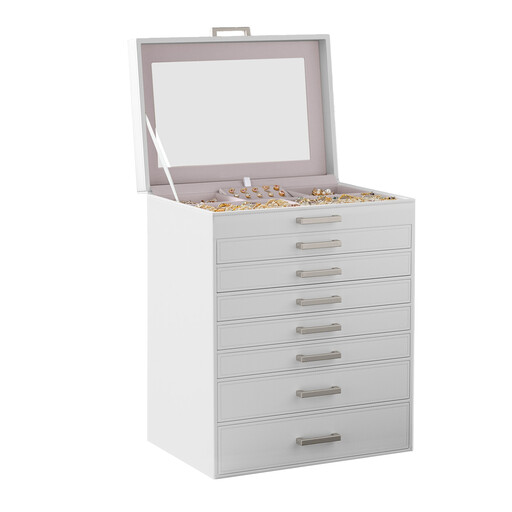
Why it suits this need: Its vertical design, measuring 30.5 × 20.2 × 39.2 cm, suits larger collections of jewellery, watches and accessories, while taking up little floor space.
The many compartments and dedicated watch section help prevent pieces from being stacked together, where they could get scratched or tangled.
Eight tiers, watch storage, velvet lining and a stated weight of 5.7 kg.
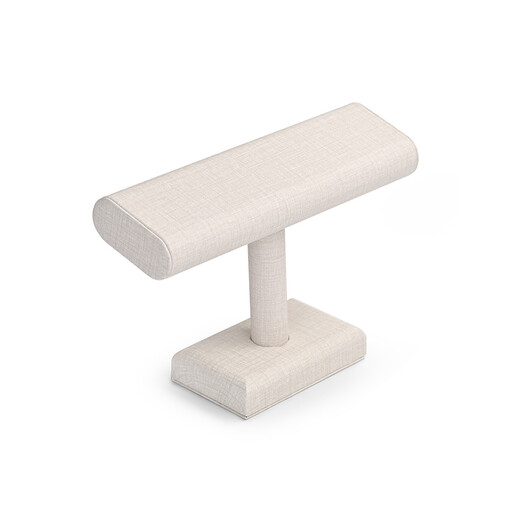
Why it suits this need: This display stand works in a shop window, on a stall or at home to showcase watches, bracelets, chains and bangles.
The weighted base helps prevent it from tipping over, while the soft covering on the bar reduces direct contact with watches.
Stated capacity of four to five watches or pieces of jewellery, dimensions of 20 × 14 × 6 cm and no assembly required.
We’ve put together a complete, real-time updated selection of products that meet these demanding criteria and European safety standards.
Choose a model with hooks, vertical spaces or individual compartments. Very fine necklaces can be tucked into small pouches, while long chains need enough height. Avoid leaving them loose in a drawer shared with bracelets.
Regularly dust the outside with a soft, dry cloth. On velvet, a soft brush can remove particles without wetting the lining. Keep the box in a dry place and follow the manufacturer’s care instructions for wood, faux leather or acrylic.
It can make it easier to choose your accessories, especially in the bedroom or when travelling. Check, though, that the mirror doesn’t take up too much of the available space. For travel, a model with a mirror and a small removable case can combine checking, carrying and storing your jewellery in a particularly practical format.