
当日/次日达

品质保障

开启新人专享福利: 全场免邮 | 低至 2 折 | 免费试用 30 天 JoyPlus 会员
下载 Joybuy
A jewellery display stand can transform a dressing table, shop window or living-room table into a well-organised space. However, some models focus mainly on appearance and prove impractical in everyday use. Tangled jewellery, an unstable base and a covering that wears out quickly: a few details are enough to make jewellery storage disappointing.
Before buying, it is worth distinguishing between a simple decorative accessory and a genuine jewellery organiser. Here are the criteria to consider, along with a selection suited to different uses in France: at home, in a shop, for product photography or on an exhibition stand.
A spacious tray does not guarantee effective storage. Without dividers or dedicated sections, chains, bracelets and earrings can easily become tangled. For delicate jewellery, check for compartments, separate surfaces or an arrangement that allows each piece to be kept apart.
A jewellery tray is best suited to varied collections that you want to arrange flat. For watches, bracelets and necklaces, a vertical stand will often be more suitable.
A tall or heavily loaded display stand can topple if its base is too narrow or insufficiently weighted. This is particularly problematic in a shop, on a trade-fair stand or in a busy area.
Compare the stand’s dimensions and weight with its stated capacity. A sturdy, sufficiently wide base helps keep accessories in place, although it does not replace secure installation in a display cabinet.
Wood, microfibre, synthetic leather and faux leather offer different appearances and come with different care requirements. A soft surface can reduce direct contact between jewellery and a rigid stand, but it also requires appropriate care.
Be wary of vague descriptions such as ‘luxury’ or ‘premium’ when no material, dimensions or care instructions are provided. The product listing should clearly state what is actually included: jewellery not included, fastening accessories or a display stand ready for use.
For a wooden jewellery stand, choose a smooth surface with a microfibre lining or another soft material. Natural variations in the grain can give each piece a unique character, but the quality of the finish remains essential to prevent splinters and uncomfortable edges.
A leather jewellery display stand may in fact be made from synthetic leather or PU. This distinction should be clearly stated. PU can generally be cleaned with a dry or slightly damp cloth, but abrasive products, excess water, heat and prolonged exposure to sunlight should be avoided.
Measure the available surface before placing your order:
Also consider the height needed for necklaces and bracelets. A T-bar stand should remain easy to access and must not be placed where it could catch on anything.
For everyday use, choose a surface that is easy to clean. Microfibre and PU can generally be wiped with a soft cloth. Wood and fabric coverings, however, should be kept dry.
In a shop or at a trade fair, choose a product that requires no assembly, is easy to move and is sufficiently stable. For photography, a neutral background — grey, black or beige — can help jewellery stand out, depending on its colour and finish.
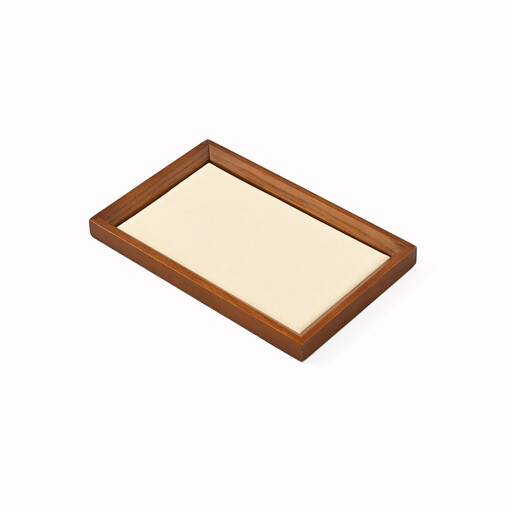
Why this choice suits this profile : Measuring 23 × 15 × 2 cm, this tray is ideal for a dressing table, bedside table or small counter. Its microfibre lining allows you to display several categories of jewellery without having to install a complete piece of furniture.
The size is clearly stated and the tray arrives fully assembled. This means you avoid a bulky model whose actual capacity would be difficult to make the most of.
Solid wood construction, microfibre lining, compact size and easy care with a soft cloth.
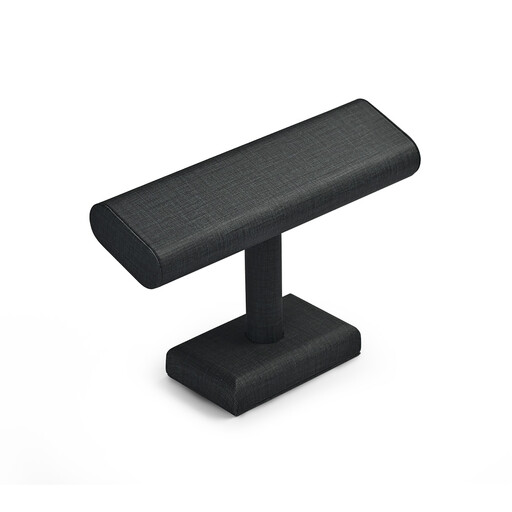
Why this choice suits this profile : Its weighted base and soft horizontal support provide a neat way to display watches, bracelets, chains and bangles. Measuring 20 × 14 × 6 cm, it is still easy to set up on furniture or in a display cabinet.
The stated capacity of 4 to 5 pieces and the weighted base provide clear, practical indicators, rather than vague promises of high capacity.
Linen-effect faux leather texture, stable base, soft resting bar and no assembly required.
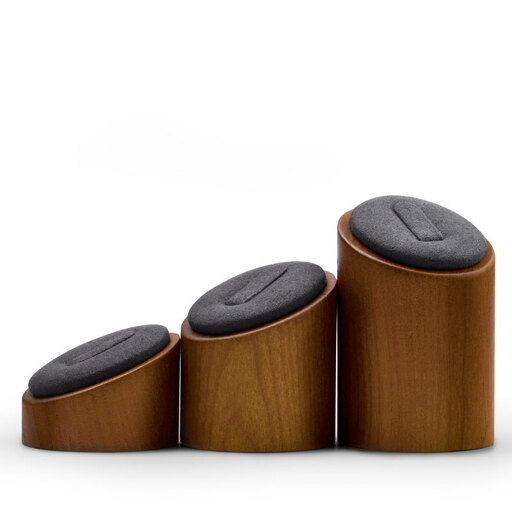
Why this choice suits this profile : Its three display heights, from 3.2 to 7.2 cm, are ideal for makers, shops and photographers who want to vary the arrangement of a display or image.
The multi-level design prevents all the rings from being lined up in a single row, which could conceal some pieces or make them difficult to pick up.
Solid wood, grey microfibre, three heights and immediate use with no installation required.
We have put together a complete, real-time updated list of products that fully meet these strict selection criteria and European safety regulations.
To get the most from a necklace and bracelet display stand, space out the chains and avoid overlapping the pieces. Watches can be placed face-up on a soft bar, while rings are best kept separate on a dedicated display stand.
Keep the organiser away from a highly exposed window, radiator and damp areas such as the bathroom. To remove dust, use a soft, dry cloth. On PU or faux leather, a slightly damp cloth may be suitable, provided the surface is dried quickly. Do not use solvents or abrasive products, and avoid large quantities of water.
Small components, particularly beads and findings used with jewellery-making accessories, must be kept out of the reach of young children. For a creative kit containing small parts, always follow the stated age recommendation and the supervision guidance given on the manufacturer’s product page.
A jewellery display tray with a soft lining is suitable for rings, earrings, necklaces, bracelets and watches arranged flat. If watches and bracelets make up most of your collection, a vertical T-bar model can free up surface space while improving visibility.
Separate the chains into different sections of the tray and avoid laying them on top of one another. For regular display, use several vertical stands or separate compartments. The stated capacity should be assessed according to the size of the jewellery, not just the number of pieces.
Its lifespan depends on how often it is handled, humidity, exposure to sunlight and care. A wooden or weighted base can remain stable for a long time if it is not moved abruptly. Regularly cleaning the microfibre or synthetic covering according to the product listing’s recommendations helps preserve its appearance.