
Same-day & Next-day Delivery

Quality Guaranteed

Unlock Your Welcome Offers: FREE Delivery | Up to 80% OFF | Free 30-day JoyPlus trial
Download the APP
You've seen them all over social media: colourful pouches filled with a uniquely textured drink, somewhere between a liquid and a solid. The jelly drink is much more than just a refreshing snack?— it's a true sensory experience. But with a booming selection, how do you navigate the options? As product experts at Joybuy, our mission is to give you the keys to decode the labels and make the right choice.
The marketing is often enticing, but disappointment can be just around the corner. Many buyers end up with a product that doesn't live up to its promises. Here are the most common mistakes.
The defining feature of an Asian jelly drink is its unique texture, which is both firm to the bite and easy to sip. The pitfall? Ending up with a product that is merely an artificially thickened juice, without the chewable bits or the characteristic texture of a konjac snack. The result is a disappointing experience, a world away from the viral TikTok drink that caught your eye. The secret is in the ingredients: look for components like konjac powder or nata de coco.
A pouch of jelly drink is, above all, an on-the-go snack. The problem? Some packaging is a real hassle to open without scissors, or the spout design is so poor that it defeats the whole purpose of the product's convenience. And while they may look like a light snack, some formulas are genuine sugar bombs (with high-fructose corn syrup leading the charge), turning a small treat into a calorie trap.
To make the best choice, two criteria are essential: they define both the quality and the enjoyment of the experience.
The gelling agent is the ingredient that makes all the difference. Scan the ingredient list for:
The packaging should make sipping easy, not complicated. Look for these formats:
Rather than just a list, we've matched each product to a specific profile to help you find the one that's made for you.
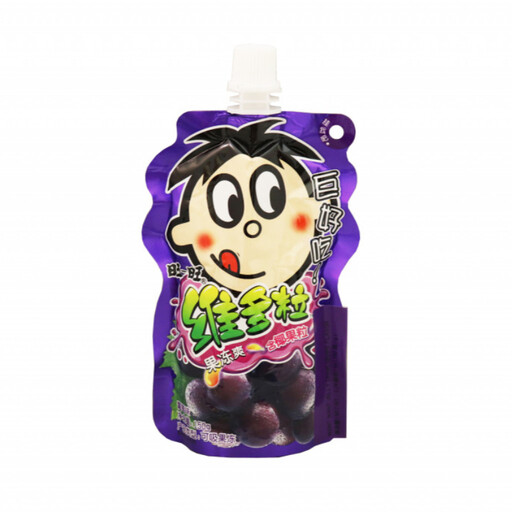
Why it's the right choice: This drink from Want Want is the epitome of the viral TikTok drink. Its recognisable packaging and texture, which combines smooth jelly with nata de coco pieces, make it the perfect product for anyone wanting to try the authentic viral experience.
It sidesteps the "fake jelly" trap with its real nata de coco pieces and konjac base, ensuring the sought-after chewy texture.
Rich texture with real pieces. Ultra-convenient pouch format for on-the-go consumption.
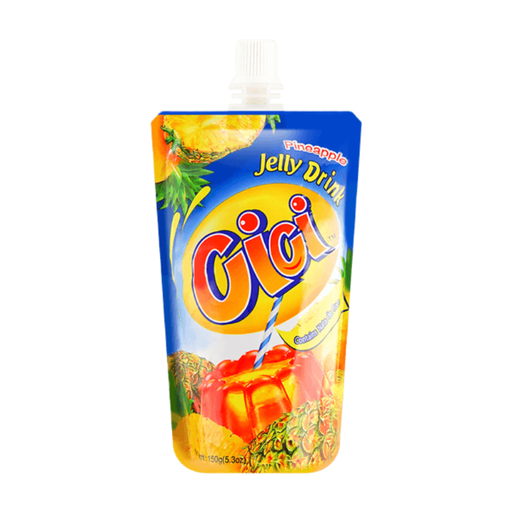
Why it's the right choice: This is a great alternative to the usual biscuits and fruit pouches. The pouch format is fun for kids and, most importantly, very practical: it slips easily into a bag and can be enjoyed mess-free.
It avoids the hassle of impractical packaging with its individual pouch and a spout designed for direct, mess-free sipping.
Contains real fruit juice (≥ 15%) and nata de coco (≥ 5%). Individual, portable, and hygienic packaging.
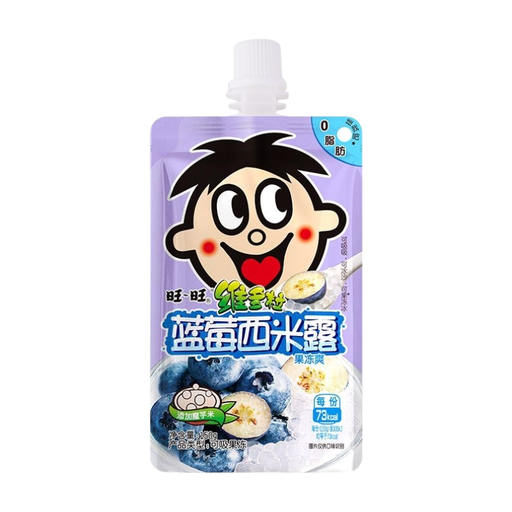
Why it's the right choice: For those who aren't satisfied with a simple jelly, this "Blueberry Sago" version is a more sophisticated option. It combines multiple textures for a richer, more surprising mouthfeel, somewhere between a drink and a dessert.
This product goes beyond a simple jelly by incorporating konjac pearls and tapioca balls. The result: a complex and varied texture in every sip.
A mix of multiple textures (konjac pearls, tapioca balls). Unique blueberry-sago flavour.
We have selected a full range of products that meet our quality criteria and comply with current regulations.
Absolutely. The experience is much better when the drink is chilled. Most manufacturers recommend placing it in the refrigerator for a few hours before consumption. The cold slightly firms up the jelly's texture and enhances its thirst-quenching quality. Some can even be placed briefly in the freezer for a "slushie" effect.
The basic ingredients are typically water, sugar (or high-fructose corn syrup), a gelling agent, and flavourings. For a quality experience, look for products containing konjac powder for the jelly, nata de coco for the chewiness, and a significant percentage of real fruit juice for the flavour.
It all depends on the product. Some jelly drinks are formulated to be light, with around 60 kcal per 100g serving and 0g of fat. Conversely, others can be much higher in sugar. It is therefore essential to check the nutritional information on the packaging to make an informed choice.