Everyday chai or coffee drinkers
You regularly take a small amount from the jar, so ease of opening and a capacity that suits your cupboard matter more than a decorative design.


To store dry chai or instant coffee in a cupboard, choose a jar designed for food and dry goods, with a closure suited to how often you’ll open it. If you also want to use the container as a gift or display it at a Christmas market, check its capacity, seal and food-contact suitability before prioritising its appearance.
You regularly take a small amount from the jar, so ease of opening and a capacity that suits your cupboard matter more than a decorative design.
You want a presentable container for a dry mix without overlooking its suitability for food contact. Bormioli Rocco describes its Fido collection as suitable for storage and presentation.
You want to store chai, instant coffee or other dry ingredients separately, and choose jars that fit neatly in your cupboard.
When choosing a jar for dry chai or instant coffee, start with your main need: frequent use, putting together a gift or saving space. In every case, the DGCCRF recommends using a container designed for food storage and following its instructions for use.
| Criterion | What to check | Who it’s for |
|---|---|---|
| Frequent opening | Whether it’s designed for dry goods, the closure and the condition of the seal. | If I use it several times a week, I want a closure that’s easy to handle, rather than choosing a preserving jar just for its appearance; around 44% of consumers prioritise everyday use. |
| Christmas presentation | Food-contact suitability, usable capacity and space for a label. | For a gift or a stall display, I want a smart container that’s still suitable for what’s inside; presentation is the main priority for around 33% of consumers. |
| Capacity and storage | How much you usually store, the height of your cupboard and the jar’s dimensions. | When cupboard space is limited or I’m storing several ingredients, I prefer to match each container to the amount I keep; around 23% of consumers prioritise saving space above all. |
A container intended for decoration isn’t necessarily designed to hold chai or instant coffee directly. The DGCCRF recommends using containers made for storing food.
Check the jar’s stated intended use and follow its instructions before filling it.
Le Parfait advises against using its Super jars for bulk storage: according to the brand, repeatedly opening and closing them can damage them.
If you regularly take chai or instant coffee from the jar, look for a model that its manufacturer says is suitable for storing dry goods in bulk.
A damaged seal means you can’t rely on the jar’s intended closure. Le Parfait says not to reuse damaged lids or seals on Color Vis jars.
Inspect the closure before filling the jar and check which parts are compatible with your chosen model.
A large jar may take up more cupboard space than expected, even if it looks right as a gift.
Compare the amount you usually store with the stated capacity, and measure the space available.
The brand describes Color Vis as a jar for dry goods and bulk storage, available in 1 L, 2 L and 3 L sizes.
The Clip Top range includes glass jars with clip-top closures in a variety of capacities.
The Fido collection combines glass jars with rubber seals, in a range of sizes that the brand says are suitable for uses including storage and presentation.
Carrefour’s jar range includes sizes such as 0.5 L, 0.75 L, 1 L, 1.5 L and 2 L.
These Joybuy containers suit different cupboard-storage needs: several jars for separating dry ingredients, a specific size for a gift presentation or a dedicated coffee container. Compare the variant and the space it takes up before choosing.
 Image unavailable
A set to consider if you want to store several dry goods separately in your cupboard.
Check the jar dimensions against the space available.
 Image unavailable
A size to consider for a small supply of dry goods or a gift arrangement.
Acacia lid and silicone seal. The lid should be washed by hand and dried thoroughly; avoid pouring boiling water directly into the jar.
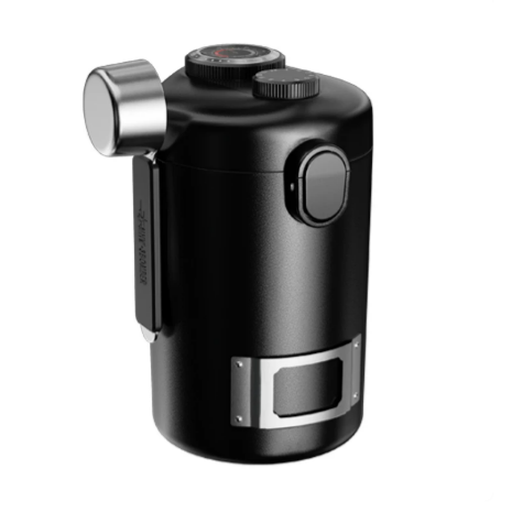 Image unavailable
A container to consider for storing dry coffee beans, rather than assuming it will hold the amount of chai or instant coffee you need.
The product name mentions humidity monitoring and a two-tier design. Check the capacity, dimensions and included configuration; the humidity dial is indicative, not a high-precision instrument.
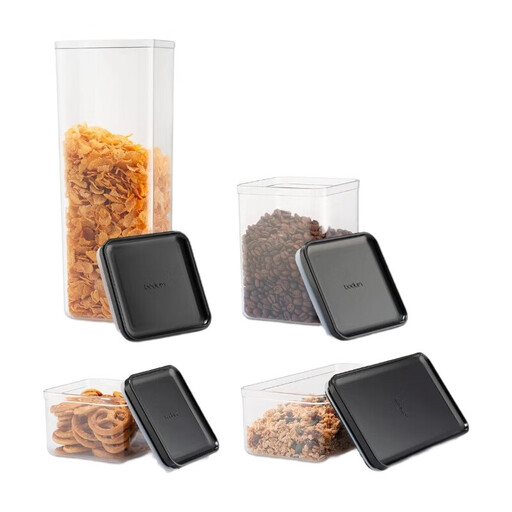 Image unavailable
Another set to consider for organising several dry goods in your cupboard.
Compare the dimensions of this variant with your storage space before buying.
Yes, provided the jar is suitable for food contact and its instructions cover the storage you have in mind. The DGCCRF recommends using containers designed for food storage; a jar’s appearance doesn’t replace this check.
Look for a jar designed for dry goods and bulk storage, with a closure that’s convenient for frequent opening. Le Parfait describes Color Vis as suitable for this use; then choose a capacity that suits the amount you usually keep and the space available.
Don’t rely on a damaged closure to provide the jar’s intended use. Le Parfait says not to reuse damaged lids or seals on Color Vis jars; look for a part that’s compatible with the model in question.
Not necessarily: check the instructions for the specific model before using any heat treatment. Le Parfait says Color Vis shouldn’t be used for processes that require heat treatment, unless you use a Familia Wiss capsule.