
Livraison le jour même ou le lendemain

Qualité garantie

Débloquez vos offres de bienvenue: Livraison GRATUITE | Jusqu'à -80 % | 30 jours d'essai gratuits à JoyPlus
Téléchargez l'application
Japanese whisky appeals to both spirit enthusiasts and those looking for a refined gift. However, a pretty label or the word "premium" isn't enough to tell you whether a bottle truly meets your expectations. Origin, category, alcohol strength, volume and flavour profile are all worth examining before you make a purchase.
Article signed by the Joybuy Product Recommendation Officer, whose role is to filter commercial information and provide practical, measured buying guidance.
A Japanese brand doesn't necessarily mean that all the whiskies in its range have been distilled and aged in Japan. Some products are international blends or show a different origin on their product page. For a 70 cl Japanese whisky, always check the country of distillation, maturation and bottling, as well as the legal information on the packaging.
The criteria set by the Japanese Whisky Standards Association are a good benchmark for bottles that clearly claim the "Japanese whisky" designation. These require, among other things, production and maturation in Japan for at least three years. If the wording is unclear, the product page and label remain the best sources to consult.
A Japanese single malt whisky is made from malt from a single distillery. This designation doesn't directly tell you about its intensity, age or level of peat. Depending on the stills used, the casks and the maturation period, a single malt can be floral, fruity, woody or smoky.
Conversely, a Japanese blended whisky typically combines malt and grain whiskies. It can offer a smoother texture and a consistent profile, which is particularly enjoyable on ice, with sparkling water or in a cocktail.
A gift box, a fancy bottle or a word like "rare" can push the price up without changing the whisky's composition. First, compare the net volume, the alcohol percentage, the category and the stated flavour notes. A Japanese whisky for gifting can certainly come in a box, but its perceived quality depends mainly on how well the bottle's profile matches the recipient's tastes.
To choose a smooth Japanese whisky, look for descriptions mentioning vanilla, honey, pear, citrus or cereals. A fruity Japanese whisky might evoke apple, plum, grape or apricot. Terms like "smoky", "spicy" or "woody" signal a more pronounced aromatic presence, although their intensity can vary from bottle to bottle.
These descriptions remain indicative and don't guarantee an identical experience for every palate.
Most bottles have an ABV between 40 and 46% vol. A higher strength, such as the 51.4% vol. of Nikka From The Barrel, can give a more concentrated sensation. A few drops of water can help open it up, but this type of whisky requires more attention when serving.
For a first discovery or a relaxed tasting, a whisky at 40 or 43% vol. is often easier to enjoy. However, alcohol should always be consumed in moderation, and alcoholic drinks are not recommended during pregnancy.
The 70 cl format is ideal for a home bar or a classic gift. A 50 cl bottle can be a good option for trying a style without committing to a larger volume, as with Mikuni Whisky or Nikka From The Barrel.
Before buying, ask yourself whether the bottle will be enjoyed neat, on the rocks, diluted with sparkling water or used in cocktails. Fruity and smooth profiles often lend themselves to several uses, while a more aromatic single malt is usually best appreciated neat or with a few drops of water.
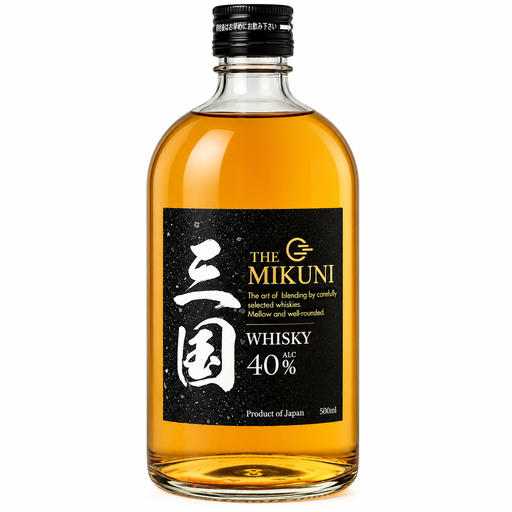
Why this choice suits this profile: its 50 cl format and 40% vol. strength let you discover the Japanese style without starting with a more committing 70 cl bottle.
The product page highlights the format, alcohol strength and Japanese identity of the presentation: all elements to compare before being swayed by the design alone.
50 cl bottle, 40% vol. and a presentation suitable for both drinking and gifting.
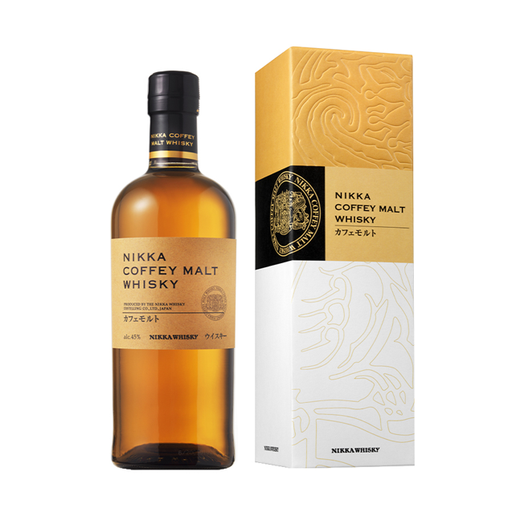
Why this choice suits this profile: its stated notes of citrus, pear, plum and vanilla match the search for a fruity Japanese whisky, with a texture described as rich and creamy.
The single malt category alone isn't enough to predict the taste: here, the Coffey still process and the stated flavour notes provide more concrete guidance.
Origin stated: Japan, 45% vol., 70 cl format and can be served neat, on the rocks, with water or in a cocktail.
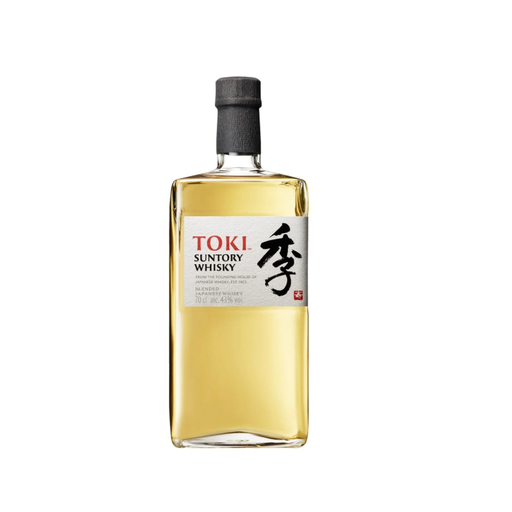
Why this choice suits this profile: its blend of malt and grain whiskies, notes of green apple, basil and citrus, and its recommendation as a highball make it a particularly versatile bottle.
The profile is clearly presented as a blend: don't buy it expecting the same experience as a single malt.
43% vol., 70 cl, fresh notes and can be enjoyed neat or in a cocktail.
If Japanese origin isn't essential, other bottles let you explore different profiles. Dalmore 12 Years, a Highland single malt at 40% vol. in a 70 cl bottle, combines orange and nut notes with maturation in bourbon and Oloroso casks. Jura Sherry Cask 12 Years focuses on plum, dried citrus and nuts.
For a Taiwanese expression, Kavalan Distillery Select No. 1 offers 40% vol. and 70 cl, with caramel and vanilla notes. These aren't Japanese whiskies, but they can enrich an international tasting selection.
A blend at 40 or 43% vol., such as Mikuni or Toki, can be an accessible first step. If you're after more fruit and a denser texture, Nikka Coffey Malt offers a profile built around citrus, pear and vanilla.
The 70 cl format is the most common and works well for both a gift and a home bar. Above all, check the alcohol strength, the type of whisky and the flavour notes. For someone who likes compact formats or simply wants to try a new reference, a 50 cl bottle may be more suitable.
Store it upright, tightly sealed, in a cool, dry place away from direct light. An opened bottle doesn't mature like a whisky in a cask. When the level drops significantly, contact with air increases: it's best to drink it within a reasonable time, while checking the condition of the cork and the bottle's seal.