Regular jam eaters
If you often make toast, it’s worth choosing a jar size that suits how quickly you’ll use it, and checking the storage instructions for after opening.


If you eat toast regularly, choose a jar size that suits how quickly you’ll use it, and check how to store it once opened. Then compare the sugars per 100 g, fruit content and ingredients in each recipe. A higher fruit content or an organic label doesn’t necessarily mean less sugar.
If you often make toast, it’s worth choosing a jar size that suits how quickly you’ll use it, and checking the storage instructions for after opening.
If the amount of sugar guides your choice, check the ‘of which sugars’ figure per 100 g and consider the portion you actually use.
If fruit or organically farmed ingredients matter to you, check these details on the specific product, separately from its nutritional information.
When choosing jam for toast, start with what matters most to you, then check the other details on the jar. Size, sugar, fruit content and storage instructions each meet different needs.
| Criteria | What to check | Who is it for? |
|---|---|---|
| Jar size | The net weight and how much you’ll use after opening. | If I eat toast regularly, I want a jar that suits my consumption, so it isn’t left in the fridge for too long. Around 25% of consumers put choosing the right size first. |
| Sugars | The ‘of which sugars’ figure per 100 g and the exact claim on the product. | I want to tell a recipe labelled as reduced in sugars apart from a standard one, without assuming it contains no sugar. This is a priority for around 25% of consumers. |
| Fruit and organic | The amount of fruit per 100 g and, if you’re looking for organic, the information shown on the product. | I choose based on the recipe and where the ingredients come from, while checking the sugar content separately. This is the main priority for around 25% of consumers. |
| Texture and storage | Whether it contains pieces and the instructions for after opening. | For my toast, a smooth or chunky texture matters just as much as being able to finish the jar within the recommended storage period. Around 25% of consumers prioritise these points. |
Jam described as ‘reduced in sugars’ still contains sugars. Anses also points out that ‘no added sugars’ doesn’t mean ‘sugar-free’.
Compare the full claim with the ‘of which sugars’ figure in the nutritional information on the jar you’re choosing.
Instructions for after opening vary by product. Bonne Maman recommends keeping its 370 g strawberry jam in the fridge for three weeks, while the Auchan products mentioned advise using them soon after refrigeration.
Choose a size that suits how quickly you’ll use it, and follow the instructions on the jar you buy.
Auchan describes its organic strawberry jam as made with 65 g of fruit per 100 g; its nutritional information also shows 55.9 g of sugars per 100 g.
Check the fruit content, ingredients list and ‘of which sugars’ figure separately.
These brands offer products in different recipes and sizes. The details below apply to the products named, not to each brand’s entire range.
Worth considering if you’re looking for strawberry jam with pieces of fruit.
Two ranges that let you compare standard strawberry jam with a recipe described as reduced in sugars.
Ranges to explore when comparing sizes and strawberry jam recipes.
Strawberry recipes with different stated fruit and sugar contents.
Brands to consider if you’re looking for extra strawberry jam in a standard-sized jar.
A retailer to consider depending on the jam products available locally.
This selection includes fruit jams in different sizes and textures, as well as a strawberry spread. First choose the category and recipe you’re looking for, then check the details for the specific product.
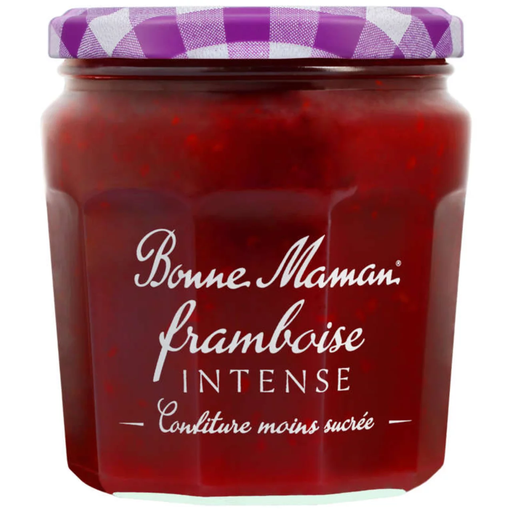 Image unavailable
Worth considering if you’d prefer raspberries rather than strawberries on your toast. The jar contains 335 g; check its nutritional information and storage instructions for after opening before comparing it with another recipe.
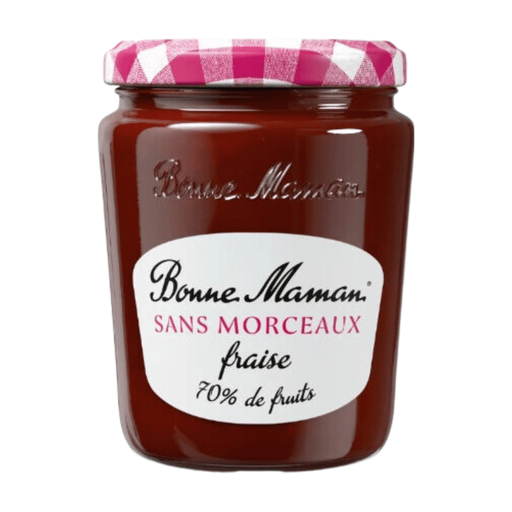 Image unavailable
Worth a look if you prefer a smooth, seedless texture on your toast. The variant name indicates a 310 g jar; check the label for sugar content and storage instructions after opening.
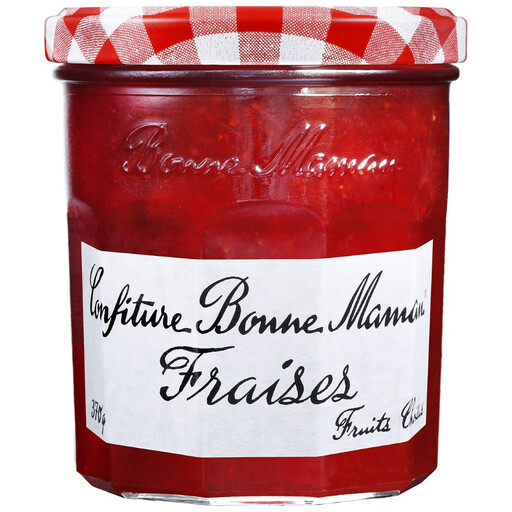 Image unavailable
For toast topped with strawberry jam containing pieces of fruit. Bonne Maman says this 370 g product is made with 50 g of fruit per 100 g and contains 59 g of sugars per 100 g. Follow the storage instructions on your jar.
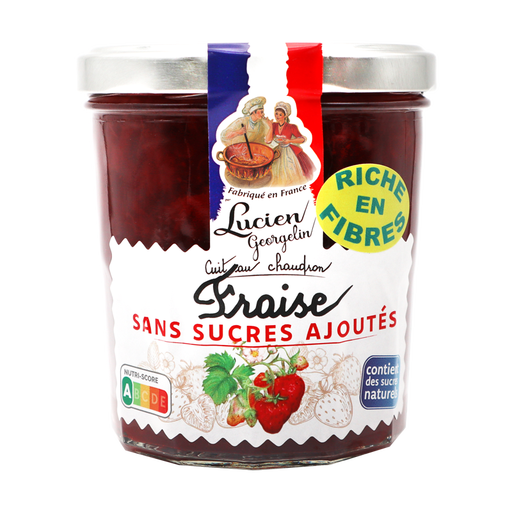 Image unavailable
Worth considering if you’d like a strawberry spread rather than jam. The jar contains 320 g; check the ingredients and storage instructions on the packaging before comparing it with a jam.
Start by comparing what matters for your toast: net weight, sugars per 100 g, fruit content and instructions for after opening. A difference in jar size alone doesn’t tell you anything about the recipe.
No: this claim doesn’t mean there are no sugars. Check the ‘of which sugars’ figure per 100 g for the product you choose. Anses also clarifies that ‘no added sugars’ doesn’t mean a food contains no sugar at all.
Not necessarily. According to Auchan, its La Gourmande and organic products each state 65 g of fruit per 100 g, but contain 40 g and 55.9 g of sugars per 100 g respectively. Compare the two figures separately.
Follow the instructions for the product you’ve bought. Bonne Maman recommends keeping its 370 g strawberry jam in the fridge for three weeks after opening; the Auchan products mentioned should be refrigerated and used soon after opening.