Households comparing jar sizes
You’re doing the weekly shop and want to compare jars in different sizes. Net weight helps you assess each size, but remember to take the recipe into account too.


For your weekly shop, choose a jar size that suits your household’s consumption, then compare recipes by checking their product descriptions and ingredients. Larger jars call for particular care when following the storage instructions after opening. And a recipe labelled ‘reduced sugar’ should not be treated as the same as a standard jam.
You’re doing the weekly shop and want to compare jars in different sizes. Net weight helps you assess each size, but remember to take the recipe into account too.
You use jam several times a week or share it with others. Sizes from 730 to 750 g may suit you if you can follow the storage instructions for your chosen jar after opening.
You want to tell a standard jam apart from a product labelled ‘reduced sugar’, or compare the stated fruit content. Check this information for the specific product you’re considering.
Start by comparing the amount in each jar with the size that suits your household. Then look at the recipe and check what’s available to buy from your usual retailer.
| Criterion | What to check | Who it matters to |
|---|---|---|
| Jar size | Check the net weight to compare sizes, while keeping standard recipes separate from those carrying a specific claim. | When I put several jams in my basket, I want to know how much is in each before I choose; around 39% of consumers prioritise comparing jar sizes. |
| Household size | Match the jar size to how often you eat jam, and read the storage instructions for your chosen jar after opening. | If we eat jam often, I look for a size our household can finish while following the storage instructions; around 23% of consumers prioritise finding a suitable size. |
| Type of recipe | Compare the product description, ingredients, nutritional information and stated fruit content for each product. | I want to make an informed choice about my recipe, especially when a jar is labelled ‘reduced sugar’; this is a priority for around 23% of consumers. |
| Local availability | Check that the product and size are available at the shop or for the collection option you plan to use. | To get my shopping done in one visit, I prioritise jam I can find at my usual retailer; around 15% of consumers put availability first. |
An extra jam and a product labelled ‘reduced sugar’ may suit different preferences. The claims on the front of the jar are no substitute for checking the specific recipe.
Check the product description, ingredients, nutritional information and stated fruit content for every jar you’re considering.
A 730 or 750 g jar should suit your household’s rate of consumption. Instructions for use after opening vary by product.
Before choosing a larger size, read the storage instructions for that exact product and consider whether you’ll use that amount under those conditions.
An opened jar that isn’t used according to its instructions may lead to food waste.
Carrefour notes that its information may vary by shop and collection option; E.Leclerc advises checking availability with the relevant store.
Check the product and its size with the retailer where you plan to shop.
These brands offer a range of sizes and recipes to compare. Check the details for each specific product.
Carrefour offers, among other products, a 370 g jar of Original strawberry jam and a 340 g Classic’ product labelled ‘reduced sugar’.
At E.Leclerc, this range includes strawberry jam in 370 g and 750 g jars, as well as a 320 g Intense strawberry recipe.
The retailer offers, among other products, extra strawberry jam in 360 g and 730 g jars.
ALDI offers TAMARA® extra strawberry jam in a 370 g jar.
The brand offers a range of fruit, sizes and recipes. Its strawberry and wild strawberry jam is a different product from its strawberry-only jams.
This selection includes Bonne Maman strawberry, apricot and peach jams in jars ranging from 335 to 750 g. For your weekly shop, compare each size and recipe with what your household will realistically use.
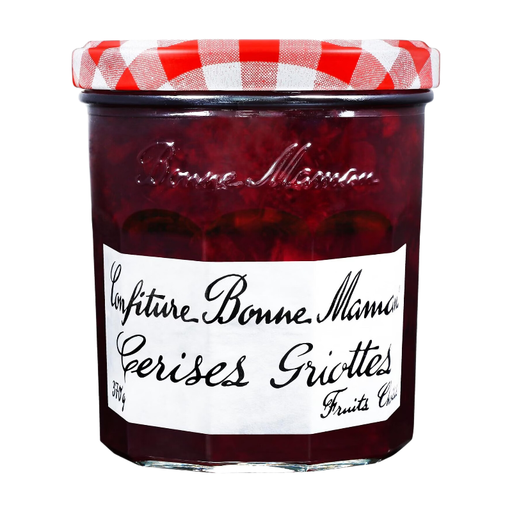 Image unavailable
This 750 g jar is worth considering if your household eats strawberry jam regularly. For this product, the instructions say to keep the jar in the fridge after opening and use within three weeks.
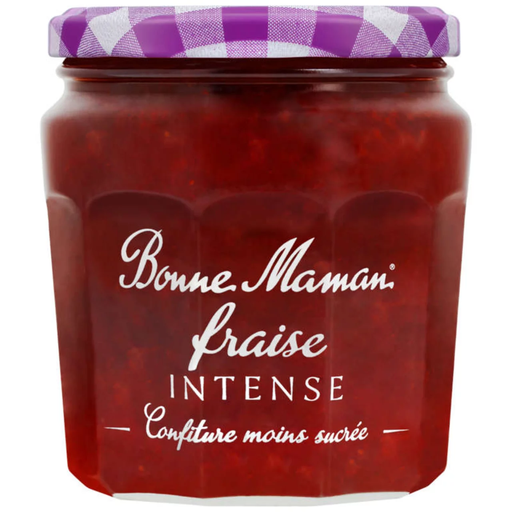 Image unavailable
This 335 g jar gives you the option of trying the Intense recipe if you’d like to compare different strawberry jams. Check its ingredients and nutritional information to assess this particular recipe, then read the storage instructions on the jar after opening.
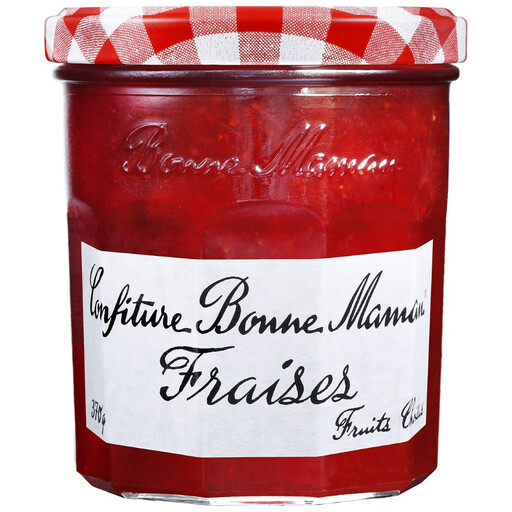 Image unavailable
This 370 g size is an option to compare with the 750 g strawberry jar, depending on how much you use. Check the ingredients and nutritional information for this product; after opening, follow the instructions on its label.
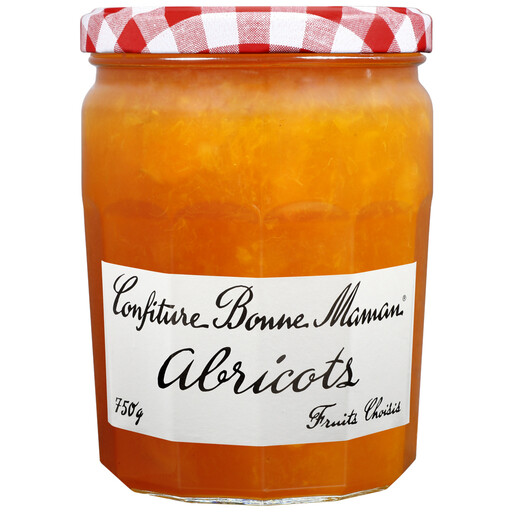 Image unavailable
If your household eats apricot jam regularly, it’s worth comparing this 750 g jar with smaller sizes. For this product, the instructions say to keep it in the fridge for three weeks after opening.
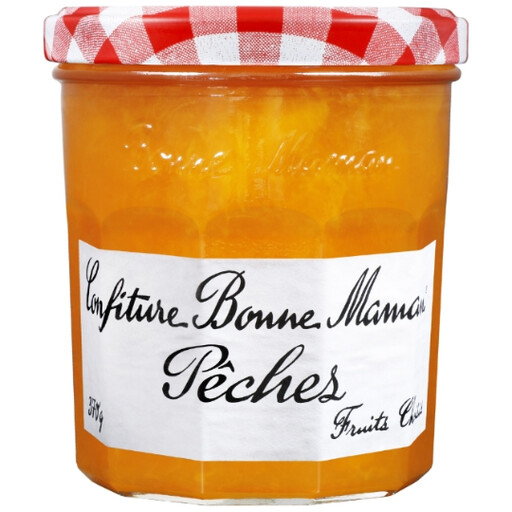 Image unavailable
This 370 g jar lets you choose peach jam instead of a strawberry or apricot recipe. Check the ingredients and, once opened, keep it in the fridge as instructed on the product.
No: these terms describe different product characteristics. The Directorate-General for Competition Policy, Consumer Affairs and Fraud Control (DGCCRF) distinguishes between the product descriptions used for jams and similar products. To choose a specific product, check its description, ingredients and nutritional information.
A large jar is suitable if your household can use it up while following the storage instructions for that particular product. Before choosing a 730 or 750 g size, check the instructions on the jar after opening rather than relying on those for a different jam.
To compare jams, start with the product description, net weight, ingredients, nutritional information and storage instructions for the product you’re considering. If a fruit quantity is stated, check which recipe it refers to.
Don’t assume a product is available in every shop. Check the product and size with the retailer where you plan to shop; E.Leclerc, for example, advises customers to contact the relevant store to check availability.