People stocking their first cupboard
If you’re trying a recipe for the first time, a standard-size jar lets you check whether you like the flavour before buying a larger quantity.


For your first food shop, a standard-size jar lets you try a flavour before buying more; a larger jar is best if you regularly eat the same recipe. If the ingredients matter most to you, compare the ingredients list and the ‘sugars’ figure per 100 g: the word ‘extra’ doesn’t replace this information.
If you’re trying a recipe for the first time, a standard-size jar lets you check whether you like the flavour before buying a larger quantity.
If sugar and ingredients guide your choice, compare the nutritional information per 100 g for each recipe, including those labelled ‘reduced sugar’.
A large jar could be a good choice if several people enjoy the same flavour. Check the product’s storage instructions and choose an amount your household can get through.
First, choose a recipe and quantity that suit how much you eat, then compare the labels if the ingredients are a key consideration for you.
| What to consider | What to check | Who is it for? |
|---|---|---|
| How much you need | The net weight and how much you think you’ll eat. | If I’m stocking my first cupboard, I’d rather choose an amount that suits me than leave a large jar half-used. Around 42% of consumers would put getting the right amount at the top of their list of priorities. |
| Sugar and ingredients | The ‘sugars’ figure per 100 g and the ingredients list. | When comparing two recipes, I want to read the ingredients rather than rely on the wording on the front of the jar. Nearly 33% of consumers would prioritise sugar and ingredients. |
| Flavour and size | The flavour, the jar’s weight and the storage instructions. | If I don’t know what everyone at home likes yet, I’d rather try a flavour in a moderate quantity. Flavour and size would be the main concern for around 25% of consumers. |
A quick glance won’t tell you precisely whether a jar is 320 g, 370 g or 750 g, as shown in the supermarket ranges reviewed.
Check the net weight, then compare recipes of the same type.
A family-size jar means eating more of the same recipe, even though you don’t yet know whether everyone at home will like it.
Try a standard-size jar first and follow the storage instructions on the jar you buy.
Any jam you don’t finish could go to waste.
‘Extra’ refers to a category of jam; on its own, it doesn’t tell you how much sugar is in the finished product.
If sugar is important to you, compare the ‘sugars’ figure per 100 g and the ingredients lists of the jars you’re considering.
The ranges shown by retailers can vary by store and season.
Check that your chosen product is available at your local shop or through its online grocery service before setting off.
Two Carrefour ranges to consider if you’re choosing between a standard recipe, a reduced-sugar recipe and different jar sizes.
An E.Leclerc Marque Repère range to consider when comparing jar sizes of strawberry jam.
A supermarket own brand to explore if you want to compare different fruits, jam categories and jar sizes.
A national brand offering other recipes to compare with supermarket own brands.
Two brands listed by ALDI France: one to consider for extra strawberry jam and the other for an organic product.
These 210 g to 350 g jars let you try a flavour without starting with a family-size jar. The selection also includes quince jelly and an orange fruit spread: check the category and label of each product to make sure it’s what you’re looking for.
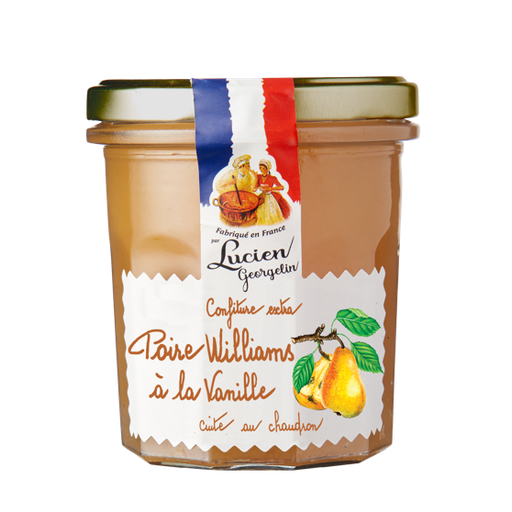 Image unavailable
A size to consider if you’d like to try pear and vanilla without going straight for a large jar.
Check the ingredients, sugars per 100 g and storage instructions on the label.
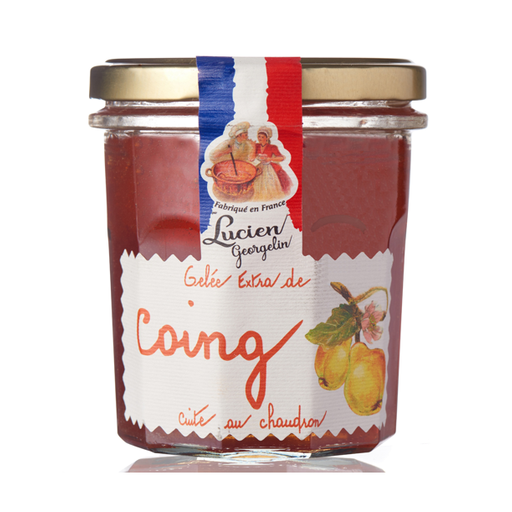 Image unavailable
Worth considering if you’d like to try quince in a jelly rather than buying a jam in a flavour you already know.
Jelly and jam are different categories. Compare their ingredients and sugars per 100 g if these matter to you.
 Image unavailable
The 210 g jar lets you try the mango and passion fruit flavour in a smaller quantity.
Check the label to compare the ingredients, sugars per 100 g and storage instructions.
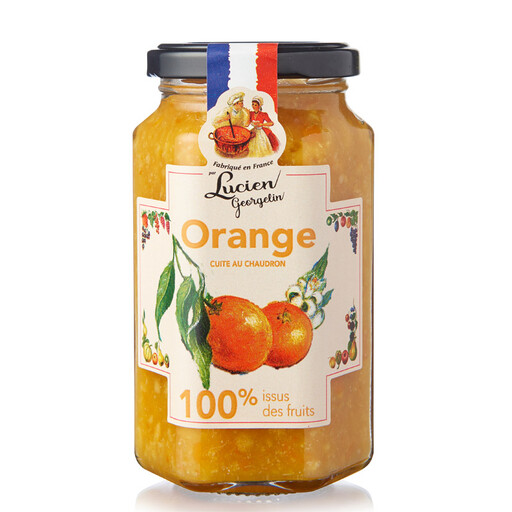 Image unavailable
A 300 g option if you’d like to try an orange fruit spread rather than a jam labelled ‘extra’.
The name ‘100% Oranges’ is no substitute for reading the ingredients. To compare sugar, check that the nutritional values are given per 100 g.
Start with a standard-size jar if you’re trying a flavour for the first time; consider a family-size jar if your household regularly eats the same recipe. In either case, follow the storage instructions on the jar you buy.
In France, ‘extra jam’ is a category of jam governed by rules on its composition, including the fruit used. As Légifrance explains, the requirements also depend on the fruit in question; this label alone doesn’t tell you the sugars per 100 g in the jar you choose.
No. Compare the ‘sugars’ figure per 100 g and the ingredients lists of the products you’re interested in. According to Manger Bouger, ingredients are listed in descending order of quantity.
Follow the instructions on the jar you bought, particularly the storage advice for after opening. Don’t automatically apply the instructions from another product.