
Livraison le jour même ou le lendemain

Qualité garantie

Débloquez vos offres de bienvenue: Livraison GRATUITE | Jusqu'à -80 % | 30 jours d'essai gratuits à JoyPlus
Téléchargez l'application
Italian products are popular for their variety, convenience and formats, which are well suited to both family meals and catering. However, an attractive illustration of the Italian countryside or the words “traditional recipe” do not necessarily mean that a product meets your expectations. Origin, ingredients, storage and quantity can all affect the final cost or make everyday use more complicated.
Here are the key criteria to consider before filling your basket with Italian groceries, along with a selection suited to different needs.
A pizza, sauce or ready meal may be inspired by Italian cuisine without having been made in Italy. To avoid surprises, check the country of manufacture, the address of the party responsible for placing the product on the market and, where stated, the origin of the ingredients.
For example, some of the frozen pizzas in this selection are made in France or Germany, while several dried pasta products and sauces are produced in Italy. This criterion alone is not enough to judge quality, but it gives you a clear basis for comparing products.
These terms may refer to a recipe, pasta shape or preparation method, but they do not replace checking the ingredients list. For an Italian tomato sauce, look in particular at the proportion of tomatoes, as well as the presence of salt, oil, sugar or herbs.
A tomato passata with a short ingredients list is a good base for creating your own sauce. On the other hand, an already seasoned preparation saves time but gives you less flexibility to adjust the flavour.
A 500 g pack is generally suitable for regular household use. A 5 kg bag is more appropriate for a large family, an association or a professional kitchen. In every case, compare the price per kilo with the storage space available to you.
For frozen pizzas and ready meals, check the storage temperature, best-before date and cooking instructions. As stated on the packaging, a defrosted product must not be refrozen.
The shape of the pasta affects how well the sauce clings to it, as well as the texture in the mouth.
Durum wheat semolina is the most common base for dried pasta. The presence of gluten must be clearly taken into account. As for cooking time, the time shown on the pack remains the best guide: it may vary depending on the pan, the amount of water used and the texture you want.
Compare nutritional values per 100 g, rather than those given per portion, as portion sizes can vary from one brand to another. For pizzas, check in particular the amount of cheese, meat or vegetables, as well as the salt and saturated fat content.
Claims such as “no preservatives” or “no colourings” should always be considered alongside the full ingredients list. They do not necessarily guarantee that the product matches all your dietary preferences. Before eating, also check the allergens — including wheat, milk, soya, mustard, eggs or celery — directly on the packaging.
For preparing quick Italian meals, ready-to-use passata, tortellini or a frozen pizza can significantly reduce the time spent in the kitchen. Dried pasta is more versatile and can generally be stored in a dry place away from heat and moisture.
Professional formats, such as 5 kg bags, require a little more organisation, however. After opening, ideally transfer the contents to an airtight container to limit exposure to moisture and pests.
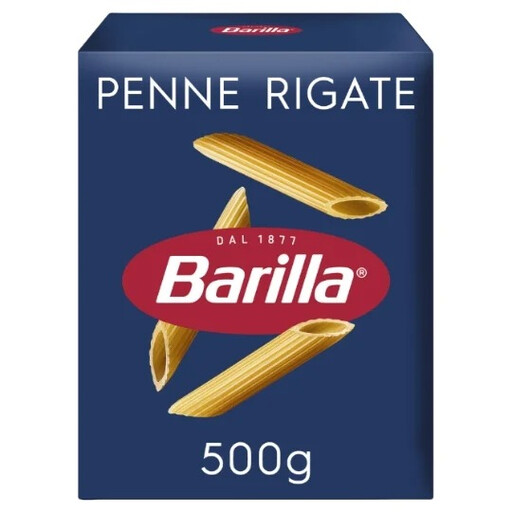
Why this choice suits this profile : A familiar format for discovering Italian pasta and easily preparing everyday recipes.
The listed ingredients are limited to durum wheat semolina. The 500 g pack is easy to store and straightforward to compare with other formats.
Ridged penne made from 100% durum wheat semolina according to the product details, with a stated cooking time of 11 to 12 minutes.
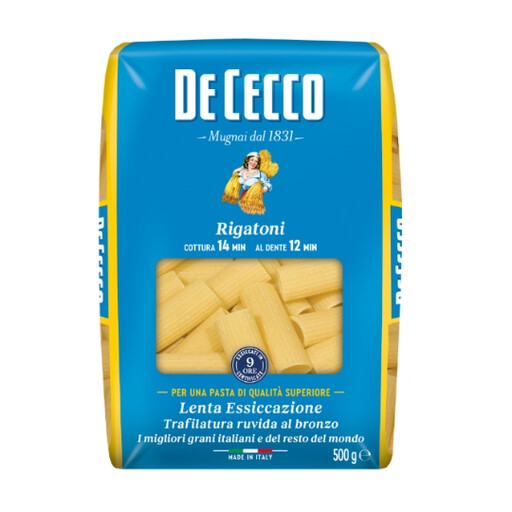
Why this choice suits this profile : A wider shape for those looking for substantial pasta that can stand up to generous sauces.
The product details mention durum wheat semolina, low-temperature drying and a bronze-drawn textured surface: tangible features that are preferable to a vague marketing promise.
Rigatoni No. 24, 500 g pack, with 14 g of protein and 351 kcal per 100 g according to the information provided.
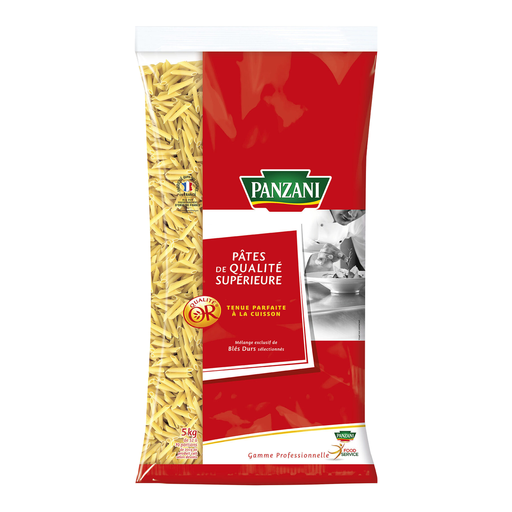
Why this choice suits this profile : A large format intended for communal kitchens, large families and catering professionals.
This format makes it easy to compare the price per kilo and reduce the number of smaller packets, provided you have suitable, dry storage space.
Ridged penne, wheat semolina, recommended storage in a dry place and detailed nutritional values per 100 g.
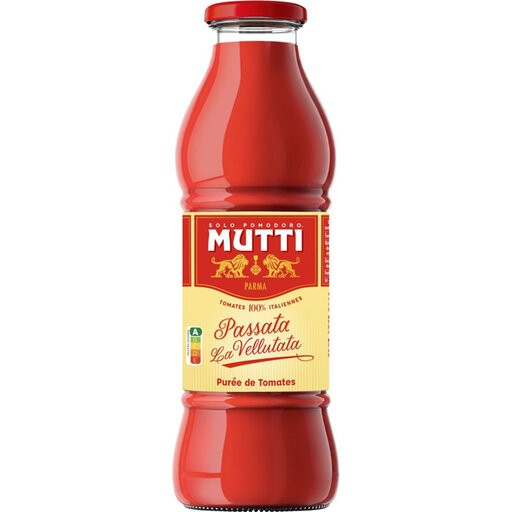
Why this choice suits this profile : A simple base for quickly preparing tomato sauce, soup or a pasta accompaniment.
The listed ingredients are limited to tomatoes and salt, without adding a range of pre-measured herbs. You can season the recipe exactly as you like.
700 g bottle, 36 kcal and 0.5 g of salt per 100 g according to the product details: refrigerate after opening and consume within 5 days.
We have put together a complete, real-time updated selection of products that meet these demanding criteria, in line with European food safety regulations.
With dried pasta, passata and a few herbs, you can prepare several recipes in no time. For a meal requiring no preparation, frozen pizzas, tortellini and individual lasagnes are even more convenient. However, remember to check the allergens, cooking method and storage conditions.
Dried pasta should be stored in a cool, dry place away from light. After opening, passata should be refrigerated and consumed according to the manufacturer’s instructions. If the packaging does not close properly, transfer it to a clean, airtight container.
Not necessarily. Compare the price per kilo, how often you consume the product and any potential waste. A 5 kg bag may be worthwhile for intensive use, but a 500 g pack will often be better suited to a household that likes to vary its recipes regularly.