
Livraison le jour même ou le lendemain

Qualité garantie

Débloquez vos offres de bienvenue: Livraison GRATUITE | Jusqu'à -80 % | 30 jours d'essai gratuits à JoyPlus
Téléchargez l'application
For everyday journeys, holidays or regularly switching between cars, an ISOFIX child car seat makes installation easier and reduces the risk of incorrect positioning. But convenient fixing is not everything: before choosing, check your child’s height, the approval standard, the seat’s orientation and its compatibility with your vehicle.
A seat advertised as suitable « from birth to 12 years » covers a wide range of heights, but the needs of a newborn are completely different from those of an eight-year-old. Check that it includes features suitable for smaller children, such as an infant insert, support cushion and height adjustments.
Compatibility also depends on your child’s build. A wide height range does not guarantee optimum support at every stage of their growth.
A 360° rotating car seat makes it easier to secure your child and switch from rear-facing to forward-facing, where the model permits this. However, the rotation should only be used once the seat has been correctly locked in the intended position.
Also consider the space between the back of the front seat and the rear bench seat. An incorrectly adjusted support leg, a backrest that is reclined too far or an incompatible ISOFIX anchorage may compromise the stability of the installation.
Terms such as « safe », « reinforced » or « side protection » sometimes refer to very general features. To compare models reliably, look for the approval label and the ECE R129 reference, also known as i-Size, as well as the height range covered.
Approval does not replace reading the vehicle and car seat manuals. Conditions of use may vary depending on the seating position, whether a support leg is fitted and the configuration of the rear bench seat.
The ECE R129 standard primarily classifies seats according to the child’s height. For a baby and child car seat, check the stated range in centimetres, for example 40 to 150 cm for some growing-with-your-child models.
For an older child, a car booster seat for ages 6 to 12 must allow the three-point seat belt to pass correctly over the shoulder and pelvis. The weight stated by the manufacturer must also be taken into account, even though height is the main criterion under the i-Size standard.
ISOFIX connects the seat directly to the vehicle’s anchorage points. This solution helps to limit installation errors, but it does not always replace the seat belt. With a booster seat, the three-point seat belt is generally still essential to restrain the child.
In particular, check the following:
A reclining car seat can be useful on long journeys, particularly when your child falls asleep. However, the adjustments should remain easy to access and must be locked before setting off.
A fully removable, washable cover makes cleaning easier after a spilt meal or a journey in the rain. Also check the width of the seat, the thickness of the padding and the amount of legroom available. Side protection should be considered a product feature, not a guarantee against injury.
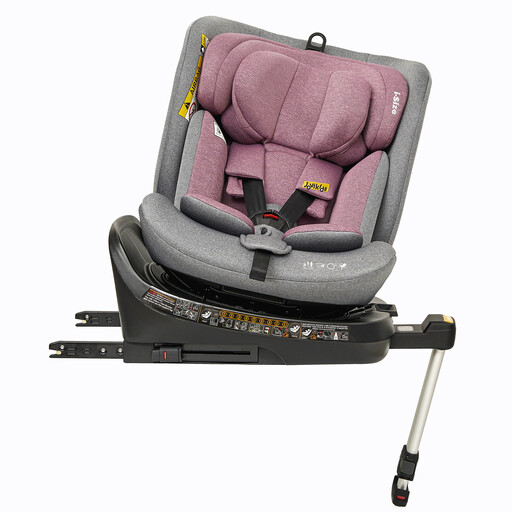
Why this choice suits this profile : this model is designed for families who want to keep one seat for several years, from 40 to 150 cm, with growing-with-your-child adjustments and rotation to make everyday installation easier.
The height range, removable newborn insert and 12 height-adjustment positions allow the seat to adapt as your child grows, provided the instructions in the manual are followed.
360° rotation, several recline positions, ISOFIX fixing with support leg, removable canopy and fully removable cover for washing.
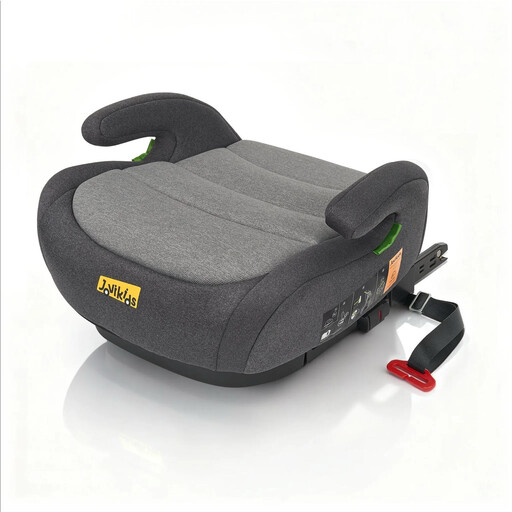
Why this choice suits this profile : for a child who is already tall enough, this booster seat prioritises simple installation, a reasonable footprint and use with the car’s three-point seat belt.
It does not claim to replace the vehicle’s seat belt: it is used with the three-point belt, while the ISOFIX connectors stabilise the booster on the bench seat.
Height range from 125 to 150 cm, ECE R129 / i-Size approval stated by the manufacturer, padded cushion, advertised weight of approximately 3 kg and removable cover.
Why this choice suits this profile : families juggling school, nursery, shopping and long journeys will appreciate the rotating access, adjustable recline and easier cleaning.
The removable cover helps deal with everyday mishaps, while the adjustable support leg must be set according to the instructions to ensure a stable installation.
Rotating function, several recline positions, removable inner cushions, removable canopy and advertised use from 40 to 150 cm.
We have put together a complete, real-time updated list of products that meet these demanding selection criteria and European safety regulations.
Before the first journey, remove all packaging, consult the manufacturer’s diagrams and check that the ISOFIX indicators are in the correct position. Once installed, the seat should not move abnormally. If a support leg is supplied, it must rest on a designated area, never on a storage compartment that is not suitable for this purpose.
For care:
No. The vehicle must have compatible ISOFIX anchorage points, and some seats also require a support leg. Check the manufacturer’s compatibility list and your car’s manual before buying.
In France, a suitable restraint remains necessary until the child is tall enough for the seat belt to be positioned correctly. The child’s height, build and the approval specifications should guide the change of category, rather than age alone.
Newborns generally travel rear-facing. The permitted orientation, minimum height and rotation conditions depend on the model. Always check the ECE R129 label and the instructions before changing the seat’s orientation.