
Livraison le jour même ou le lendemain

Qualité garantie

Débloquez vos offres de bienvenue: Livraison GRATUITE | Jusqu'à -80 % | 30 jours d'essai gratuits à JoyPlus
Téléchargez l'application
Choosing an ISOFIX i-Size child car seat is not simply a matter of comparing prices or looking for a “360°” label. In France, the seat must be suitable for the child’s height, the vehicle and the regulations in force. Incorrect installation, a shell that becomes too narrow after just a few months or a cover that is difficult to clean can quickly turn a seemingly good deal into a disappointing purchase.
Here are the key points to check before choosing a baby and child car seat, an adaptable model or an ISOFIX child booster seat.
A seat advertised “from birth to 12 years” potentially covers a wide range of heights. However, its adjustments must genuinely accommodate the child’s growth. Check the height range specified in centimetres, whether a newborn insert is included, how the headrest adjusts and whether the cushions can be removed progressively.
A 40–150 cm model may appear to be the ultimate adaptable solution. However, the manual remains essential at every stage: rear-facing position, forward-facing position, harness use, transition to the vehicle’s seat belt and any weight limits.
ISOFIX connectors simplify attachment to the vehicle’s anchorage points, but they cannot compensate for incompatibility or incorrect installation. Before ordering, check that the vehicle has ISOFIX anchorage points, assess the available space in front of the seat and confirm compatibility with the support leg or supplied restraint system.
The support leg must rest on a sufficiently solid and suitable floor. It must not be placed on a storage compartment lid unless the vehicle manufacturer explicitly allows this configuration. The vehicle and car seat manuals remain the authoritative sources.
A 360-degree rotating car seat makes it easier to place the child in the seat and access the harness. However, this does not mean that every position is permitted while driving. Some models must be locked in a specific orientation before setting off.
A reclining seat can also improve comfort during breaks or naps. Here too, the approved positions for each height range and orientation must be followed.
The ECE R129 standard, also known as i-Size for certain categories, primarily classifies seats according to the child’s height. The product listing should specify the covered range, such as 40–150 cm or 125–150 cm.
The R129 designation does not remove the need to check:
Statements concerning protection against frontal or side collisions describe the product’s stated design and approval. They do not constitute a guarantee of performance in every situation.
For an ISOFIX-equipped seat, prioritise clearly visible locking indicators and easily accessible adjustments. A high-back booster seat or adaptable car seat may also require use of the vehicle’s three-point seat belt.
From 125 cm, some booster seats are designed to position the belt correctly across the child’s shoulder and pelvis. It must pass neither across the neck nor over the abdomen. A backless booster is lighter and easier to transport, but a high-back model generally provides better belt guidance and more structured side support. Compare the configuration with your child’s needs and the manufacturer’s instructions.
Comfort depends in particular on seat depth, recline, shoulder room and ventilation. A side-impact protection feature highlighted in the product listing should be assessed as part of the overall structure rather than viewed solely as a marketing claim.
For regular journeys, a removable, washable cover is a genuine advantage. Crumbs, spilled drinks and muddy clothes are all part of everyday life in the car. Check whether the cover is machine washable and whether the padded elements can be removed without altering the restraint system.
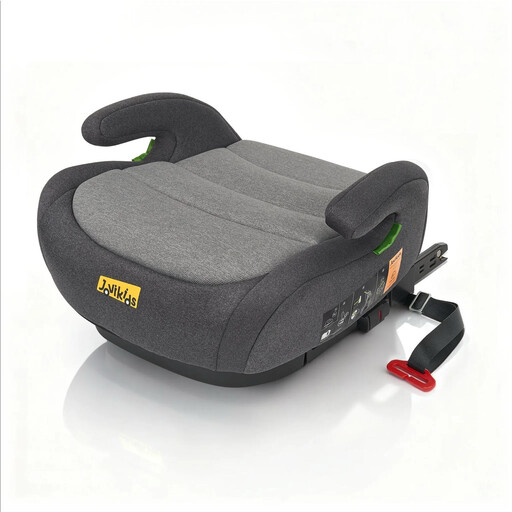
Why it suits this profile: This booster seat is suitable for children from 125 to 150 cm, approximately 6 to 12 years old. It is well suited to school runs, everyday journeys and frequent changes of vehicle.
The height range is clearly stated, and the product combines ISOFIX connectors with the vehicle’s three-point seat belt. It is therefore not presented as a replacement for a newborn car seat.
Stated ECE R129/i-Size approval, weight of approximately 3 kg, padded seat and removable cover.
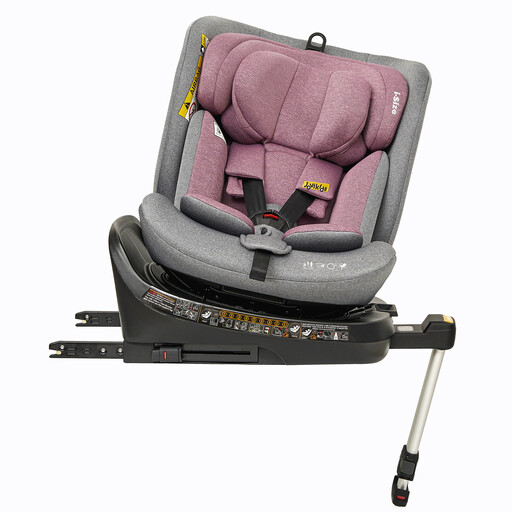
Why it suits this profile: This 40–150 cm model is designed for families looking for an adaptable solution, multiple recline positions and more convenient access to the child.
The rotation function is paired with ISOFIX attachment and an adjustable support leg. It remains essential to check the manual to confirm which orientation is permitted before every journey.
Stated range of 40 to 150 cm, headrest adjustable to 12 positions, removable canopy and fully removable cover according to the product listing.
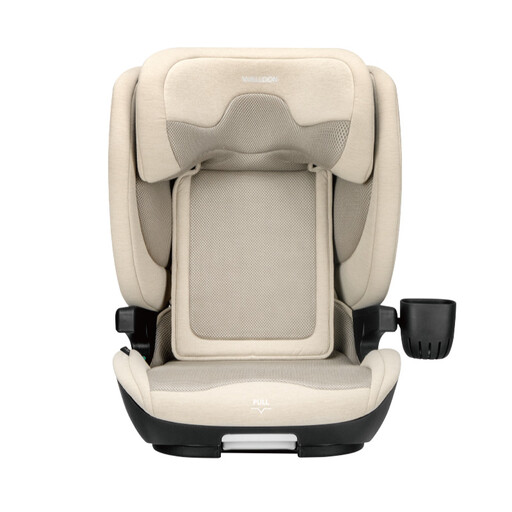
Why it suits this profile: Designed for children aged 3 to 12, this seat is aimed at families who prioritise a high-back design, easy maintenance and ISOFIX-compatible installation.
The product listing mentions a removable, washable cover and a belt-guidance system. Nevertheless, check the height range and fit in your vehicle.
Stated ISOFIX installation, high backrest, removable cover and dimensions of 46 × 45 × 63 cm specified by the manufacturer.
We have put together an up-to-date selection of products to help you compare solutions suited to children’s safety equipment and comfort in the car in France.
Age is only an indicator. The limit mainly depends on the child’s height and the manufacturer’s specifications. A model rated for 40–150 cm can accommodate several stages, while a 125–150 cm ISOFIX booster seat is generally intended for older children. Always check the approval label and the manual.
No. Compatibility depends on the ISOFIX anchorage points, seat-belt length, the space between the bench seat and the front seat and, for some models, the shape of the floor. The support leg and rotation positions must be checked against the vehicle and manufacturer documentation.
A high-back booster seat guides the belt more effectively and provides more structured side support. A backless model is lighter and easier to move, but the child must be tall enough for the belt to sit correctly. In both cases, follow the minimum height and standard specified on the product.