
Livraison le jour même ou le lendemain

Qualité garantie

Débloquez vos offres de bienvenue: Livraison GRATUITE | Jusqu'à -80 % | 30 jours d'essai gratuits à JoyPlus
Téléchargez l'application
Choosing an ISOFIX i-Size child car seat is not simply a matter of comparing prices or looking for the words “360°”. For families in the UK, the key considerations are your child’s height, compatibility with your car and how easy the seat is to install and use every day. A seat that is too bulky, incorrectly adjusted or awkward to handle can quickly become a source of frustration.
A seat advertised as suitable “from birth to 12 years” covers a wide range of heights, but a baby’s needs are completely different from those of a 10-year-old. The removable newborn insert, harness adjustments and headrest height must all be able to adapt as your child grows.
Age is only a guide: under i-Size regulations, it is primarily height in centimetres that matters. Check the height range shown on the label and in the instructions, rather than relying solely on a marketing claim.
ISOFIX anchor points make it easier to secure the seat, but they do not replace reading the instructions. You need to check compatibility with your vehicle, the locking indicators and, depending on the model, the correct position of the support leg or top tether.
A support leg positioned incorrectly, a seat installed over a storage compartment or a bench seat that is too steeply angled can prevent proper installation. Before ordering, check the compatible vehicle list if one is provided.
A 360° rotating child car seat can make installing a baby much easier, particularly in a small car or when access to the rear seat is limited. However, the mechanism must be simple to lock securely and must not significantly reduce the space available for your child’s legs or for the front passenger.
Side-impact protection, multiple recline positions and a sun canopy can also be useful. However, they should never take priority over the essentials: compliance, height range, orientation and installation quality.
The ECE R129 standard, also known as i-Size for certain categories, classifies seats according to the child’s height and sets precise requirements for compatibility and protection in line with European regulations. The relevant certification should be checked on the product label and in the documents supplied.
For a baby, prioritise rear-facing use in accordance with the manufacturer’s instructions. For an older child, a group 2/3 child car seat or a high-back booster seat should allow the vehicle’s three-point seat belt to sit correctly across the shoulder and pelvis.
Compare the seat’s dimensions with those of your vehicle seat: width, height, depth and the space required for rotation. ISOFIX is particularly convenient if your vehicle has the corresponding anchor points, although some booster seats can also be used with the seat belt.
Also check whether the seat has a support leg, an anti-rotation device or requires the passenger airbag to be deactivated. This information should be confirmed in the seat instructions and with the car manufacturer.
A reclining child car seat can make long journeys more comfortable, provided each position is approved for your child’s height. A removable, washable cover also makes life easier after a spilt snack, a little accident or a rainy journey.
For children aged around 6 to 12, choose an ISOFIX booster seat with a well-padded base, a belt guide and, where your child’s build makes it appropriate, a backrest. The weight of the seat can also make a difference if it regularly needs to be moved from one car to another.
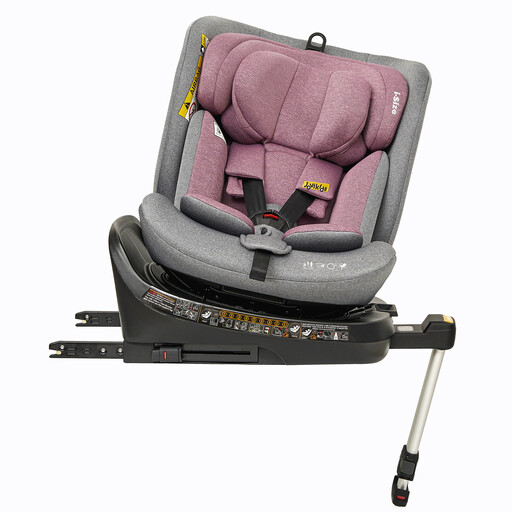
Why it suits this profile : This growing child car seat covers an advertised height range of 40 to 150 cm and features 360° rotation to make installation easier. It could suit families who want to avoid changing seats at every stage of their child’s growth.
The product details mention ECE R129 certification, ISOFIX and an adjustable support leg. It is still essential to check compatibility with your car and follow the height limits.
360° rotation, several recline positions, removable sun canopy and fully removable cover for easy washing.
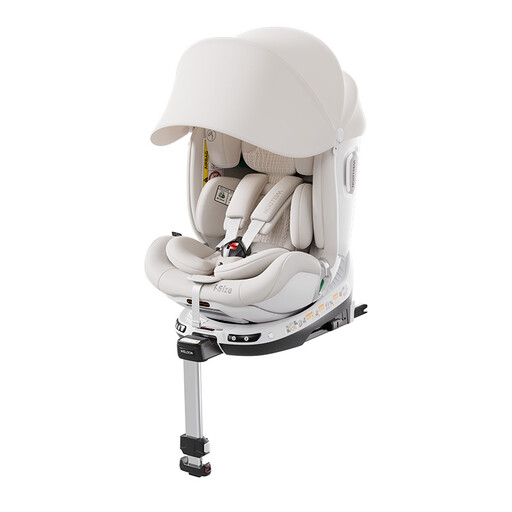
Why it suits this profile : With an advertised height range of 40 to 125 cm, several recline settings and a rotating system, this model is aimed at parents looking for greater adjustability for everyday journeys and longer trips.
The product description details the ISOFIX system, support leg and installation alerts. These features must be used in accordance with the instructions and do not replace a manual check.
Rotation with a 90° stop, removable newborn insert, deployable side-impact protection, sun canopy and washable cover.
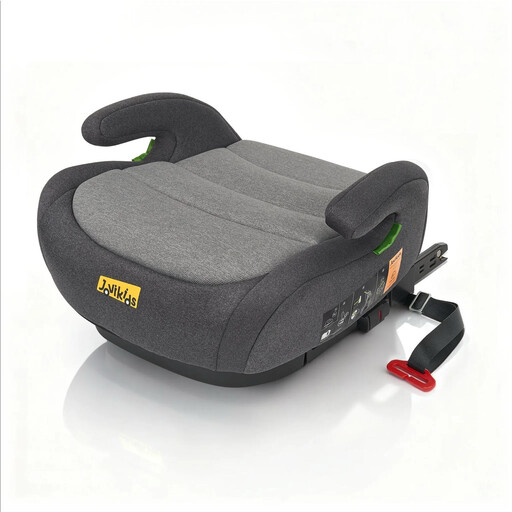
Why it suits this profile : This ISOFIX child booster seat is ideal for families looking for a lightweight option for the school run, weekends away or frequent changes between cars.
Its height range is clearly stated, from 125 to 150 cm, and it is used with the vehicle’s three-point seat belt. This helps prevent choosing a booster seat too soon.
ECE R129 certification stated, ISOFIX connectors, advertised weight of approximately 3 kg, padded cushion and removable cover.
We have brought together a complete, real-time selection of products that meet these demanding criteria and European safety requirements.
The models shown here are generally designed for use from 125 cm, according to their product details. Your child must be correctly secured with the vehicle’s three-point seat belt. Always check the height range of the model you choose, as well as ensuring that the belt sits correctly across the shoulder and pelvis.
It depends on the model and your child’s height. Some seats allow you to switch from rear-facing to forward-facing, but the permitted orientation varies according to the manufacturer’s instructions. Do not change position based solely on age: follow the height and installation guidance provided in the instructions.
The usable lifespan depends on the condition of the seat, its height range and its history. Replace it after a serious accident, if any parts are damaged or if the cover and harness no longer allow correct adjustment. When buying second-hand, the absence of instructions or a usage history should be treated as a serious warning sign.