What to prioritise when choosing your ironing appliance
Start with the finish you want, then check the runtime, storage requirements and maintenance needed for the specific model.
| Priority |
What to check |
Your needs |
| Preparation and runtime |
Compare the stated heat-up time, tank type and whether you can refill the appliance during use. Consider the capacity in ml or L alongside the steam output and the fabrics being treated. |
I want to get started without too much waiting and avoid interrupting a long session to refill the appliance or let it cool down. |
| Garment finish |
Check whether the appliance is designed for use on a hanger or on an ironing board. A heated soleplate and mechanical pressure on an ironing board are needed to create a crisp crease. |
For touch-ups on hanging clothes, steam may be enough. To shape collars, cuffs or trousers, I would keep an iron or steam generator. |
| Storage and ironing board |
Measure the base, and check the weight, locking mechanism and storage location. Also confirm whether the model can genuinely be used without an ironing board. |
My appliance needs to be easy to store between uses, without cluttering the ironing board or cupboard. |
| Water maintenance |
Follow the instructions on the type of water to use, limescale treatment and emptying the tank. Instructions are not interchangeable between brands. |
I prefer to know what maintenance is required from the moment I buy the appliance, especially if the water in my home is hard or the appliance is used frequently. |
Joybuy products for your ironing routine
These Joybuy options cover a steam generator for larger sessions, an iron for ironing-board use and garment steamers for touch-ups without an ironing board.
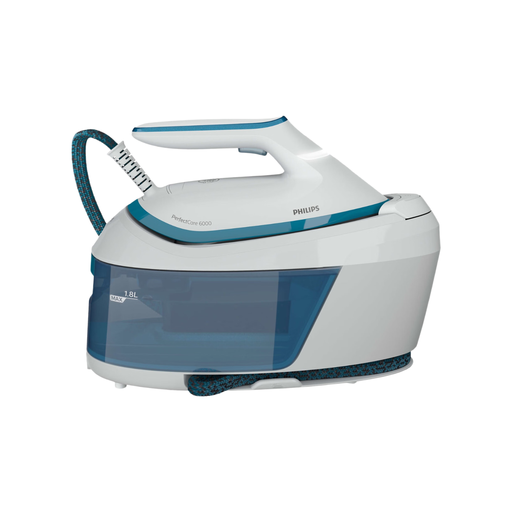 Image unavailable
Philips PSG6022/20 PerfectCare 6000 Series
For larger ironing-board sessions, with an additional vertical steam function.
Removable 1.8 L tank, continuous steam output of up to 150 g/min and total weight of 3.4 kg. Check the instructions to see whether it can be refilled during use.
Joybuy
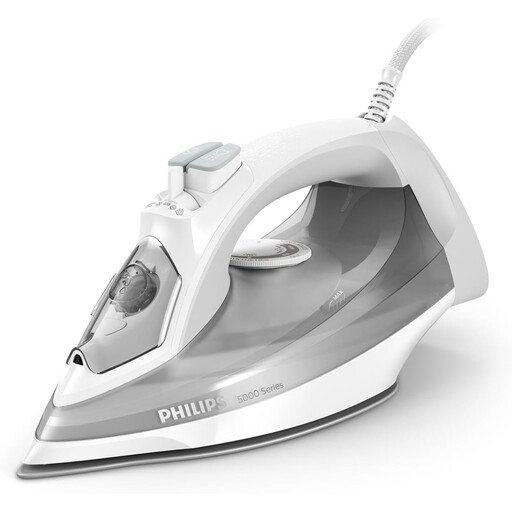 Image unavailable
Philips DST5010/10 Series 5000, 2400W
A steam iron for short ironing-board sessions and crisp creases on everyday clothes.
320 ml tank, continuous steam output of 40 g/min, 160 g steam boost, drip-stop system and integrated limescale protection. An ironing board is still needed for collars and structured trousers.
Joybuy
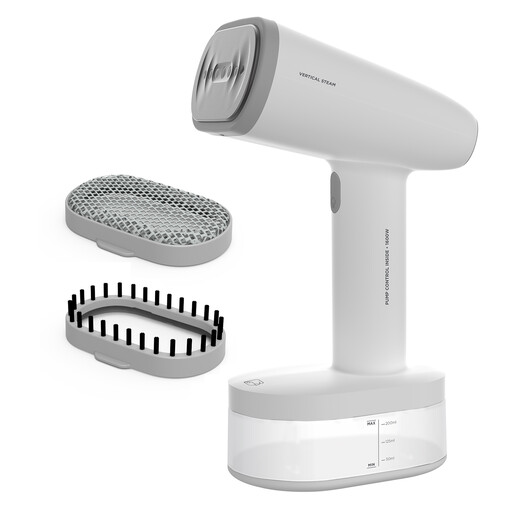 Image unavailable
BLACK+DECKER 1600W handheld vertical garment steamer
For steaming several hanging garments without getting out an ironing board.
Removable 250 ml tank, steam output of 25 g/min and stated runtime of approximately 15 to 20 minutes. It does not create the sharp creases of an iron used on an ironing board.
Joybuy
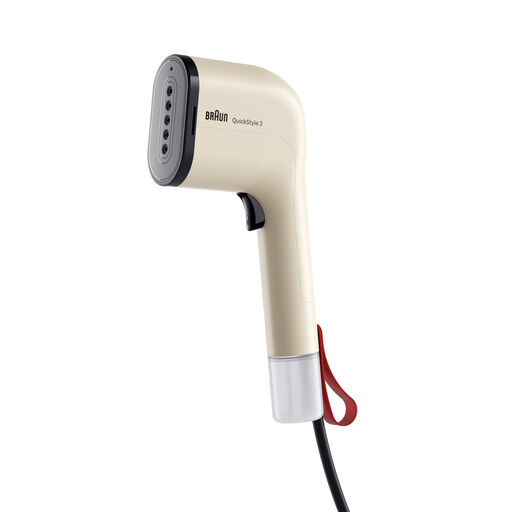 Image unavailable
BRAUN QuickStyle 3 GS3012BG
A compact garment steamer for quick touch-ups on a hanger, in small spaces and while travelling.
Advertised heat-up time of 30 seconds, removable 70 ml tank, continuous steam output of 20 g/min, stated weight of 770 g and 2 m cord. Automatic shut-off is stated as unavailable.
Joybuy
Frequently asked questions
Can a garment steamer completely replace an iron?
Not if you need to create sharp creases in collars, shirts or trousers. A garment steamer is better suited to touch-ups, hanging clothes and certain delicate fabrics, while ironing-board use combines heat, steam and pressure.
Can you refill a steam generator during use?
It depends on the technology and the model. The Institut national de la consommation states that steam generators with limited autonomy must cool down before being refilled, while continuous-fill models provide access to the tank during use; check for this information in the instructions.
What water should you use in an iron or garment steamer?
Always follow the instructions for your model first. Philips states that, for the relevant appliances, distilled or demineralised water may be recommended in hard-water areas and advises against using perfumed water, vinegar, starch, descaling products or other chemicals in the tank.
Should you empty a garment steamer’s tank after use?
For the Philips models covered by this instruction, the brand recommends emptying the tank after use to help prevent limescale and algae. Check the instructions for your own model, as procedures vary between appliances.
What protection applies when buying from a professional seller in France?
According to the French Ministry for the Economy, the statutory guarantee of conformity applies to new, second-hand and refurbished goods sold by a professional to a private individual in France. The seller is responsible for defects in conformity that existed when the goods were delivered; keep your proof of purchase and the product sheet.


