Households with large ironing loads
You regularly iron piles of clothes or household linen and can set aside space for the appliance. UFC-Que Choisir recommends considering a steam generator when you have a lot to iron.


For smaller loads, a crisp finish or limited storage space, an iron is usually the first option to consider. A steam generator is better suited to larger ironing sessions if you have room for its base. A clothes steamer is mainly for quick touch-ups on hanging garments, but it won’t create creases like an iron. Whichever you choose, check garment care labels and follow the instructions for water and maintenance supplied with your model.
You regularly iron piles of clothes or household linen and can set aside space for the appliance. UFC-Que Choisir recommends considering a steam generator when you have a lot to iron.
You want to create sharp creases in shirts or trousers, rather than simply ease creases in a hanging garment. UFC-Que Choisir points out that a clothes steamer won’t give you the same finish as an iron or steam generator.
You mainly need to deal with a few creases and have to consider how long it takes to get the appliance out, heat it up and put it away. A clothes steamer can save you from setting up an ironing board for some quick touch-ups, provided its finish meets your expectations.
Consider it: for smaller loads, ironing on a board and creating sharp creases, or if storage space is limited.
Bear in mind: the water tank moves with the iron, so its weight in your hand and the space available for an ironing board both matter.
Consider it: for larger ironing sessions, particularly when you have household linen to tackle, if you can set up and store the base.
Bear in mind: the whole appliance takes up more space. Check the filling process and heat-up time for the specific model.
Consider it: to ease a few light creases in hanging garments without setting up an ironing board.
Bear in mind: it usually won’t create creases like an iron, and a small water tank may need refilling more often.
UFC-Que Choisir highlights different needs, including larger loads, sharp creases and touch-ups on hanging garments. If you’re choosing between these three appliances for your everyday laundry, the criteria below can help you decide what matters most.
| What matters to you | What to check | Who it matters most to |
|---|---|---|
| Large loads | Typical load size, space on your ironing board and for storage, and how often the tank needs refilling for the model. | When I have big piles to iron, I want to minimise interruptions without cluttering my space. This is a priority for nearly 29% of consumers. |
| Finish and fabrics | Care label symbols, temperature and steam settings, and whether you’ll iron on a board or on a hanger. | If I want sharp creases, I need an appliance suited to the fabrics I can iron. A precise finish is the priority for around 22% of consumers. |
| Quick touch-ups | The heat-up time stated for the model, whether you need an ironing board and how heavy the appliance feels in your hand. | To quickly freshen up one or two garments, I want a straightforward set-up. Nearly 21% of consumers put quick touch-ups first. |
| Storage | Dimensions when stored, space for an ironing board, the cord and any stand for hanging a garment. | If my cupboard space is limited, I want an appliance that fits away without making touch-ups impractical. Available space is the priority for around 14% of consumers. |
| Water management | The type of water specified in the instructions, access to the tank and the model’s descaling procedure. | If I want to avoid the hassle of repeated refilling and maintenance, I check the instructions before choosing. This is a priority for around 14% of consumers. |
According to UFC-Que Choisir, a clothes steamer is mainly useful for easing light creases and won’t give you the same finish as an iron or steam generator.
Before choosing, think about the difference between touching up garments on a hanger and creating creases or achieving a precise finish.
The stated steam output alone doesn’t tell you how well an appliance will remove creases, and the measurement methods used for pressing functions aren’t necessarily comparable.
Also consider ease of use, intended applications and the fabrics you’ll be treating. UFC-Que Choisir assesses clothes steamers against several criteria in its testing process.
The base sits alongside the iron and can take up a lot of room when the appliance is set up or stored away.
Measure the space available on your ironing board and in your cupboard before choosing a steam generator.
Water and descaling instructions vary by model. Philips also says that perfumed water can stain clothes when used with the clothes steamers covered by its support guidance.
Check the instructions for your chosen model before adding water or any other product to the tank.
The range featured in Calor’s guide, shared by Rowenta, includes irons, steam generators and clothes steamers, so you can compare different approaches to garment care.
The brand offers steam irons, including the Steamforce Pro DW9520D1.
The CareStyle range includes the IS3257BK steam generator. Consider it if the iron’s ease of handling and the space needed for the base are important to you.
Philips offers handheld clothes steamers, including the foldable STH3020/70, to consider for touch-ups and when storage space is limited.
The brand offers handheld clothes steamers in different sizes, including the Karl XL 2, with a stated tank capacity of 400 ml.
This selection includes irons, steam generators and clothes steamers, so you can compare ironing on a board with touch-ups on hanging garments.
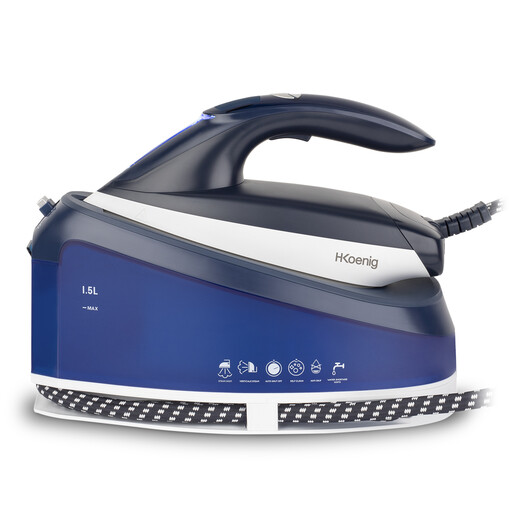 Image unavailable
Worth considering for ironing on a board, with vertical touch-ups as an added option.
The description lists a ceramic soleplate, a 1.5 L tank, a vertical steam function and automatic shut-off.
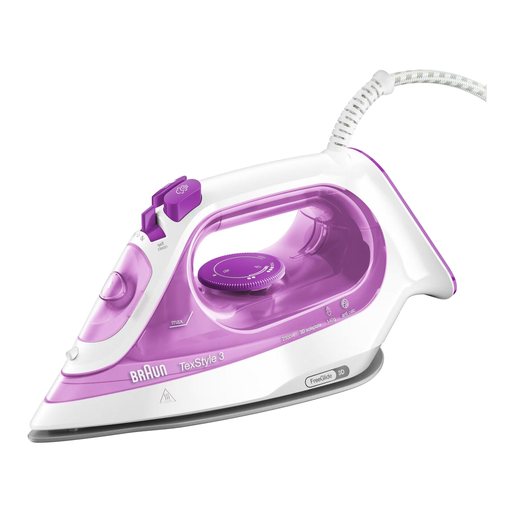 Image unavailable
Worth considering for ironing on a board and vertical touch-ups on suitable garments.
The description lists a 270 ml tank, an anti-scale system, a 35-second heat-up time and a precision tip.
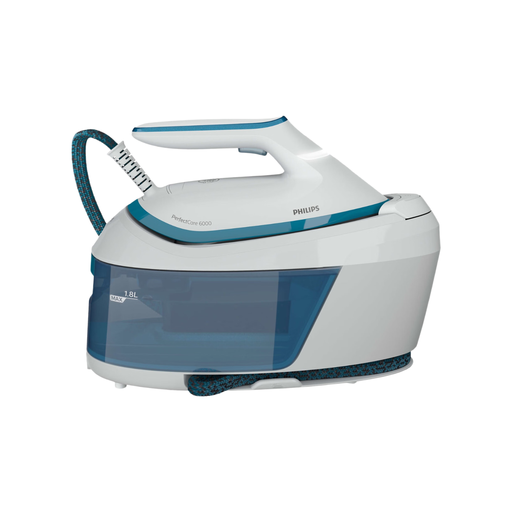 Image unavailable
Worth considering for ironing sessions on a board, if you have room for the base.
The description lists a removable 1.8 L tank, a Calc-Clean system, automatic shut-off and OptimalTEMP technology, which requires no manual temperature adjustment.
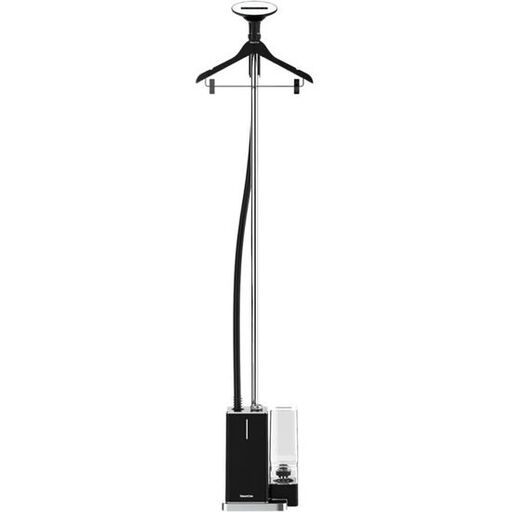 Image unavailable
Worth considering for steaming several hanging garments without using an iron on a board.
The description lists a 2 L tank, up to 90 minutes of use, three steam settings, a heat-up time of around 35 seconds and an included hanger. A clothes steamer won’t give you the same finish as an iron for creating creases.
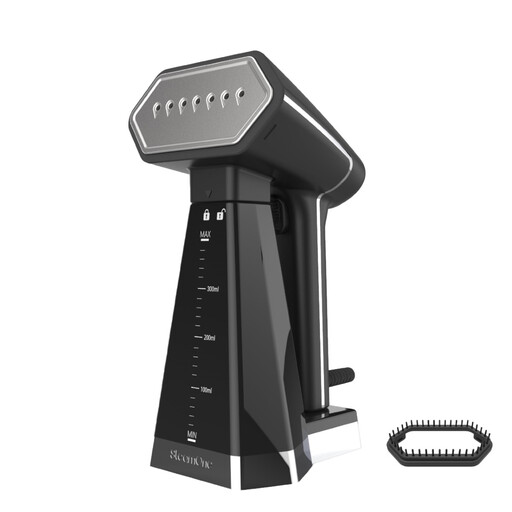 Image unavailable
Worth considering for vertical touch-ups on hanging garments, rather than creating creases with an iron.
The description lists two steam settings, a 400 ml tank, up to 27 minutes of use, a heat-up time of around 40 seconds and an included fabric brush.
No. First check the symbols and instructions on the care label, then consult the appliance manual. The right temperature and use of steam vary by fabric. A clothes steamer is mainly suitable for compatible touch-ups and won’t guarantee the same finish as an iron.
An iron or steam generator used flat needs a stable surface that’s large enough. A clothes steamer designed for touch-ups on a hanger can save you from getting out an ironing board. Check which accessories are included, and make sure you have somewhere to hang the garment where nobody will be exposed to the steam.
Follow the instructions for your chosen model, as the recommended water and descaling procedure vary. For the clothes steamers covered by its support guidance, Philips says that descaling depends on the appliance and that perfumed water can stain clothes.
Steam and hot surfaces can cause burns. Read your model’s instructions, keep the appliance out of children’s reach while it’s in use and cooling down, and never direct steam at anyone.
When a private individual buys from a professional seller in France, the legal guarantee of conformity applies to new, second-hand and refurbished goods. According to the DGCCRF, a claim must be made within two years of delivery. A manufacturer’s commercial warranty is separate and optional.
No. The DGCCRF explains that the CE marking represents the manufacturer’s commitment to meeting the applicable European requirements; it is not a certification mark. It doesn’t prove that an appliance irons effectively or is suitable for every fabric.