
Livraison le jour même ou le lendemain

Qualité garantie

Débloquez vos offres de bienvenue: Livraison GRATUITE | Jusqu'à -80 % | 30 jours d'essai gratuits à JoyPlus
Téléchargez l'application
Frequent shaving, painful waxing, and salon appointments that are tricky to fit into your schedule – an IPL (Intense Pulsed Light) hair removal device appeals to both women and men who want to gradually reduce hair regrowth at home. But you need to know what to look for. An IPL device is not a medical laser and doesn’t promise permanent hair removal. Its effectiveness depends largely on the contrast between your hair and skin tone, how regularly you use it, and whether you follow the manufacturer’s instructions.
Intense Pulsed Light emits broad-spectrum flashes, whereas a laser uses a single, precise wavelength. A home IPL hair removal device can help reduce hair growth gradually and over the long term, but it doesn’t replace professional treatment. So be wary of absolute promises like “permanent results” or “zero regrowth.”
A lamp advertised with several hundred thousand flashes might sound reassuring, but that number alone isn’t enough to judge the day-to-day experience. Instead, check the flash rate, the size of the treatment window, the different modes, and how clear the manual is. A device that’s too slow or awkward to position is likely to end up at the back of a drawer after a few sessions.
IPL works because of the difference in pigmentation between the hair and the skin. White, grey, very light, or red hair may therefore respond poorly. Depending on the model, very dark skin tones can also be incompatible – the device may not always distinguish the hair from the skin clearly enough. A skin tone sensor, combined with a patch test on a small area, is a real advantage.
The sensor analyses your skin tone and can adjust the energy output or prevent a flash if the area isn’t suitable. That doesn’t mean you can skip reading the manual – the limits vary from one device to another. Multiple intensity levels also let you start gently, especially on the underarms, bikini line, or upper lip.
A hair removal device with sapphire cooling can make the contact feel more pleasant, depending on the features claimed by the manufacturer. However, this function doesn’t mean sessions will be completely pain-free. The sensation varies depending on the area being treated, the intensity level chosen, and your own sensitivity. If your skin reacts easily, also look for a gentle mode, a window that’s easy to position, and a stable grip.
Corded models let you fire off flashes without interruption, while battery-powered versions are more convenient for travel. For facial and body hair removal, check exactly which areas are allowed: some devices are suitable for the upper lip and chin, but not for a man’s beard, eyebrows, or the eye area. Dedicated attachments can improve precision on the face and speed up treatment on the legs.
Before each session, your skin should generally be clean, dry, and shaved – no waxing or tweezing. Don’t use the device on irritated, sunburnt, tattooed, or damaged skin, or on dark moles. If in doubt, ask a healthcare professional for advice.
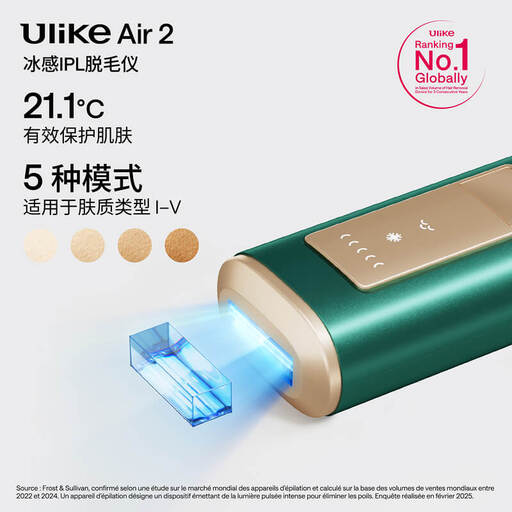
Why this choice suits this profile: its five intensity levels and sapphire cooling system offer a reassuring first step into IPL, on both the face and body.
The manual adjustment means you’re not stuck with a single power level. The advertised cooling can help reduce the sensation of heat, without promising a completely pain-free session.
Five intensities, use on face and body, sapphire cooling technology as claimed by the brand.
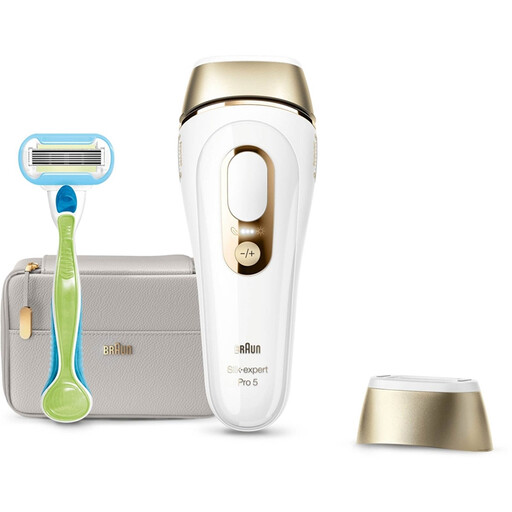
Why this choice suits this profile: regular users will appreciate the automatic intensity adjustment and the design, which is built for repeated sessions at home.
The SensoAdapt skin tone sensor adjusts the energy based on data provided by the manufacturer, which reduces the risk of selecting an unsuitable intensity.
Approximately 400,000 flashes claimed, six energy levels according to the product sheet, and corded operation.
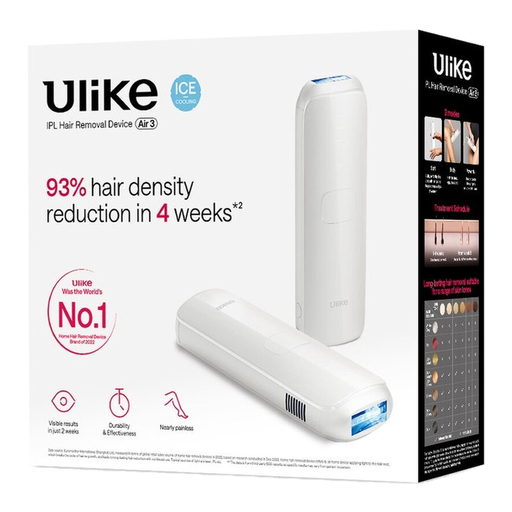
Why this choice suits this profile: its continuous flash mode and claimed weight of 271 g make sessions on the legs, underarms, and bikini line much easier.
The sapphire cooling and three claimed modes cater to users who are sensitive to heat as well as those treating multiple areas.
Automatic flash, claimed spectrum of 550 to 1,200 nm, and corded device supplied with goggles and a razor.
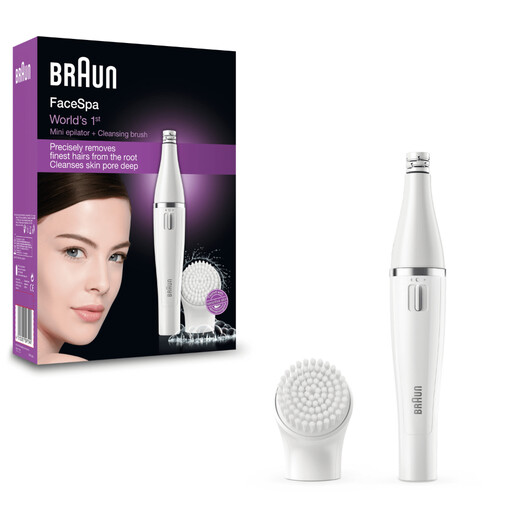
Why this choice suits this profile: this compact Braun device is aimed at those looking for a facial hair remover for the upper lip and small areas, with a separate cleansing function.
It doesn’t present itself as an IPL device – its targeted use avoids buying a light-based model when your need is only for the face.
Ten tweezers, soft-bristle brush, powered by an AA battery, and IPX7 water resistance according to the product sheet.
We’ve put together a complete, up-to-date selection of products that meet these demanding criteria and European safety standards.
For your first session, shave the area following the manufacturer’s instructions, then do a patch test on a small area. Wait around 24 hours to check how your skin reacts. Then follow the schedule provided – some brands recommend an initial phase with frequent sessions, followed by maintenance sessions spaced further apart. Flashing the same spot several times during one session won’t necessarily speed up hair reduction and can increase redness.
The cost of use mainly comes down to the purchase price and the electricity consumed by corded models. Devices with a long-life lamp generally don’t require any recurring consumables, but their actual lifespan depends on how well you look after them and the number of flashes used. Clean the treatment window with a soft, dry cloth, unplug the device before any handling, and store it out of reach of children.
Yes, but only if the manual explicitly allows those areas. For the face, use is often limited to the upper lip, chin, or jawline, keeping a safe distance from the eyes and eyebrows. Mucous membranes, genitals, and tattooed areas are generally excluded.
It depends on the number of flashes claimed, how often you use it, and how well you maintain it. A lamp rated for 250,000 or 400,000 flashes can support a routine for several years, but this number doesn’t guarantee a specific result or a fixed period of use.
No. Contrast plays a key role – black or brown hair is generally the most compatible with this technology, while white, grey, very blonde, or red hair may respond poorly. Always check the compatibility chart for the model before you buy.