
Livraison le jour même ou le lendemain

Qualité garantie

Débloquez vos offres de bienvenue: Livraison GRATUITE | Jusqu'à -80 % | 30 jours d'essai gratuits à JoyPlus
Téléchargez l'application
On the Paris Metro, at the office, or queuing up, your iPhone screen can easily reveal a message, a password, or a banking transaction to the person sitting right next to you. An iPhone 17 anti-spy screen protector limits visibility from the sides, while shielding the display from scratches and the everyday knocks of daily life.
However, not all options are equal on the criteria that really matter. A filter that is too dark can make reading a strain, an imprecise cut-out can put pressure on the case, and a promise of "bubble-free" installation won't make up for poor compatibility. Here are the points to check before you place your order.
A protector designed for the iPhone 17 won't necessarily fit the iPhone 17 Air, iPhone 17 Pro, or iPhone 17 Pro Max. The dimensions, bezels, and sensor positions can all differ.
Before ordering, always double-check the exact model reference on the product page. A mention like "iPhone 17 Pro / Pro Max" deserves your full attention: it could refer to two distinct variants, each with its own specific reference.
A privacy filter works using a structure of micro-louvers that reduces visibility from the sides. The screen usually remains readable from the front, but its perceived brightness drops as you move away from the centre.
The "25°" and "360°" ratings don't always mean the same thing. The first figure might refer to a front or side viewing angle, while the second is often a marketing term promising all-round privacy. Check the technical specifications and consider increasing the brightness in darker environments.
9H tempered glass is marketed as scratch-resistant, but this rating doesn't guarantee the screen will survive a significant drop. It primarily indicates the surface hardness against scratches, based on a specific test method.
For everyday use, also look at the edge quality, the adhesive, the presence of an alignment frame, and compatibility with a case. A scratch-resistant protector is no substitute for a case that can absorb impacts.
Tempered glass offers a feel close to the bare screen and resists surface scratches better. It's a good choice for people who carry their phone with keys or prefer a rigid surface.
Thinner, a protective film for the iPhone 17 can be preferable with certain snug-fitting cases. However, its feel and impact resistance depend heavily on its composition. For anti-spy protection, make sure the privacy function is built into the material, not just achieved with a dark tint.
The key is finding the right balance between discretion and ease of use. A protector that is too restrictive can darken photos, videos, and text. Product pages often highlight high light transmission, an anti-glare coating, or technology designed to preserve colours: weigh these promises against your own habits.
If you often use your phone on the train, look for a product page that clearly details the privacy angle and the stated impact on brightness.
A bubble-free automatic installation depends as much on the kit's contents as on your screen preparation. An applicator or alignment tray helps with centring, but it doesn't eliminate the risk of dust.
Follow these steps:
A protector that is compatible with a case should leave a slight gap all around the glass. A cut-out that is flush with the edges risks gradual peeling.
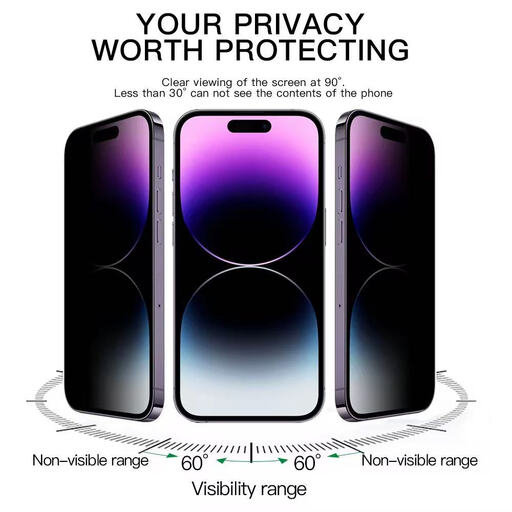
Why this choice suits this profile: This option is aimed at iPhone 17 users who want a guided installation and basic protection against prying eyes, scratches, and fingerprints.
The product page mentions an automatic adsorption applicator and 9H hardness. Still, double-check the exact model before confirming your purchase, as compatibility information can sometimes be unclear.
9H tempered glass, hydrophobic and oleophobic coatings, applicator included, and a 360° privacy filter.
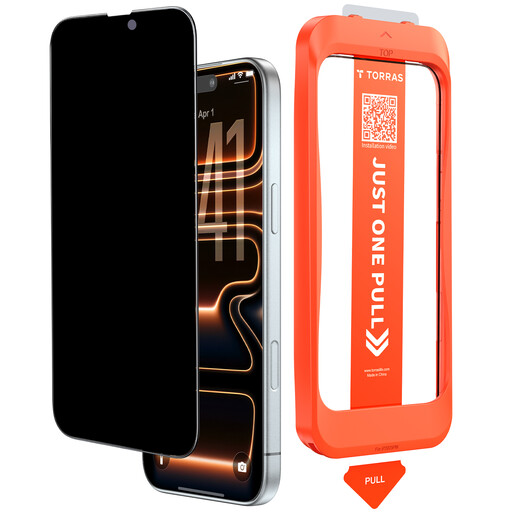
Why this choice suits this profile: This model targets iPhone 17 Pro owners looking for a refined finish, effective privacy in public places, and good integration with their case.
The product page specifies a 25° side angle, a micro-louver structure, and a peripheral gap designed to maintain case compatibility.
Stated 9H surface, oleophobic coating, reinforced edges, and the Install Master system designed to simplify alignment.
Why this choice suits this profile: Its automatic applicator is ideal for people who rarely change their protector and want to avoid centring errors on the iPhone 17 Air.
The guided installation reduces the risk of an off-centre glass or one covered in dust. The product page does note that the filter may slightly reduce brightness.
Stated 9H hardness, anti-fingerprint coating, adsorption application, and a design intended to limit side views.
Why this choice suits this profile: This option is aimed at frequent travellers and professionals who view sensitive information on public transport, in lifts, or in shared spaces.
The product page combines side privacy, automatic installation, and 9H hardness. As the filter can darken the screen, check the brightness level you'll need before buying.
Glass stated to have high light transmission, hydrophobic and oleophobic coatings, applicator supplied, and declared compatibility with the iPhone 17 Pro.
We've put together a comprehensive, real-time updated selection of products that meet these demanding criteria and European safety regulations.
It can, especially when the screen is viewed from an angle or used in a dimly lit room. Privacy filters deliberately reduce side visibility. Check the light transmission figures and increase your iPhone's brightness if needed.
There's no standard lifespan. Replace it as soon as it's cracked, heavily scratched, or lifting at the edges, or when dust starts to get underneath. However, avoid repeatedly removing and reapplying the protector: some product pages note that this can damage the screen's oleophobic coating.
Yes, provided the cut-out leaves enough space around the screen. Look for the case compatible mention and install the protector before putting on the case. After fitting, inspect all four edges: if the case presses against the glass, choose a thinner option or one with a better-suited cut-out.