
Livraison le jour même ou le lendemain

Qualité garantie

Débloquez vos offres de bienvenue: Livraison GRATUITE | Jusqu'à -80 % | 30 jours d'essai gratuits à JoyPlus
Téléchargez l'application
Long, thick or curly hair can take a considerable amount of time to dry. A high-speed ionic hair dryer can shorten drying time with a powerful, focused airflow while helping to reduce static electricity through dedicated settings. However, the figures highlighted on the packaging are not enough to distinguish one model from another.
Some marketing claims can even lead to a disappointing purchase:
Expressed in watts, electrical power indicates maximum energy consumption and provides an initial overview of the appliance’s capabilities. A powerful hair dryer rated between 1,600 and 2,400 W may suit thick hair, but this figure should not be considered in isolation.
Brushless motors, also known as brushless motors, are commonly used in high-speed models. Technical specifications may advertise speeds of 110,000 rpm and an airflow reaching 22 or 25 m/s. These figures are useful when comparing appliances, provided you also check:
A fast-drying hair dryer should not rely solely on high temperatures. A strong airflow removes moisture more efficiently while giving you better control over heat.
The presence of a hair dryer with intelligent temperature control deserves particular attention. Some models include sensors that regularly measure air temperature and automatically adjust operation. This is a regulation system, not a medical guarantee or absolute protection against heat-related damage.
For everyday use, look for at least:
For fine, coloured or dry hair, start with a moderate temperature. With thick hair, divide it into several sections rather than bringing the hot nozzle excessively close to the scalp.
Ionic technology is generally presented as a way to neutralise some static electricity and make styling easier. In practice, the result also depends on ambient humidity, hair type, the distance between the appliance and the hair, and the attachment being used.
A frizz-control hair dryer should therefore be assessed together with its attachments:
Weight also plays an important role. A lightweight hair dryer, weighing between 390 and 680 g depending on the models featured, can reduce arm fatigue during extended styling sessions. However, remember to check whether the stated weight includes the attachments.
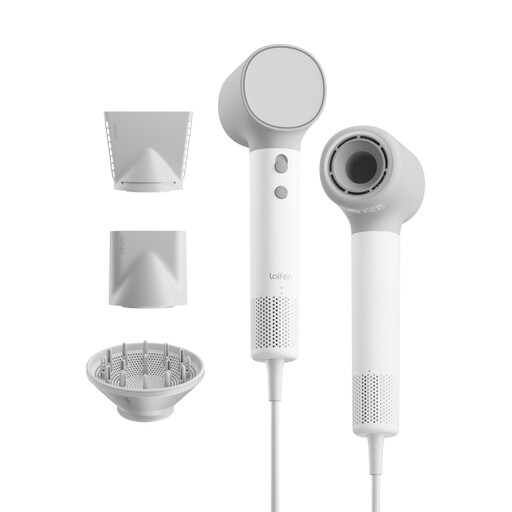
Why it suits this profile: Weighing just 390 g according to the specifications, with three attachments and adaptive temperature settings, it is an appealing introduction to faster drying without the bulk of a cumbersome appliance.
The specifications list a 110,000 rpm brushless motor, an airflow of 22 m/s and automatic temperature regulation. The comparison therefore does not rely solely on the advertised ion count.
Advertised weight of 390 g, 110,000 rpm, three attachments including a diffuser, plus two speeds and a child mode according to the specifications.
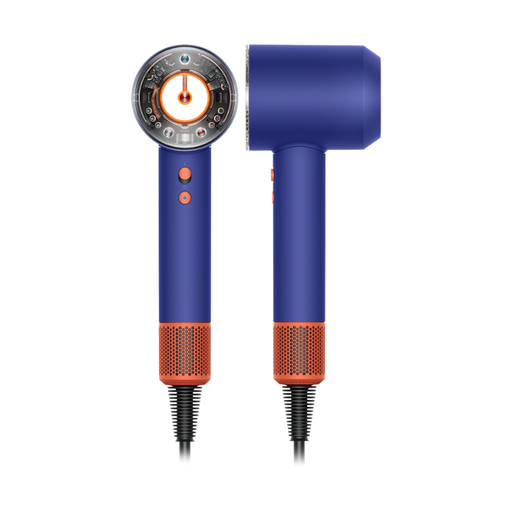
Why it suits this profile: It is designed for users who value precise controls, a versatile selection of attachments and a construction intended for everyday styling.
The specifications detail four temperature settings, three speeds, a cool-shot button and five attachments. They also mention a British plug, so an adapter may be required in France.
1,600 W, advertised airflow of 13 L/s, weight of 680 g for the appliance alone and a 2.6 m cable.
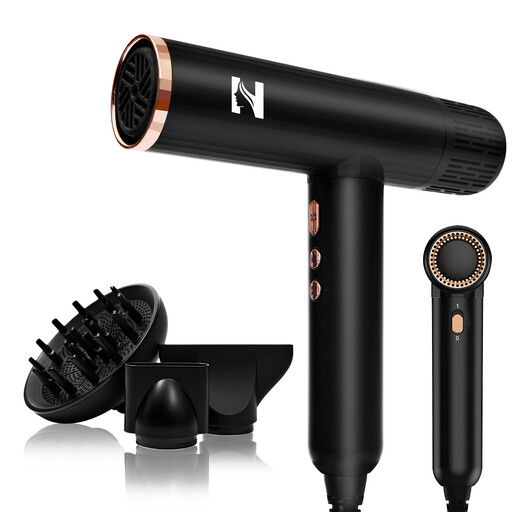
Why it suits this profile: Its diffuser and various concentrator nozzles cater to the needs of curly, long or voluminous hair, whether at home or after a workout.
The model combines a brushless motor rated at 110,000 rpm with four temperature settings and three speeds. This lets you tailor the airflow instead of relying on maximum heat at all times.
Advertised power of 1,900 W, airflow of 23 m/s, diffuser, two concentrator nozzles, listed weight of 570 g and a noise level below 65 dB according to the specifications.
We have brought together a complete, real-time-updated selection of products that meet these demanding criteria while complying with European safety regulations.
To avoid rough handling, begin by gently squeezing excess water from your hair with a towel rather than rubbing it vigorously. Hold the appliance at a reasonable distance and keep it moving continuously. For a blow-dry, use the concentrator nozzle in the direction of the hair fibre. For wavy or curly hair, a diffuser will generally be more suitable.
Remember to clean the air inlet grille regularly. Hair and dust can reduce airflow and cause the temperature to rise. Always unplug the appliance before cleaning it, allow the nozzle to cool and never use it near a bath, sink or wet surface.
It depends on its power rating and how long it is used. A 1,600 W model used for ten minutes consumes approximately 0.27 kWh, excluding variations caused by real-world operation. For the same duration, a 2,400 W appliance uses approximately 0.40 kWh. Reducing drying time can therefore partly offset the higher power rating.
A moderate speed with the diffuser is generally best to minimise movement that could disrupt the curl pattern. A medium or low temperature is often easier to control. Also check that a diffuser is included: its diameter, prong length and attachment system can vary from one model to another.
Its lifespan depends on the motor design, frequency of use, filter maintenance and adherence to safety instructions. A brushless motor or professional AC motor may be designed to withstand intensive use, but no universal lifespan can be guaranteed. Before buying, check the warranty period, the availability of spare parts and the terms of after-sales support.